Traditional vs Modern Haggis Dishes: Best Picks for Entertaining
Table of Contents
- How to choose haggis dishes for your guest list
- What counts as traditional vs modern haggis
- Comparison criteria for entertaining
- Flavor and authenticity
- Prep time and hosting logistics
- Dietary inclusivity and guest coverage
- Presentation and scaling for groups
- Cost per guest and waste control
- Best picks for formal dinners
- Best picks for casual parties and game nights
- Best picks for mixed-diet gatherings
- Hybrid strategy that balances tradition and convenience
- Meat Recipe Box
- Tested recipes for real life
- Meat-first, minimally processed approach
- Recipe index highlights
- Portable meal box ideas for haggis leftovers
- Join the newsletter for the Lunch Trip Sport meal box ebook
- Serving tips and pairings
- Make-ahead, reheating, and holding guidance
- Sourcing and substitutions
- Frequently asked questions
- What is haggis and how does modern haggis differ from traditional?
- Is traditional haggis legal and available where I live?
- How do I keep haggis moist and flavorful when serving a crowd?
- What sides and sauces pair best with haggis for different formats?
- What are reliable vegetarian haggis options for entertaining?
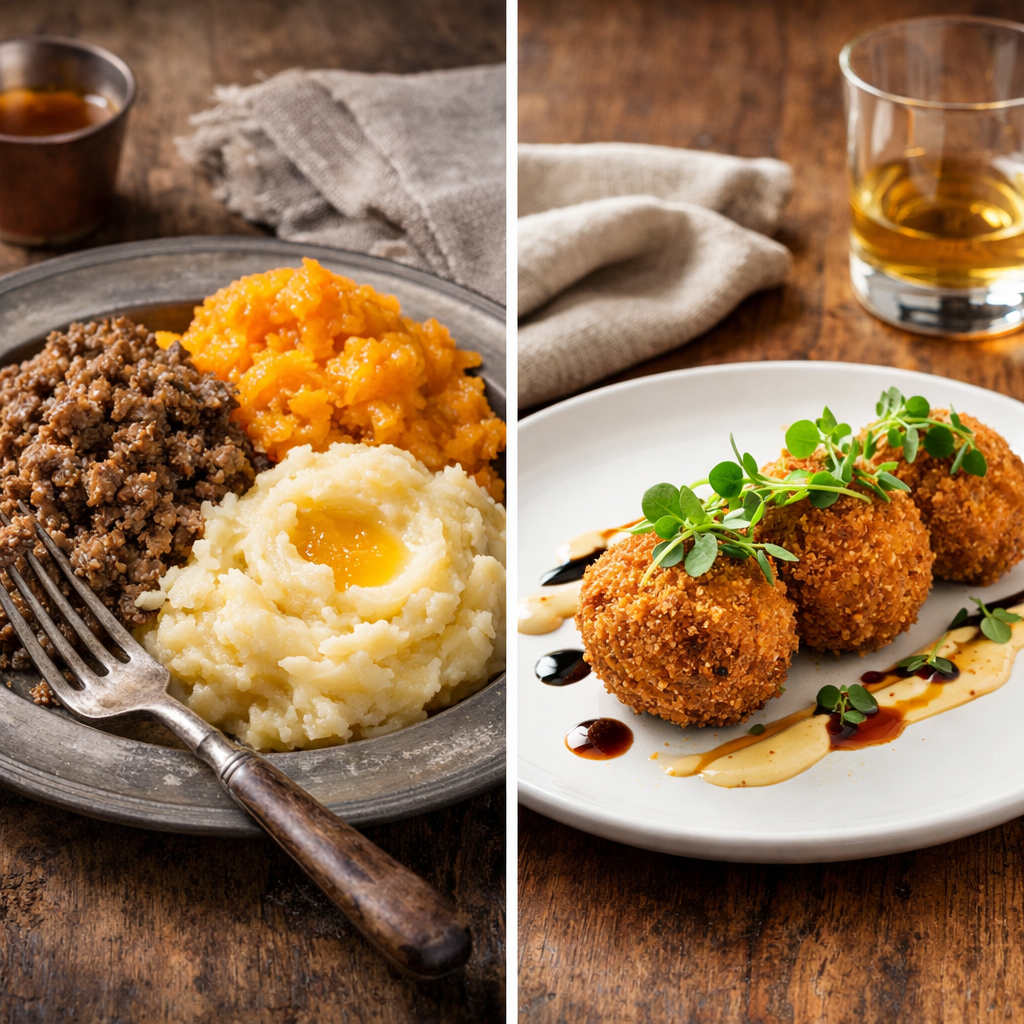
Traditional vs Modern Haggis Dishes: Best Picks for Entertaining
Haggis is a peppery, oat-bound savory pudding with Scottish roots—deeply comforting, surprisingly versatile, and ideal for guests when you match the format to your crowd. For most hosts, the best haggis dishes for entertaining blend classic flavor with modern, flexible serving: think a ceremonial slice alongside mini bonbons and a vegetarian option. This hybrid approach maximizes coverage, controls portions, and streamlines service without losing soul. At Meat Recipe Box, we lean on this hybrid for stress-free hosting.
Traditional haggis (40–50 words): A savory pudding of sheep offal—heart, liver, and lungs—mixed with oatmeal, suet, onions, and warming spices. The mixture is stuffed into a stomach casing and gently simmered for hours. Expect peppery warmth, a crumbly-oat texture, and rich, meaty depth prized for Burns Night and formal occasions.
Modern haggis formats: Lung-free, usually in a synthetic casing and often pre-cooked for quick reheating; includes vegetarian haggis made from lentils or mushrooms seasoned with traditional spices.
How to choose haggis dishes for your guest list
Use this five-step path to hit flavor, timing, and inclusivity in one sweep.
- Headcount: 10–20 favors one showcase dish plus a couple of sides; 20+ needs small plates or staged service.
- Dietary constraints: Note vegetarians, gluten-free guests, and cautious eaters; choose at least one inclusive option.
- Formality: Ceremony? Serve a whole haggis with neeps and tatties. Casual? Go bite-sized.
- Kitchen constraints: Inventory oven, hob, air fryer, warming trays, and counter space.
- Service style: Plated, buffet, or passed bites—pick formats that hold and replenish well.
Anchor strategy: Use traditional rigor for flavor and modern agility for guest experience. Cross-domain analyses show that combining traditional depth with modern responsiveness yields more complete outcomes, boosting coverage and satisfaction, a principle echoed in comparative evaluations of methods in other fields (see the synthesis in this review of traditional vs modern approaches to performance analysis). Meat Recipe Box entertaining guides follow the same principle for reliable flow.
- Formal/cultural default: Whole haggis with neeps and tatties.
- Mixed-diet/cocktail default: Mini haggis bonbons plus vegetarian haggis tartlets.
- Busy host default: Hybrid tapas plates using pre-cooked modern haggis with classic sides.
What counts as traditional vs modern haggis
Traditional haggis (40–50 words): A peppery mixture of sheep’s heart, liver, and lungs (the “pluck”) with oatmeal, suet, onions, and spices, encased in a stomach and gently simmered. It’s celebrated for ceremony and maximal authenticity, with a robust, crumbly texture and warm spice that anchors classic Burns Night plates.
Modern haggis (40–50 words): Typically lung-free and packed in synthetic or collagen casings for consistency and compliance, often pre-cooked for quick reheating. Vegetarian versions swap in lentils or mushrooms plus oats and traditional spices to mimic crumb and peppery savor, enabling faster service and broader dietary inclusivity.
Legality and availability in brief: Lung-in traditional versions face restrictions in some markets; widely available modern, lung-free haggis—and vegetarian haggis—are the easiest to source year-round at supermarkets and online. Traditional methods are time-tested but less adaptable; modern formats increase speed and inclusivity. Our default menus use compliant lung-free or vegetarian options to simplify sourcing and service.
Comparison criteria for entertaining
Use this quick rubric to match format to your event.
| Format | Flavor authenticity | Prep time | Dietary inclusivity | Presentation/scaling | Cost/waste | When to choose |
|---|---|---|---|---|---|---|
| Traditional whole haggis | Highest depth and classic peppery richness; ceremony-forward | Long (2.5–3+ hrs including simmer/hold) | Low by default | Impressive centerpiece; slower plating | Lower cost per portion; risk of over-portioning | Formal dinners, Burns Night, heritage focus |
| Modern pre-cooked/mini | Preserves spice profile; slightly lighter mouthfeel | Short (30–60 mins reheat/finish) | Moderate | Easy to portion as bonbons, sliders, crostini | Higher unit cost; tight portion control | Limited oven space, large groups, passed bites |
| Vegetarian haggis | Earthy lentil/mushroom depth; pepper warmth | Short to moderate (make-ahead friendly) | High | Tartlets, stuffed veg, polenta rounds | Similar to minis; minimal waste with labeling | Mixed diets, inclusive menus, cautious guests |
| Hybrid service | Classic flavor plus agile formats | Moderate (staggered) | High | Ceremony + fast plates/bites | Balanced cost and lowest waste | Most parties; want coverage and flow |
Principle: Traditional = depth and ceremony; modern = agility and inclusivity; hybrid = the most complete solution when integrating strengths.
Flavor and authenticity
Traditional haggis delivers the fullest pepper-and-offal savor with oat crumble and suet richness—ideal when guests expect ceremony. Modern, lung-free versions keep the spice balance and aroma with a slightly softer bite, and vegetarian haggis trends earthier from mushrooms and lentils while echoing the peppered warmth.
A pragmatic framing: traditional excels in authenticity; modern maintains core flavors in petite or plant-based forms but may shift mouthfeel. The hybrid approach preserves heritage on the plate and adds flexible, guest-friendly textures—mirroring how integrated methods balance depth with responsiveness cited in broader evaluations.
Accents that boost “classic” in small bites:
- Black pepper cream or whisky jus
- Mustard-oat crumb for texture
- Caramelized onion jam or apple chutney for lift
Prep time and hosting logistics
Expect longer simmering and active service for traditional formats; modern pre-cooked loaves, mini patties, and bonbons reduce active time and fit staggered service.
Time-boxed plans:
- Formal roast/ceremony: 3+ hours including simmer/reheat and a holding buffer.
- Cocktail bites: Batch-fry or air-fry bonbons in 20–30 minute waves.
- Vegetarian tartlets: Pre-bake shells; reheat filling; assemble in 10 minutes.
Logistics checklist:
- Oven capacity and rack plan
- Warming trays or low-oven space for holding
- Air fryer or skillet zones for crisp finishes
- Serving cadence and runner/refresh schedule
Meat Recipe Box recipes include make-ahead windows and reheating steps that match these plans.
Dietary inclusivity and guest coverage
Vegetarian haggis and modern lung-free versions are top picks for multi-diet tables—fast to reheat, familiar in flavor, and broadly acceptable. Dietary inclusivity means designing menus that accommodate vegetarians, gluten-free guests, and preference-driven eaters without isolating anyone or overcomplicating prep.
Guest profiles and best-fit formats:
- Vegetarian: Lentil/mushroom haggis tartlets or stuffed mushrooms.
- Gluten-free: Certified GF oats; serve on polenta rounds or baked potatoes.
- Picky eaters/kids: Haggis sliders or bonbons with a creamy dip.
At Meat Recipe Box, we plan menus with certified GF oats and clear labeling where needed to keep service smooth.
Presentation and scaling for groups
Lean on modern small-plate formats—bonbons, tartlets, crostini—for high visual impact and simple portion control. For heritage moments, present the whole haggis, address and slice, then pivot to pre-portioned plates to speed distribution.
Scaling guide:
| Guests | Bites per guest | Suggested total units | Buffer |
|---|---|---|---|
| 10–20 | 3–4 | 30–80 | +10% |
| 21–40 | 3–4 | 63–176 | +10% |
| 41–80 | 3–4 | 135–352 | +10% |
Tip: Mix two to three bite formats to balance fryer/oven load and flavors.
Cost per guest and waste control
Use a simple calculator: total cooked weight × yield per format = portions; plan +10% for bites, 0–5% for plated dinners.
Trade-offs:
- Whole traditional haggis often wins on cost per portion but can over-serve without careful slicing.
- Modern small bites may raise unit cost but reduce waste through precise portion control and clearer labeling.
Waste reducers:
- Staggered frying or crisping to match demand
- Smaller platters refilled often
- Clear “vegetarian” and “classic” signage to guide guests
Best picks for formal dinners
- Core plate: Whole traditional haggis with silky neeps and tatties, a drizzle of whisky cream, and buttered greens.
- Ceremony cue: Briefly address the haggis, slice cleanly, and plate swiftly with pre-warmed sides.
- Fallback: Modern lung-free haggis plated as the classic trio if traditional sourcing is limited.
- Hybrid flourish: Individual timbales (traditional-flavor filling molded and baked) for white-glove service with tidy portion control.
Best picks for casual parties and game nights
- Trio of bites: Mini haggis bonbons, vegetarian haggis tartlets, and haggis-stuffed jalapeños or sliders.
- Dips: Peppercorn yogurt, honey-mustard, smoky tomato.
- Speed: Air fryer or skillet finishes in waves to keep food hot and crisp.
- Portioning rule: Plan 3–5 bites per person per hour for the first 2 hours.
Best picks for mixed-diet gatherings
Build a two-lane spread:
- Lane A (classic): Bonbons or mini patties with whisky-onion gravy.
- Lane B (veg): Lentil–mushroom tartlets with peppered oats and herb crème.
- Central starch: Baked potatoes or polenta slices—gluten-free, neutral, and satisfying.
- Signage: Clear labels boost confidence and cut questions at the table.
Hybrid strategy that balances tradition and convenience
Blending authenticity with agile formats consistently delivers higher guest satisfaction and lower service risk. Cross-domain reports on combining traditional frameworks with modern, continuous methods show gains in engagement and performance—useful proof that integration works beyond the kitchen. That approach anchors our party playbooks at Meat Recipe Box.
Sample hybrid menu with timing:
- T–1 day: Prep vegetarian haggis filling; roll bonbons; make sauces; par-cook neeps and tatties.
- T–2 hours: Reheat whole haggis (or modern loaf) gently; load warming trays; set stations.
- Service: Address and slice; plate classic trios; fry/air-fry bonbons in 20-minute waves; assemble tartlets to order.
Meat Recipe Box
Our point of view: recipes for real life—tested, meat-forward, and adaptable for busy schedules. We favor minimally processed meats for dependable results and a robust index of beef, pork, and air fryer recipes to round out your entertaining menu. Explore our recipe index for sides, sauces, and bites that play beautifully with haggis.
Visit the full recipe index.
Tested recipes for real life
We validate timing windows, substitutions, and make-ahead steps in real home kitchens. Busy-cook features include 30-minute adaptations, air fryer finishes, and reheating instructions that protect texture—ideal when you’re juggling guests and game time.
Meat-first, minimally processed approach
Minimally processed meats are prepared with straightforward techniques—grinding, seasoning, simple curing—without ultra-processed additives. They deliver clean labels, predictable cooking, and full-flavor results. For haggis-adjacent dishes, we lean on quality ground meats, offal where available, and spice-forward blends, with easy low-carb options like serving over greens or roasted veg.
Recipe index highlights
- Beef and pork mains for complementary platters and hearty backups.
- Air fryer party bites for crisp, fast service and last-minute warm-ups.
Portable meal box ideas for haggis leftovers
- Haggis-stuffed baked potatoes with pepper yogurt in a reheatable container.
- Haggis breakfast burritos or egg wraps (low-carb) with sautéed onions.
- Haggis shepherd’s pie cups with mash in meal-prep trays.
Reheat hot items until steaming; room-temp tartlets with relish travel well with a cold pack.
Join the newsletter for the Lunch Trip Sport meal box ebook
Subscribe for first access to the Lunch/Trip/Sport meal box ebook, early recipes, and exclusive tips. Get weekly, test-backed menus and time-saving checklists built for real-life cooking.
Serving tips and pairings
- Classic: Neeps and tatties, buttered greens, whisky cream or peppercorn sauce.
- Modern: Mustard crème fraîche, caramelized onion jam, apple slaw.
Template: Pair 1 hearty side + 1 bright/acidic accent + 1 creamy element for balance. Find make-ahead sauces and sides in the Meat Recipe Box recipe index.
Make-ahead, reheating, and holding guidance
- Prep fillings 1–2 days ahead; reheat until piping hot; hold safely in warming trays.
- Reheat covered to retain moisture; finish uncovered 5–8 minutes to restore texture.
- Fry/air-fry bonbons just in time for crunch.
Holding: Maintaining cooked food at safe serving temperature while preserving texture; use covered pans at low heat and refresh crisp items right before service.
Sourcing and substitutions
- Where to buy: Local butchers for offal and traditional casings; specialty or online shops for modern, lung-free haggis; supermarkets and delis for vegetarian haggis.
- Substitutions:
- If offal is unavailable: Spiced beef/lamb with oats for similar crumb and warmth.
- Vegetarian: Lentils + mushrooms + oats with black pepper and nutmeg.
- Gluten-free: Certified GF oats or rice crumbs.
Check labels for balanced spices and visible black pepper grains in prepared products.
Frequently asked questions
What is haggis and how does modern haggis differ from traditional?
Traditional haggis uses sheep’s heart, liver, and lungs with oats and spices in a stomach casing; modern versions omit lungs, often use synthetic casings, and include vegetarian options using lentils or mushrooms. Meat Recipe Box covers both styles with make-ahead and reheating tips.
Is traditional haggis legal and available where I live?
Lung-in traditional haggis faces restrictions in some countries, while modern lung-free versions are legal and widely sold; check local availability. Our menus default to compliant, ready-to-reheat options.
How do I keep haggis moist and flavorful when serving a crowd?
Reheat gently until piping hot, hold covered to retain moisture, and finish crisp items just before serving; Meat Recipe Box recipes include sauce pairings like whisky cream to balance textures.
What sides and sauces pair best with haggis for different formats?
Classic plates shine with neeps and tatties and a whisky or peppercorn sauce; find bite-friendly sauces and slaws in the Meat Recipe Box recipe index.
What are reliable vegetarian haggis options for entertaining?
Choose lentil- or mushroom-based versions with oats and warm spices; they mimic the crumbly texture and peppery profile while suiting mixed-diet gatherings. Meat Recipe Box menus pair them with tartlets, stuffed mushrooms, or polenta rounds for easy service.