Traditional Haggis Dinner with Neeps and Tatties Recipe: Expert Guide
Table of Contents
- What you need
- Ingredients and substitutions
- Equipment checklist
- Step 1: Prep and cook the neeps
- Peel, cube, and simmer until tender
- Mash with butter and seasoning
- Step 2: Make the tatties creamy
- Boil, drain, and steam-dry
- Mash with warmed milk and butter
- Step 3: Heat the haggis properly
- Canned or tinned haggis
- Traditional haggis in casing
- Vegetarian haggis option
- Step 4: Whisk a simple whisky cream sauce
- Build flavor with shallot, whisky, stock, and cream
- Reduce gently and season to finish
- Step 5: Plate like a pro
- Classic family-style plating
- Tall stack with a ring mold
- Timing, portions, and make-ahead tips
- Sourcing and quality notes from Meat Recipe Box
- Responsible protein standards
- Prep-simplified recipe cards and digital guides
- Flexible box sizes and seasonal menus
- Troubleshooting and pro tips
- Texture fixes for mash
- Sauce rescue tips
- Holding and reheating without drying out
- Frequently asked questions
- What are neeps and what should I buy outside the UK?
- Can I make the mash and sauce ahead of time?
- How long should I simmer a whole haggis in casing?
- What whisky works best for the sauce?
- How do I serve for Burns Night at scale?
Traditional Haggis Dinner with Neeps and Tatties Recipe: Expert Guide
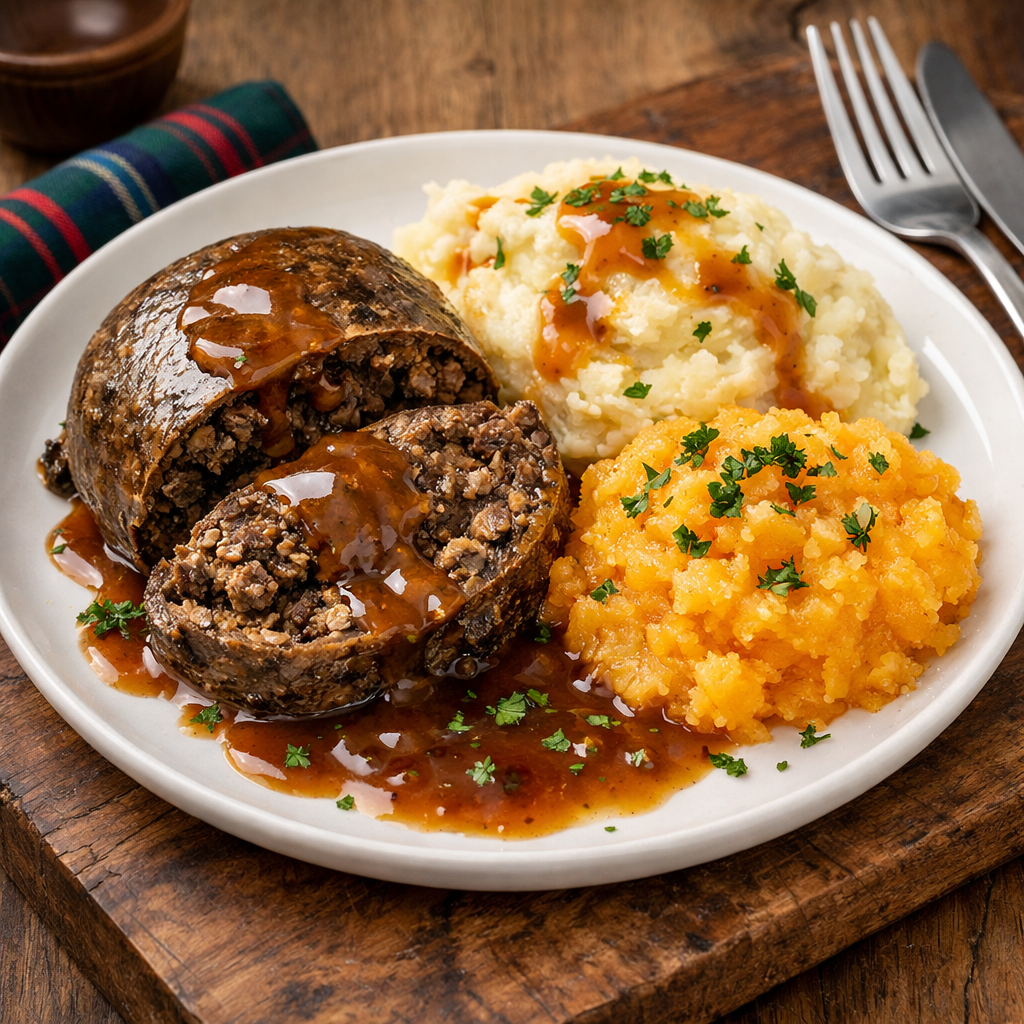
A traditional haggis dinner pairs savory haggis with two classic sides: buttery mashed potatoes (tatties) and mashed rutabaga/swede (neeps), plus a quick whisky cream sauce. This expert guide walks you through the whole plate with precise timing for canned versus traditional haggis, plating ideas, and make-ahead tips. If you’re cooking a whole haggis in its casing, plan for a long, gentle simmer—The Spruce Eats notes a typical 2 hr 20 min cook time for a classic version—while tinned haggis makes a 40-minute weeknight option. We’ll show you both tracks, so your Burns Night dinner or cozy Sunday supper lands on time and tastes unmistakably Scottish.
What you need
You can make this traditional haggis dinner with neeps and tatties recipe using either tinned haggis (fast) or a whole, traditional haggis (festive). Neeps are rutabaga (also called swede), a Brassica in the cabbage/turnip family; tatties are mashed potatoes. The core ingredients are simple, and a few tools—like a potato ricer and a shallow pan—make the finish restaurant-smooth.
Printable workflow at a glance:
- Start the neeps first (they take longest).
- Cook potatoes in a separate pot; steam-dry before mashing.
- Warm the haggis (tinned) or simmer the whole haggis while veg cook.
- Make whisky cream sauce while potatoes steam-dry.
- Plate classic or stacked; sauce at the end.
Ingredients and substitutions
Core (serves 4):
- Haggis: 1½–2 lb traditional in casing, or 2 x 14–16 oz tins; vegetarian haggis works 1:1.
- Potatoes (floury/waxy-floury like Maris Piper, Yukon Gold, or Russets): 2 lb, peeled and cubed.
- Rutabaga/swede (neeps): 1½–2 lb, peeled and cubed.
- Unsalted butter: 6–8 tbsp total (split between neeps and tatties).
- Milk/cream: ½–¾ cup warm dairy for tatties; optional 2–3 tbsp warm milk for neeps.
- Seasoning: kosher salt, black or white pepper. Optional pinch of nutmeg for neeps.
Sauce pantry (whisky cream sauce):
- Shallot: 1 small, finely chopped.
- Scotch whisky: ¼ cup.
- Beef stock: ½–¾ cup (use good-quality stock for depth).
- Heavy cream: ½ cup.
- Butter: 1 tbsp.
- Optional: ½ tsp Dijon or a few crushed peppercorns.
Notes and swaps:
- Tinned haggis speeds things up and is widely used where traditional haggis is harder to source.
- Vegetarian haggis is a direct substitute; use vegetable stock in the sauce if preferred.
- Clapshot variation: blend some tatties into the neeps for a single, Orkney-style mash with butter and chives—often served with haggis.
Equipment checklist
Must-haves:
- 2 medium pots with lids (separate pots for neeps and tatties)
- Colander for draining and steam-drying
- Sturdy masher or potato ricer
- Sharp peeler and chef’s knife
- Measuring jug
- Shallow sauté pan (for haggis and/or sauce)
Nice-to-haves:
- Ring mold or biscuit cutter for stacked plating
- Fine sieve for ultra-smooth tatties
- Warmed platter and ladle for family-style service
Step 1: Prep and cook the neeps
Start the neeps first—they need more time than potatoes. Keep neeps and tatties in separate pots so each mash hits the right texture.
Peel, cube, and simmer until tender
- Peel rutabaga/swede and cut into 1–1.5 inch cubes. Salt the water generously.
- Simmer until very tender, about 20–45 minutes depending on cube size; aim for fork-tender with no resistance.
- Drain thoroughly and let sit uncovered in the hot pot for a minute or two to steam off excess moisture.
Mash with butter and seasoning
- Add 2–3 tbsp warm butter (and a splash of warm milk if desired). Mash to a slightly coarse, spreadable texture.
- Season with salt and pepper; optional pinch of nutmeg or white pepper for gentle warmth.
- Keep neeps coarser than tatties for contrast.
Step 2: Make the tatties creamy
Creamy, cloud-like mash comes from steam-drying and adding warmed dairy off the heat.
Boil, drain, and steam-dry
- Peel and cube potatoes (¾–1 inch). Boil in salted water until tender, 12–20 minutes; small cubes can be ready in about 13 minutes, as demonstrated by Christina’s Cucina.
- Drain well. Leave in a colander to steam-dry for about 10 minutes so excess moisture escapes.
- Doneness cue: a paring knife should slip in and out easily; edges just begin to feather.
Mash with warmed milk and butter
- Return the empty pot to low heat. Add 4–5 tbsp butter and ½–¾ cup milk/cream to warm gently.
- Add potatoes and mash lightly; a ricer yields lump-free mash, and a quick pass through a sieve gives an extra-fine finish.
- Season at the end. If too stiff, loosen with a splash of warm dairy.
Step 3: Heat the haggis properly
Traditional haggis was historically cooked in an animal’s stomach; modern versions use a casing. Choose the quick tinned route or simmer a whole haggis for a ceremonial touch.
Canned or tinned haggis
- Tip tinned haggis into a non-stick pan and warm gently over low heat, stirring minimally to keep a coarse crumble.
- Cover between stirs to retain moisture and heat until hot throughout. This format is especially practical in the US, where traditional haggis can be harder to find, as noted by Fusion Craftiness.
Traditional haggis in casing
- Submerge the whole haggis in a large pot of water and keep at a bare simmer—never a rolling boil—to avoid bursting the casing.
- Simmer 1–3 hours depending on size and package directions; guideposts include a 2 hr 20 min cook and a brief 5-minute rest before opening, highlighted by The Spruce Eats.
- Top up with hot water as needed to keep the haggis submerged.
Vegetarian haggis option
- Cook vegetarian haggis according to pack directions. If you’re sharing pots, avoid cross-contamination if serving both meat and veg versions.
- Use vegetable stock in the sauce if you want a fully meat-free plate.
Step 4: Whisk a simple whisky cream sauce
Make this ahead and reheat gently to pour at serving.
Build flavor with shallot, whisky, stock, and cream
- Soften finely chopped shallot in 1 tbsp butter over medium heat.
- Deglaze with ¼ cup whisky and reduce by half.
- Add ½–¾ cup good beef stock and ½ cup cream. Simmer until slightly thickened; season with salt and pepper. Optional: a touch of Dijon or crushed peppercorns for nuance.
- BBC Food’s haggis, neeps, and tatties method underscores using gentle heat after adding cream to protect the texture.
Reduce gently and season to finish
- Keep the sauce at a gentle simmer after adding cream to prevent splitting.
- Aim for nappe (it should lightly coat a spoon). If too thin, reduce 2–3 minutes more; if too thick, loosen with warm stock.
Step 5: Plate like a pro
Classic family-style plating
- On warm plates or a platter, spoon neeps and tatties on either side with haggis in the middle—ideal for a Burns Night dinner.
- Spoon whisky sauce over the top or serve on the side. Garnish with chopped parsley and offer a wee dram if desired, a presentation echoed by Christina’s Cucina.
Tall stack with a ring mold
- For a clean tower, set a ring mold on the plate and layer: neeps base, haggis middle, tatties top. Press lightly and lift the ring carefully.
- Spoon sauce around or over the stack; finish with cracked pepper and herbs for color.
Timing, portions, and make-ahead tips
- Tinned path: about 40 minutes total (neeps 20–30, tatties 20, sauce 10; much overlaps).
- Traditional haggis: plan 2–3 hours of gentle simmering; a representative classic timeline is 20 minutes prep, 2 hr 20 min cook.
- Make-ahead: both mashes and the sauce can be prepared earlier in the day. Reheat gently and keep components in a low oven around 200°F/90°C; loosen mashes with warm dairy before serving.
- Portions: plan 6–8 oz haggis per person; equal scoops of neeps and tatties; 2–3 tbsp sauce per serving.
- If using a Meat Recipe Box kit, follow the included recipe card’s time cues to keep everything landing hot together.
Sourcing and quality notes from Meat Recipe Box
Meat Recipe Box makes it easy to build a haggis dinner kit with responsibly raised meat, chef-tested steps, and flexible delivery—especially around Burns Night when our seasonal menus feature this classic.
Responsible protein standards
- We source responsibly raised, traceable, premium-grade proteins with tight freshness controls and precise portions for consistent results.
- Vegetarian options are easy to add to your box for mixed-diet gatherings.
Prep-simplified recipe cards and digital guides
- Every kit includes step-by-step recipe cards with time cues, doneness checks, and plating prompts.
- Dietary filters and cuisine variety keep planning simple, while QR videos demonstrate sauce reduction and mashing techniques in under a minute.
Flexible box sizes and seasonal menus
- Choose box sizes for 2, 4, or a crowd, with streamlined add-ons like stock, cream, and aromatics to cut store trips.
- Around Burns Night, look for a haggis-focused bundle that includes neeps, tatties, sauce aromatics, and clear time estimates.
Troubleshooting and pro tips
Texture fixes for mash
- If tatties are gluey, fold in a bit of warm cream and stop mashing; next time, use a ricer and steam-dry longer before mashing.
- If neeps are watery, return to low heat to evaporate moisture, then add butter and season; keep them slightly chunky for structure.
Sauce rescue tips
- If the sauce splits, remove from heat and whisk in a splash of warm cream; next time, keep the heat gentle after adding cream.
- If too thin, simmer briefly to reduce; if too salty, add unsalted cream or a little stock to rebalance.
Holding and reheating without drying out
- Hold mashed veg covered in a low oven (~200°F/90°C); loosen with warm dairy before serving.
- Keep tinned haggis warm on low, covered. Rest a whole haggis about 5 minutes post-simmer before opening to retain juices.
Frequently asked questions
What are neeps and what should I buy outside the UK?
Neeps are rutabaga, also called swede. Outside the UK, buy rutabaga to mash alongside potatoes for the classic side.
Can I make the mash and sauce ahead of time?
Yes—both can be made ahead. Reheat gently, loosen mash with warm milk/cream, and keep sauce just below a simmer to avoid splitting.
How long should I simmer a whole haggis in casing?
Plan for 1–3 hours depending on size and pack instructions, then rest about 5 minutes before opening for best texture.
What whisky works best for the sauce?
Use a smooth, mid-range Scotch you enjoy drinking. Avoid smoky styles if you want a more delicate, creamy finish.
How do I serve for Burns Night at scale?
Plate family-style on warm platters and keep components in a low oven. Meat Recipe Box box sizes make scaling straightforward.