Stop Wasting Stalks: Efficient Ways to Trim Asparagus Right
Table of Contents
- Why efficient trimming matters
- Tools and setup
- Step 1: Wash and dry for better seasoning adhesion
- Step 2: Line up spears for batch trimming
- Step 3: Trim with a knife at the color change
- Step 4: Peel thick stalks for tenderness
- Step 5: Save trimmings for stocks and purées
- Step 6: Optional bias cuts for quick-cook pieces
- Knife vs snap: what actually saves more asparagus
- Thickness guide for minimal waste
- Prep to cook: quick methods for busy nights
- Air fryer asparagus
- Roast or grill
- Sauté or stir-fry
- Blanch for salads and meal prep
- Storage and make-ahead tips
- Meat Recipe Box meal ideas with asparagus
- Steak and asparagus sheet pan dinner
- Air fryer pork chops with asparagus
- Chicken sausage and asparagus meal prep bowls
- Bacon-wrapped asparagus for portable snacks
- Frequently asked questions
- Should I snap or cut asparagus ends?
- How much should I trim off the bottom?
- Do thin and thick spears need different trimming?
- What can I do with the trimmed ends and peels?
- How do I keep asparagus from turning stringy or soggy?
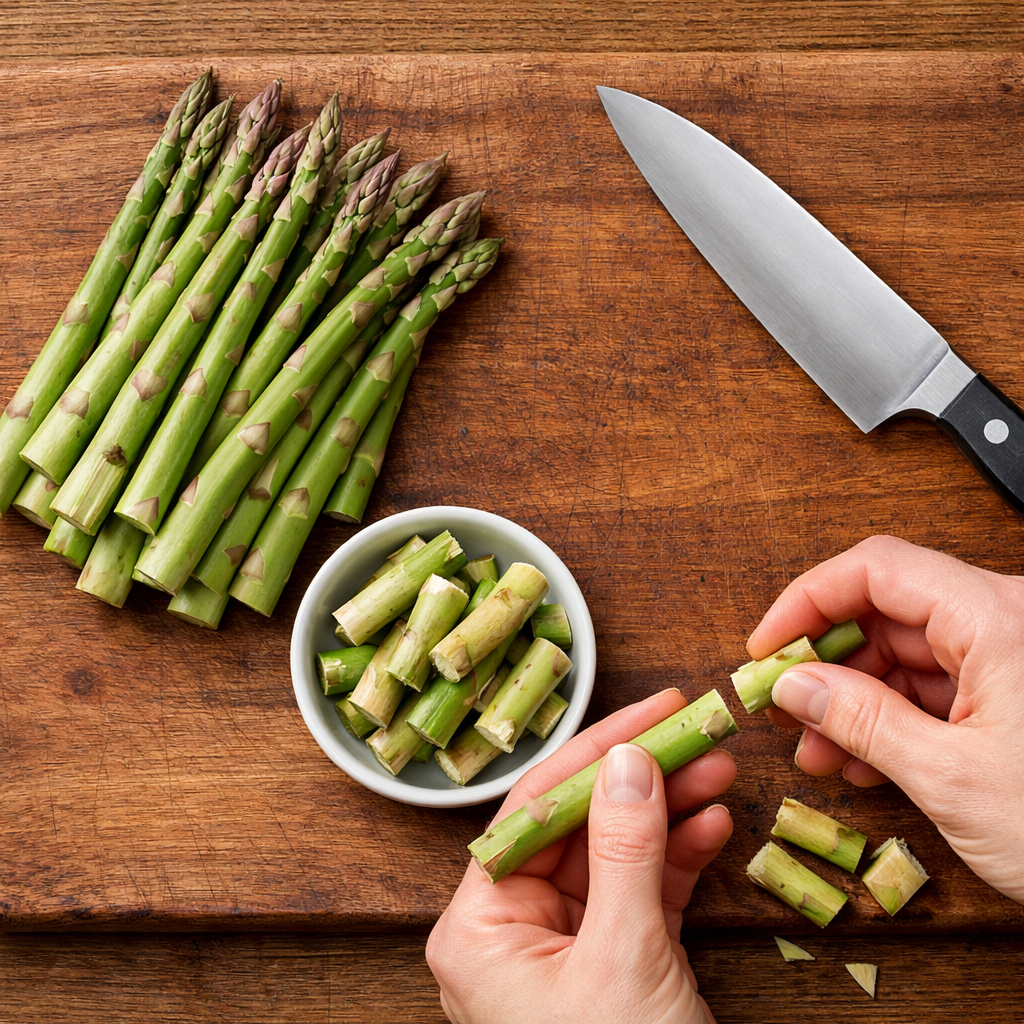
Stop Wasting Stalks: Efficient Ways to Trim Asparagus Right
When you’re racing to get dinner on the table, efficient asparagus prep can be the difference between crisp-tender spears and mushy, stringy bites. Here’s the short answer: line up the spears and trim with a knife right where the color shifts from pale/white to green, then peel only thick stalks. This method saves edible asparagus, keeps pieces uniform for even cooking, and speeds weeknight prep more than snapping. Below, we’ll walk you through the exact workflow we use in the Meat Recipe Box kitchen—plus fast cooking methods and meat-forward meal ideas that turn those perfectly prepped spears into portable, satisfying dinners.
Why efficient trimming matters
Smart trimming preserves flavor, consistency, and your grocery budget. The popular bend-and-snap trick is easy, but it’s inconsistent and often lops off more than necessary—tests show snapping can remove up to 30% more edible stalk compared with careful cutting, and it shortens spears unpredictably, as noted by experts on Simply Recipes and the Serious Eats trimming guide (reinforced by Southern Living’s how-to). Woody ends are the tough, fibrous lower portion of an asparagus spear that resist cooking and remain stringy; trimming or peeling removes these fibers so the remaining stalk cooks evenly and tastes tender. Knife trimming at the color change conserves product and produces uniform lengths that cook at the same rate, plate neatly, and taste better. It’s our standard in the Meat Recipe Box kitchen for reliable results.
References:
- Simply Recipes’ expert guidance highlights waste from snapping and uniformity with knife work.
- Serious Eats’ trimming guide demonstrates batch-cut efficiency and yield.
- Southern Living’s how-to underscores the color-change cue and drying for better browning.
Tools and setup
You only need a minimal kit:
- A sharp chef’s knife, sturdy cutting board, and a colander for quick rinsing
- Clean kitchen towels for thorough drying
- A Y‑peeler for thick or mature spears
- A scrap bowl or freezer bag to save trimmings for stock or purée (chef tricks from Food & Wine’s chef tips)
Pro tip: Keep the spears banded, or hand‑bundle them, and line up the ends on the board to trim multiple stalks in one motion (a hallmark of the Serious Eats method and our prep routine at Meat Recipe Box).
Step 1: Wash and dry for better seasoning adhesion
Rinse asparagus in a colander under cool water to remove grit, shake well, then pat completely dry with towels so oil and seasoning stick (a Southern Living staple). Moisture barrier: Leaving surface water on vegetables prevents oil from coating evenly, which reduces browning and seasoning adhesion during high-heat cooking. No soaking—quick rinse and dry keeps texture snappy. This simple step underpins most of our high-heat vegetable cooking.
Step 2: Line up spears for batch trimming
Align the spears so the tough ends are even on the board, then cut several at once with a chef’s knife for matching lengths (as in the Serious Eats trimming guide and Misen’s cutting guide). Keep them banded or gently squeeze a bundle with your non‑dominant hand to maintain alignment. Batch trimming speeds prep and ensures even cooking.
Step 3: Trim with a knife at the color change
Use the spear’s color as your compass. Trim about 1–2 inches from the base, or cut just above where the stalk shifts from pale/white to green—this cue reliably removes only the woody portion (Southern Living’s how-to). If the color change isn’t obvious, make a test cut about 1 inch up and adjust; fatter spears may need slightly more than thin ones (see the Feel Good Foodie tutorial). Snapping can break unpredictably and usually yields shorter spears than precise cutting (Serious Eats).
Step 4: Peel thick stalks for tenderness
When spears are thick or especially woody, peel the bottom half with a Y‑peeler to remove the fibrous outer layer—aim to shave the skin, not the tender core (a common pro move in Food & Wine’s chef tips and Simply Recipes’ expert guidance). Many chefs trim only about 1 inch from the end, then peel to conserve more edible stalk and keep yield high. Note: White asparagus generally requires peeling because its outer layer is thicker and more fibrous (Misen’s cutting guide).
Step 5: Save trimmings for stocks and purées
Turn “waste” into flavor:
- Freeze trimmed ends and peels in labeled bags.
- Build vegetable stock with onion skins, carrot peels, and herb stems.
- Quick purée: simmer trimmings until tender, blend with a little stock, strain, and swirl into risotto or pasta as a springy finisher (a zero‑waste habit chefs advocate in Food & Wine’s chef tips).
Step 6: Optional bias cuts for quick-cook pieces
Cutting diagonally (on the bias) increases surface area for faster cooking and a more elegant look—perfect for sautés, stir‑fries, and salads. Slice on a sharp angle into roughly 2‑inch pieces; a trimmed spear usually yields five to six slices (as shown in Six Burner Sue’s bias-cut method).
Knife vs snap: what actually saves more asparagus
Verdict: Knife trimming at the white‑to‑green color change conserves more edible stalk and produces uniform, reliable lengths. Snapping breaks at variable points and can waste up to about 30% more asparagus compared with careful trimming (noted by Simply Recipes and supported in Serious Eats’ trimming guide). If you lack a knife, snapping works in a pinch—but it’s one‑at‑a‑time and less precise (a pragmatic nod echoed in Food & Wine’s chef tips). For batch prep, we stick with knife trimming at Meat Recipe Box.
Thickness guide for minimal waste
- Thin “pencil” spears: Minimal trimming; test one by color or feel, then trim the bunch accordingly (Misen’s cutting guide).
- Medium spears: Trim 1–2 inches or at the color change; peeling usually unnecessary (Southern Living’s how-to).
- Thick spears: Trim about 1 inch, then peel the lower half for even tenderness (Food & Wine’s chef tips and Misen’s guide).
At a glance: If the green fades to pale/white, cut just above that transition (Southern Living; Simply Recipes’ expert guidance).
Prep to cook: quick methods for busy nights
Dry well and don’t overcrowd—space equals browning. Bias‑cut pieces cook even faster, which is handy when dinner needs to move. For more fast protein pairings, browse our recipe index and easy recipes.
Air fryer asparagus
Toss dried spears with oil, salt, and pepper. Air fry at 400°F (205°C) until crisp‑tender: 6–9 minutes for whole medium spears, 5–7 minutes for bias‑cut pieces, shaking once. Finish with lemon zest, grated Parmesan, or garlic butter. Drying first helps oil adhere and improves browning (as emphasized in Southern Living’s how-to).
Roast or grill
- Roast: 425°F (220°C), 8–12 minutes for medium spears, 10–15 minutes for thick, flipping once. Season with smoked paprika or crushed red pepper; drizzle herb vinaigrette after roasting.
- Grill: Medium‑high heat, lightly oiled grates, 4–7 minutes total, turning for even char. Thicker spears handle grill marks best.
Sauté or stir-fry
Bias‑cut 2‑inch pieces cook fast and evenly. Sauté over medium‑high with oil and salt until browned‑tender, 4–6 minutes; or stir‑fry over high heat, 2–4 minutes. Finish with umami boosters like soy, oyster sauce, or miso butter—great alongside steak bites or pork.
Blanch for salads and meal prep
Boil salted water. Blanch spears until crisp‑tender: 1–2 minutes for thin, 2–3 for medium, 3–4 for thick. Shock in ice water, drain, and dry thoroughly for meal‑prep longevity. Toss with vinaigrette, fold into chilled pasta salads, or pack into grain bowls with chicken sausage.
Storage and make-ahead tips
- For freshness: Stand spears upright in a jar with an inch of water, cover loosely with a bag, and refrigerate. Change water every 1–2 days; use within 3–5 days.
- For ready‑to‑cook prep: Trim and wash, then dry thoroughly and refrigerate in a towel‑lined, breathable container up to 3 days. Keep peels/ends frozen for stock or purée for up to 2–3 months.
- Uniform trim/peel promotes even cooking and reliable reheating in meal prep.
Meat Recipe Box meal ideas with asparagus
Connect your efficient trim to meat‑forward, portable meals. Scale to 4 servings unless noted.
Steak and asparagus sheet pan dinner
Use medium‑thick spears trimmed at the color change. Roast asparagus at 425°F while searing or broiling steak; aim for asparagus to finish crisp‑tender as the steak hits target doneness. Top both with garlic‑herb butter. For more pairings, browse our recipe index.
Air fryer pork chops with asparagus
Cook seasoned pork chops in the air fryer; while they rest, air‑fry the asparagus (6–9 minutes at 400°F). Finish with lemon‑pepper and Parmesan. Portability tip: Pack with a lemon wedge for reheating at work. See more quick ideas in easy recipes.
Chicken sausage and asparagus meal prep bowls
Blanch or sauté bias‑cut asparagus for snap. Portion with sliced chicken sausage, farro or rice, and mustard vinaigrette. Store 3–4 days; keep dressing separate until serving to maintain texture.
Bacon-wrapped asparagus for portable snacks
Choose thick spears, peel the lower half, and wrap in thin bacon. Roast at 400°F until bacon is crisp, 12–18 minutes, or air fry 8–12 minutes. Try maple‑chile or balsamic glazes for variety.
Frequently asked questions
Should I snap or cut asparagus ends?
Cut with a sharp knife where the color shifts from pale/white to green for consistent, minimal waste. That’s the standard we use at Meat Recipe Box.
How much should I trim off the bottom?
Trim about 1–2 inches or cut just above the white‑to‑green color change. For thick spears, trim about 1 inch and peel the lower half to keep more tender stalk—our go‑to approach.
Do thin and thick spears need different trimming?
Yes. At Meat Recipe Box, we minimally trim thin spears but peel thick ones after a short trim for even cooking.
What can I do with the trimmed ends and peels?
Save them for vegetable stock or blend into an asparagus purée to stir into soups or pasta. We freeze trimmings in a labeled bag until there’s enough.
How do I keep asparagus from turning stringy or soggy?
Trim or peel woody ends for tenderness, dry well so oil sticks, and avoid overcrowding during cooking. At Meat Recipe Box, we cook hot and fast and serve immediately for crisp‑tender results.