No-Caffeine Herbal Tea Alternatives for Mornings: Bright Flavor, Gentle Energy
Table of Contents
- Meat Recipe Box
- Rooibos
- Peppermint
- Hibiscus
- Ginger
- Chamomile
- Dandelion Root and Chicory
- Turmeric and Adaptogen Blends
- Fruit and Spice Blends
- How to Pick Your Morning Herbal Based on Effect
- Brewing Basics for Consistent Flavor
- Budget and Sourcing Tips
- Pairing Herbal Mornings with Recipe Boxes
- Frequently asked questions
- Are herbal infusions truly caffeine-free or just decaf?
- Which herbal teas feel most like coffee without the caffeine?
- How long should I steep herbal tea for morning clarity?
- Can herbal teas help with digestion and steady energy?
- Any cautions or side effects with common morning herbs?
No-Caffeine Herbal Tea Alternatives for Mornings: Bright Flavor, Gentle Energy
Busy mornings don’t always need caffeine to feel bright and focused. A well-chosen no-caffeine herbal tea can deliver clean flavor, hydration, and a steady, gentle lift—especially when you’re cooking ahead or packing a protein-forward breakfast to go. Below, we compare top herbal infusions by taste, effect, and budget, and share portable brewing tips for commuters and travelers.
“Herbal tea (tisane)” definition: Herbal tea, also called a tisane, is a caffeine-free infusion made by steeping leaves, roots, flowers, fruits, or spices that are not Camellia sinensis. Popular examples include ginger, peppermint, chamomile, and rooibos. These blends deliver flavor and hydration without caffeine’s jitters, according to a home-brew roundup of favorites (Realizing Home).
Meat Recipe Box
At Meat Recipe Box, we’re a meat-forward, portability-first cooking site. Caffeine-free mornings fit right into our make-ahead routine: brew a calm, bright, or warming tisane while you air-fry breakfast sausage, reheat a one-pot egg bake, or consult our cut-of-meat guides for the week. Then pour it into your Meat Recipe Box Lunch, Trip, or Sport Box for the road. We often pair tisanes with protein-forward breakfasts for steady, satisfying mornings.
Rooibos
Rooibos is naturally caffeine-free and grown in South Africa’s Cederberg mountains; it’s mellow, honeyed, and reliable as a morning base with no jitters (Senchá Tea Bar’s guide to caffeine‑free tea). Antioxidant content is often cited for gentle heart and digestion support (UMRI guide to non-caffeinated teas for focus).
- Flavor profile: smooth, woody-sweet; light caramel.
- Morning benefit: warm comfort and steadiness.
- Best uses: hot; excellent “latte” with milk or oat milk.
- Brewing note: 1 tsp per 8 oz; 5–7 minutes; great as a meal-prep concentrate.
Pairings: vanilla, cinnamon, or a pinch of caramel spice to mimic a latte without caffeine (Taste of Tea roundup of the best caffeine‑free teas).
Best for: milk tea, spiced morning cup, and big-batch concentrate.
Peppermint
Peppermint is our “bright and clarifying” cup—refreshing, aroma-forward, and supportive of digestion and gentle focus without stimulants (UMRI guide to non-caffeinated teas for focus).
- Flavor profile: cool, minty, slightly sweet.
- Morning benefit: clear head, post-breakfast comfort.
- Best uses: hot before the commute; iced mint with lemon for hydration.
- Brewing note: 3–5 minutes; menthol can feel intense—start milder if sensitive.
Hibiscus
Hibiscus brews a tart, ruby-red cup that shines hot or iced. It’s rich in vitamin C and is often discussed for supporting healthy blood pressure, making it a vibrant, wellness-leaning morning choice (UMRI guide to non-caffeinated teas for focus).
- Flavor profile: cranberry-tart, fruity.
- Morning benefit: crisp alertness and hydration.
- Best uses: iced; great with citrus or ginger.
- Brewing note: 5–7 minutes hot; for cold brew, steep in cold water 6–12 hours.
Flavor tip: balance tartness with orange peel or a touch of honey. For Meat Recipe Box Trip Box packing, cold-brew overnight in your thermos, then strain and go.
Ginger
Ginger tea is made from the rhizome; it’s warming, peppery, and commonly used to reduce inflammation and relieve nausea—ideal for steady, feel-good energy (Senchá Tea Bar’s guide to caffeine‑free tea).
- Flavor profile: spicy-warm, lemon-friendly.
- Morning benefit: circulation and digestive support.
- Best uses: hot; blends beautifully with lemon or mint.
- Brewing note: cover the cup while steeping 5–7 minutes to trap aromatics, then strain into a travel mug.
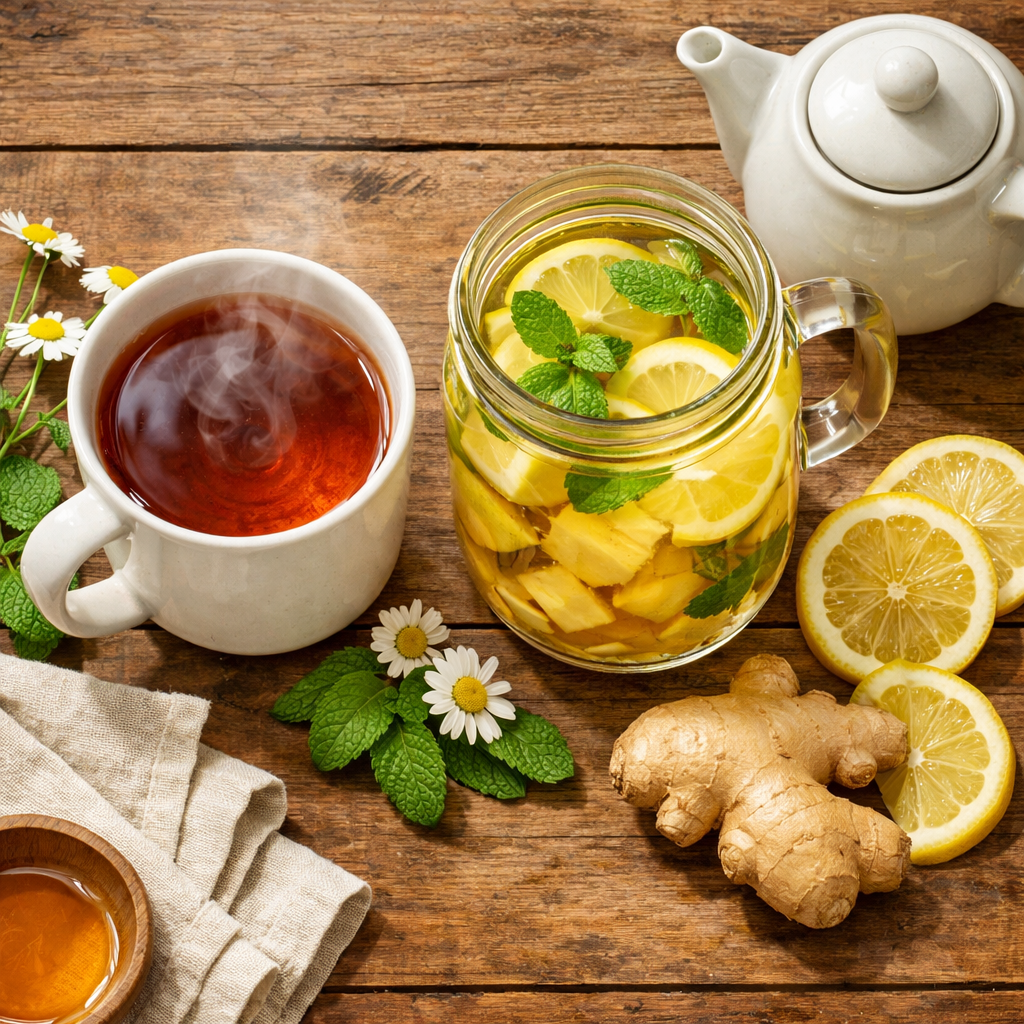
Blend ideas: lemon-ginger, ginger-mint, or ginger-hibiscus for a bright, balanced start.
Chamomile
Chamomile is golden and softly sweet with apple-like florals; it’s naturally caffeine-free and known for calming effects—great for calm focus rather than sleepiness (Senchá Tea Bar’s guide to caffeine‑free tea).
- Flavor profile: honey-apple, floral.
- Morning benefit: steadies nerves for focused work.
- Best uses: hot; perk it up with lemon or a few mint leaves.
- Brewing note: 3–5 minutes to avoid bitterness.
Use when: you need a gentle, composed morning or a pre-meeting ritual with a light protein breakfast.
Dandelion Root and Chicory
These roasted roots mimic coffee’s toasty depth without caffeine and are popular coffee substitutes (Senchá Tea Bar’s guide to caffeine‑free tea).
- Flavor profile: roasted, nutty, slightly bitter—coffee-adjacent.
- Morning benefit: bold, satisfying mouthfeel without stimulation.
- Best uses: hot with warm spices; takes milk or cream well.
- Brewing note: 5–7 minutes; strain well for a smooth cup.
Notes: Chicory can cause gas for some—test tolerance (Taste of Tea roundup of the best caffeine‑free teas). For a “half-caf feel” without tea/coffee leaves, blend roasted roots with cacao nibs for body while staying caffeine-free.
Turmeric and Adaptogen Blends
Warming spice blends—often turmeric-forward with cinnamon or ginger—can feel grounding and steady. Many adaptogen-based blends are formulated to be truly caffeine-free while promoting calm focus (UMRI guide to non-caffeinated teas for focus).
“Adaptogen” definition: Adaptogens are plant compounds traditionally used to help the body adapt to stress. While not stimulants, certain blends (such as turmeric, ashwagandha, and tulsi) are formulated to support calm focus and steady energy as part of a daily ritual without caffeine (UMRI guide to non-caffeinated teas for focus).
- Flavor profile: earthy, gently spicy; turmeric brings golden color.
- Morning benefit: grounded, sustained warmth.
- Best uses: hot with milk; excellent as a prepped concentrate.
- Brewing note: 5–7 minutes; whisk with milk for a creamier cup.
Quick “golden tea” concentrate: Simmer 4 cups water with 2 tsp turmeric, 1 tsp ginger, cinnamon stick, and orange peel 10 minutes; strain. Store chilled up to 4 days. Reheat a half-cup concentrate with milk or water for instant morning mugs.
Fruit and Spice Blends
Fruit teas combine dried fruits and peels for bright, juicy cups that also brew beautifully iced (Taste of Tea roundup of the best caffeine‑free teas).
- Flavor profile: citrusy, berry, or apple-spiced.
- Morning benefit: light, hydrating refreshment.
- Best uses: iced for commute or gym bottle; hot in colder months.
- Brewing note: 5–7 minutes hot; 6–12 hours cold-steep.
Examples: lemon-ginger, orange-spice, berry-mint. Budget-friendly bagged versions make easy entry points.
How to Pick Your Morning Herbal Based on Effect
Choose by outcome, then flavor. For bright alertness, pick mint or citrus-forward tisanes. For warmth and “hug in a mug,” go with spices, roots, or adaptogen blends. For calm stability, reach for chamomile and softer florals; rotate 2–3 varieties to find your groove (Elemental Wellness explainer on herbal vs regular tea). Whatever you choose, pair it with a protein-forward breakfast to stay satisfied.
- Need crisp focus? Peppermint; hibiscus with citrus.
- Need steady warmth? Ginger; turmeric/adaptogen blends.
- Want coffee-like comfort? Dandelion/chicory; spiced rooibos.
| Tea | Flavor | Morning Effect | Best As |
|---|---|---|---|
| Peppermint | Cool, minty | Clear, focused | Hot or iced |
| Hibiscus | Tart, fruity | Bright, hydrating | Iced |
| Ginger | Spicy, warming | Grounded, steady | Hot |
| Rooibos | Smooth, honeyed | Comforting, calm | With milk |
| Dandelion/Chicory | Roasted, toasty | Bold, coffee-like | Hot with milk |
| Chamomile | Floral, apple-honey | Calm, steady focus | Hot |
Brewing Basics for Consistent Flavor
- Use about 1 teaspoon loose leaf (or 1 bag) per 8 ounces of water; adjust to taste (Elemental Wellness explainer on herbal vs regular tea).
- Cover the cup or teapot during steeping to retain volatile aromatics, and use a timer for repeatability (Elemental Wellness explainer on herbal vs regular tea).
- Hot brew steps:
- Boil fresh water. 2) Add herbs (1 tsp/8 oz). 3) Cover and steep: 3–5 minutes for light florals/mints; 5–7 for roots/spices. 4) Strain, sweeten if desired, and pour into a preheated thermos.
- Cold brew steps:
- Use 2 tsp herbs per 8 oz cold water. 2) Refrigerate 6–12 hours. 3) Strain and bottle. 4) Add citrus or mint before serving.
Thermos-to-go tip: Preheat your thermos with hot water for 2 minutes, dump, then add your brewed tea to keep it warm through the commute.
Pack your tea
- For hot drinks: wide-mouth vacuum thermos; leave 1 inch headspace to prevent leaks.
- For iced: a bottle with a built-in infuser for cold-steeping overnight.
- Keep a small spice tin (cinnamon, orange peel) in your Meat Recipe Box Lunch/Trip/Sport Box for on-the-go flavor tweaks.
Budget and Sourcing Tips
Start affordably, then branch out. A home-brew roundup lists mainstream bagged blends around $3–$9—Stash Lemon Ginger ($3.95), Twinings Peppermint ($3.72), and Tazo Organic Spicy Ginger (~$8.25) (Realizing Home price snapshot of popular herbal teas). Many Celestial Seasonings herbal varieties run roughly $5.39–$10.79, with single blends often starting near $5.49 (Celestial Seasonings herbal tea collection).
- Specialty functional or coffee-alternative blends typically land $10–$15+ per canister or box.
- Buy samplers first to find flavors you’ll finish.
- Prefer visible pieces of herbs/spices for better re-steeps and potency.
- Store airtight, away from light and heat; label jars with steep times.
Pairing Herbal Mornings with Recipe Boxes
- Lunch Box: peppermint or hibiscus iced alongside an air fryer chicken breakfast or a slice of one-pot casserole.
- Trip Box: a thermos of spiced rooibos or dandelion-chicory to sip with portable breakfast bakes.
- Sport Box: ginger or turmeric blends for warm-up hydration with protein-forward snacks.
Pro tip: Batch-brew 2–3 quarts on Sunday. Portion into grab-and-go bottles and label by effect—Bright (mint/citrus), Warm (ginger/turmeric), Calm (chamomile/rooibos).
Frequently asked questions
Are herbal infusions truly caffeine-free or just decaf?
Most herbal infusions (tisanes) are naturally caffeine-free because they don’t use Camellia sinensis tea leaves; decaffeinated tea starts with real tea and can retain trace caffeine (Senchá Tea Bar’s guide to caffeine‑free tea).
Which herbal teas feel most like coffee without the caffeine?
Roasted dandelion root and chicory give a bold, coffee-like flavor and mouthfeel. For a creamier cup to pack in a Meat Recipe Box Lunch or Trip Box, try spiced rooibos with vanilla or cinnamon to mimic latte comfort without the buzz.
How long should I steep herbal tea for morning clarity?
Start with 3–5 minutes for light, aromatic blends like peppermint or chamomile, and 5–7 minutes for roots and spices like ginger or dandelion. Cover your cup or travel mug while steeping to preserve aroma (Elemental Wellness explainer on herbal vs regular tea).
Can herbal teas help with digestion and steady energy?
Yes—peppermint, ginger, and chamomile are often used for digestive support and calm focus, which can translate into steadier morning energy, alongside the alertness that comes from good hydration (UMRI guide to non-caffeinated teas for focus). They pair well with a protein-forward Meat Recipe Box breakfast.
Any cautions or side effects with common morning herbs?
Cutting caffeine can cause brief headaches or fatigue as you adjust. Chicory may cause gas for some people (Taste of Tea roundup of the best caffeine‑free teas), and decaf teas can still contain trace caffeine (Senchá Tea Bar’s guide to caffeine‑free tea).