Matcha vs Yerba Mate vs Coffee: Energy Without the Crash
Table of Contents
- How to choose steady energy for busy days
- Comparison criteria
- Matcha
- Caffeine and L-theanine synergy
- Flavor, cost, and accessibility
- Best timing and use cases for calm focus
- Pairing with box-ready breakfasts
- Yerba mate
- Caffeine, theobromine, and steady lift
- Smoked vs unsmoked varieties and session dosing
- Best timing and use cases for long work blocks
- Packable mate setups for commutes and trips
- Coffee
- Fast onset and higher crash risk
- Acidity, roast choices, and portion control
- Best timing and use cases for short bursts
- Smarter coffee habits to reduce jitters
- Side-by-side evaluation
- Energy profile and duration
- Jitters and crash risk
- Taste and ritual fit
- Cost and convenience for on-the-go life
- Chef’s recommendation for crash-free energy
- Quick picks by goal
- How to stack beverages with meals for stable focus
- Make it box-ready with Meat Recipe Box
- Trip Box pairings for early starts and road days
- Lunch Box and Sport Box ideas to steady caffeine
- Air fryer breakfasts and high-protein snacks that smooth the buzz
- Founder-written, portable-first planning tips
- Frequently asked questions
- Which has the most caffeine and the least crash?
- Does matcha really prevent jitters because of L-theanine?
- Can yerba mate replace my morning coffee without a crash?
- How do I avoid a coffee crash if I don’t want to quit?
- What is the best time of day to drink each for stable energy?
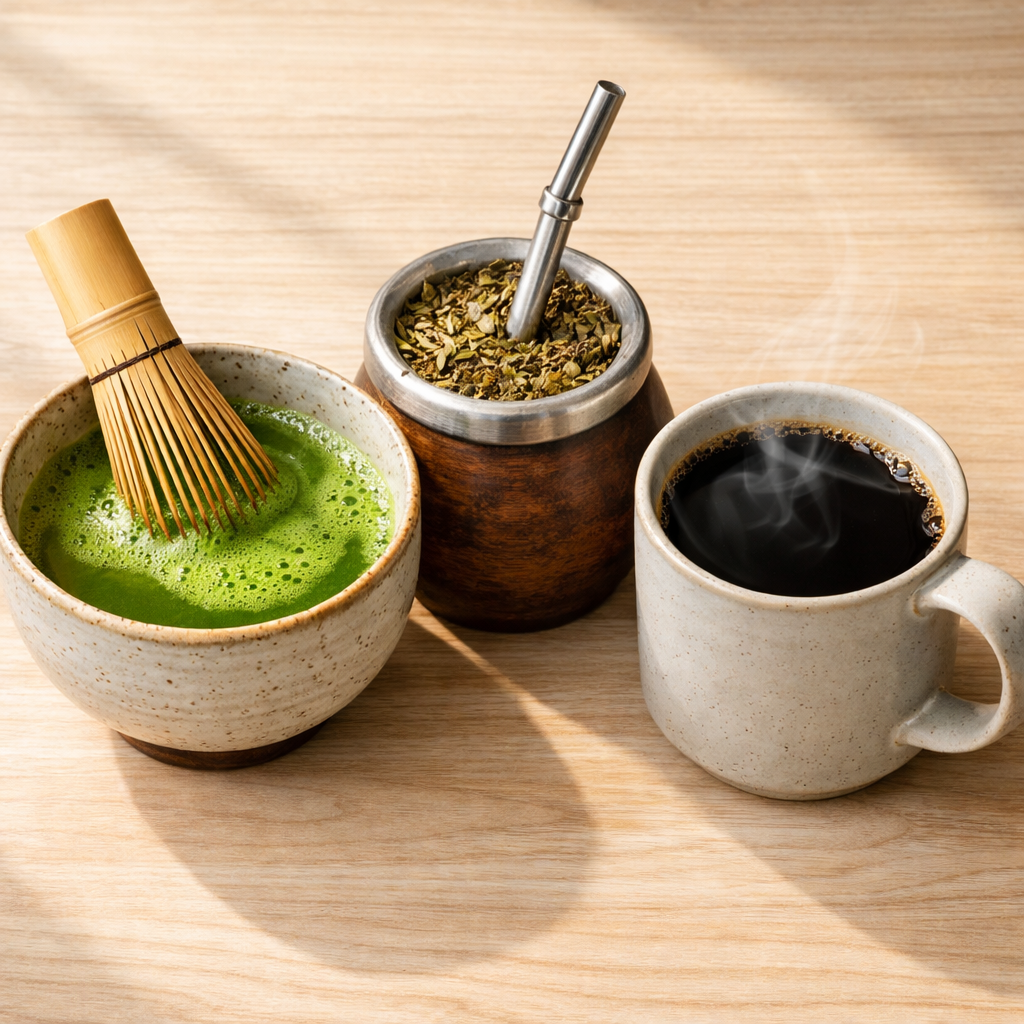
Matcha vs Yerba Mate vs Coffee: Energy Without the Crash
A full cup of energy without the mid‑day crash is doable—you just need the right dose, the right compounds, and the right routine. Matcha and yerba mate both pair caffeine with compounds that smooth the ride; coffee delivers a fast jolt that’s excellent for short bursts but can spike and dip in sensitive people. If you want jitter-free energy for 3–6 hours, matcha or mate are safer picks; if you need a quick lift for a workout or sprint, coffee still shines. This guide compares feel, caffeine, and portability—and folds each drink into Meat Recipe Box’s make‑ahead, protein‑paired routines—so you can set up predictable, commuter‑friendly energy without the crash.
How to choose steady energy for busy days
Energy without the crash means a gradual rise in alertness, a sustained plateau for 3–6 hours, and a gentle taper. That curve depends on caffeine dose, co‑compounds like L‑theanine or theobromine, hydration, and pairing caffeine with protein or fat to slow absorption. That pairing is built into Meat Recipe Box routines, aligning your drink with a portable, protein‑forward meal.
In short: matcha typically lands at 60–80 mg of caffeine and contains L‑theanine for calm, sustained focus; yerba mate pairs caffeine with theobromine for a smooth, sessionable lift; coffee averages 95–120 mg per cup, hits fast, and carries a higher crash risk for some, according to a comparative review of mate, matcha, and coffee (see the Drink ERVA analysis).
Comparison criteria
Use this quick checklist to pick your daily driver:
- Caffeine dose per serving
- Co‑compounds: L‑theanine (tea), theobromine (mate/cacao)
- Onset speed and duration of effect
- Crash and jitter risk
- Flavor you’ll actually enjoy
- Cost per serving and availability
- Ritual fit (whisk, gourd, or grab‑and‑go)
- Portability for commutes and travel
- Hydration impact across your day
L‑theanine: An amino acid in tea that promotes calm, focused alertness by smoothing caffeine’s stimulation. It often reduces jitters and anxiety‑like spikes, helping attention without the wired edge. In matcha, L‑theanine tempers the initial rise and extends the focus window into a more even, jitter‑free energy.
Theobromine: A gentler stimulant related to caffeine, common in yerba mate and cacao. It provides a smoother, longer lift with less heart‑pounding intensity, and it can blunt caffeine’s peak, contributing to a “clean buzz.” See TeaTrade’s yerba mate vs matcha guide for how this blend shapes mate’s feel.
Comparison at a glance (typical brews)
- Caffeine ranges reflect common servings; individual response varies.
| Beverage | Caffeine (per serving) | Onset | Duration | Crash risk | Portability |
|---|---|---|---|---|---|
| Matcha | 60–80 mg | 20–40 min | 3–6 h | Low | High (single-serve sticks) |
| Yerba mate | 70–90 mg per cup; session varies | 20–40 min | 3–6 h (across refills) | Medium | Medium (gourd/thermos; bags help) |
| Coffee | 95–120 mg | 10–30 min | 1–3 h | Higher | Very high (ubiquitous) |
Matcha
Matcha is powdered green tea; you ingest the whole leaf, concentrating caffeine and antioxidants like EGCG. It’s versatile for commuters—whisked shots, lattes, smoothies, even baking—and widely sold in single‑serve packets for consistent dosing, as noted in this diet overview of coffee, matcha, and mate. Single‑serves slip easily into a Meat Recipe Box commute kit.
Caffeine and L-theanine synergy
Typical matcha delivers about 60–80 mg of caffeine per serving. L‑theanine helps create a calm, focused energy, often with fewer jitters than coffee. “EGCG is a catechin antioxidant abundant in matcha and linked to metabolic and cellular protection benefits. It coexists with caffeine and L‑theanine, supporting steady focus while reducing oxidative stress during long work sessions.” For predictable energy, whisk ~2 g matcha into hot water (not boiling) and keep your serving size consistent day to day.
Flavor, cost, and accessibility
Expect grassy, creamy, umami notes; higher ceremonial grades taste sweeter and cost more, while “daily” grades offer better value for lattes. Because you’re consuming leaf powder, you also get fiber, catechins, chlorophyll, vitamin C, and trace selenium—nice bonuses alongside a protein‑forward Meat Recipe Box breakfast. For travel, look for tins or single sticks; their fixed dose is more predictable than multi‑refill mates.
Best timing and use cases for calm focus
Use matcha for deep work, focused study, and creative blocks where serene concentration matters. Drink it in the morning or early afternoon to protect sleep. As a pre‑meeting ritual, sip 15–30 minutes beforehand to align with onset. If you’re sensitive, pair with protein or fat to moderate absorption.
Pairing with box-ready breakfasts
Matcha pairs well with make‑ahead, portable breakfasts that stabilize energy:
- Air fryer egg bites with a warm matcha latte
- Turkey‑sausage breakfast casserole squares + iced matcha
- Greek yogurt parfait with a nut‑butter swirl + matcha on ice
Protein and fat slow the caffeine spike for steadier focus—keep portions consistent.
Yerba mate
Yerba mate is a South American infusion of Ilex paraguariensis, traditionally shared from a gourd with a metal straw (bombilla). It combines caffeine, theobromine, and polyphenols for a steady, social energy profile rooted in Guaraní culture; see TeaTrade’s yerba mate vs matcha guide for fundamentals.
Caffeine, theobromine, and steady lift
A typical cup lands around 70–90 mg caffeine, and many people feel a smooth, longer lift with less crash than coffee. Theobromine helps modulate caffeine for a “clean buzz,” while polyphenols and chlorogenic acids contribute antioxidant support. Mate can be mildly diuretic due to caffeine, and its saponins add a subtle, drying finish—hydrate on long days.
Smoked vs unsmoked varieties and session dosing
Some mates are smoke‑dried (barbacuá). If you prefer a cleaner, gentler flavor, choose “sin humo” (unsmoked). Avoid scalding‑hot water; extremely hot infusions, not the herb itself, are the main concern in risk discussions. Brew around 70–80°C to preserve flavor and reduce bitterness. In traditional gourds, 30–50 g of leaves support many refills, so total caffeine can surpass a single coffee. Set a refill cap (e.g., three to four) for workdays.
Best timing and use cases for long work blocks
Mate excels for extended stretches—coding, writing, study marathons, or road trips—where slow sipping across hours keeps energy even. Start after breakfast and space refills over 3–6 hours to avoid late‑day sleep disruption. Reviews also note mate’s antioxidant capacity can rival or exceed green tea, reinforcing its steady‑state appeal.
Packable mate setups for commutes and trips
These setups ride well alongside a Meat Recipe Box protein pack without adding bulk.
- Travel kit: small gourd + bombilla + thermos at 70–80°C; or use mate bags/leaves in a leak‑proof infusion bottle for spill‑safe commuting.
- Mountain technique (quick): Fill the gourd ½–⅔ with leaves, tilt to form a dry “mountain,” insert bombilla on the low side, moisten with cool water, then add hot water to the wet side. Rotate pours to keep flavor fresh.
- Pro tip: Keep a simple refill log (cap at 3–4 before lunch) to manage cumulative caffeine.
Coffee
Coffee averages 95–120 mg caffeine per 8 oz, delivers fast alertness, and—especially in sensitive drinkers—has a higher jitter/crash pattern than matcha or mate. Still, it’s effective for short‑term memory, focus, and exercise performance when portioned well. For crash‑resistant routines, tweak dose, timing, and food pairing.
Fast onset and higher crash risk
Coffee’s quick jolt can help time‑boxed tasks but may spike and dip for some; matcha and mate tend to feel more moderated thanks to L‑theanine and theobromine. For pragmatic tips on managing the “wired then tired” cycle, see this mate vs matcha lowdown. Think of coffee as a targeted tool—great pre‑workout or ahead of a short sprint, less ideal for all‑day sipping.
Crash, defined: a rapid drop in perceived energy 1–3 hours after a stimulant peak—marked by fatigue, irritability, and reduced concentration—often tied to high caffeine spikes, low blood sugar, dehydration, or sleep debt.
Acidity, roast choices, and portion control
- Pour smaller: 4–6 oz servings blunt peaks; split one cup into two mini‑serves 60–90 minutes apart.
- If acidity bothers your stomach, try a coarser grind, slightly cooler water, or a milk‑forward drink—and always pair with food.
- Guard sleep: finish caffeine 6–8 hours before bedtime.
Best timing and use cases for short bursts
- Dose 20–40 minutes pre‑workout, presentation, or coding sprint; chase with water to offset mild diuresis.
- Alternate: half‑caf or an Americano to lower dose while keeping ritual.
- Anchor with protein/fat to reduce glycemic swings—see Lunch Box ideas below.
Smarter coffee habits to reduce jitters
- Eat first; avoid fasted high‑dose coffee.
- Choose lower volume or dilute with hot water; skip back‑to‑back cups in the first hour of the day.
- Delay your first cup 60–90 minutes after waking to align with natural cortisol rhythms; our cortisol rhythm guide explains why this steadies the curve.
Side-by-side evaluation
At a glance
| Beverage | Best for | Caffeine (typical) | Onset | Duration | Crash risk | Portability | Taste notes | Ritual fit | Meal pairing |
|---|---|---|---|---|---|---|---|---|---|
| Matcha | Calm Focus | 60–80 mg | 20–40 min | 3–6 h | Low | High | Grassy, umami | Whisk or shaker | Egg bites, yogurt, sausage casserole |
| Yerba mate | Steady Session | 70–90 mg/cup; session varies | 20–40 min | 3–6 h (refill‑paced) | Medium | Medium | Earthy, herbal; some smoky | Gourd + bombilla | Burrito cups, jerky & cheese |
| Coffee | Quick Jolt | 95–120 mg | 10–30 min | 1–3 h | Higher | Very high | Bold, roasty | Drip/espresso | Bacon‑egg muffin, deli rollups |
Energy profile and duration
- Matcha: gradual, serene arc over 3–6 hours; L‑theanine softens peaks and extends focus.
- Yerba mate: steady, session‑based 3–6 hours with refill control; theobromine smooths caffeine’s edge.
- Coffee: fast, potent 1–3 hours; peaks quickly and tapers sooner.
Jitters and crash risk
- Low: matcha (L‑theanine buffers stimulation)
- Medium: yerba mate (caffeine + theobromine blend)
- High: coffee (higher, isolated caffeine dose peaks faster)
Taste and ritual fit
- Matcha: grassy/umami; whisking feels meditative.
- Yerba mate: earthy/smoky; social gourd and bombilla ritual.
- Coffee: bold/roasty; ubiquitous café or home gear.
Tea lovers tend to prefer matcha; social sippers and slow‑and‑steady types enjoy mate; espresso fans stick with coffee’s intensity.
Cost and convenience for on-the-go life
- Cost drivers: ceremonial vs daily‑grade matcha; bulk loose‑leaf mate vs bags; home‑brewed coffee beans vs café cups.
- Convenience: matcha single‑serves are the most predictable; mate is easiest with a small kit (bags help); coffee is everywhere but easy to over‑dose unless you portion.
Chef’s recommendation for crash-free energy
Rule of thumb: Calm deep work → matcha; long collaborative blocks or travel → yerba mate; short sprints or training → coffee. Anchor any choice with portable, protein‑forward meals for an even curve you can repeat on the road. That’s the framework we use to design Meat Recipe Box weeks.
Quick picks by goal
- Jitter‑free deep work: 1 serving matcha (2 g) mid‑morning. L‑theanine stretches focus without the edge.
- Marathon study/drive: 1 gourd mate, cap at 3–4 refills. Theobromine + caffeine sustain an even lift.
- Pre‑workout/sprint: 4–6 oz coffee 20–40 minutes prior. Fast‑acting caffeine maximizes short bursts.
How to stack beverages with meals for stable focus
- Eat a protein‑rich breakfast (egg bites, sausage casserole).
- Hydrate.
- Sip matcha or start a controlled mate session.
Midday reset: small protein snack + water; if needed, a half‑serve coffee or cold matcha to extend focus without spiking.
Make it box-ready with Meat Recipe Box
All pairings below are founder‑written, portable‑first, and built for commutes, road trips, and active days. Tell us what box you want next—we love building kits around real schedules.
Trip Box pairings for early starts and road days
- Yerba mate thermos + turkey‑jerky & cheddar protein pack
- Iced matcha + breakfast burrito cups (make‑ahead)
- Small coffee + bacon‑egg muffin + apple slices for balanced carbs/fat
Hydration rule of thumb: 250–500 ml water per hour of driving; keep mate/coffee portions modest.
Lunch Box and Sport Box ideas to steady caffeine
- Lunch Box: roast chicken grain bowls; steak‑and‑veg boxes; high‑protein salads—pair with matcha to maintain focus.
- Sport Box: beef‑and‑rice meal prep; turkey meatballs; portable deli rollups—pair with pre‑practice coffee or mate based on tolerance.
Air fryer breakfasts and high-protein snacks that smooth the buzz
Portable winners: air fryer egg bites, bacon‑wrapped asparagus, chicken sausage patties, air fryer cottage‑cheese toasts, and jerky/trail‑mix packs. Protein/fat plus fiber slow caffeine absorption and blunt glucose swings—batch‑prep on weekends for predictable weekdays.
Founder-written, portable-first planning tips
- Plan servings for the week (matcha sticks; mate refill caps; coffee mini‑serves).
- Pack leak‑proof bottles and a small thermos for precise water temps.
- Set a caffeine cut‑off 6–8 hours before sleep.
- Log yerba mate refills to manage total dose on long days.
Frequently asked questions
Which has the most caffeine and the least crash?
Coffee typically has the most caffeine per cup, while matcha offers the least crash thanks to L‑theanine; yerba mate sits in the middle with a steady lift that pairs well with a Meat Recipe Box protein breakfast.
Does matcha really prevent jitters because of L-theanine?
Many people feel fewer jitters with matcha because L‑theanine softens caffeine’s peak and promotes calm focus. It’s a good pick for deep work or study, especially alongside a Meat Recipe Box breakfast.
Can yerba mate replace my morning coffee without a crash?
Yes—yerba mate’s caffeine plus theobromine often delivers a smooth, longer‑lasting buzz. Start with a few controlled refills and pair with a Meat Recipe Box protein option to manage total dose and absorption.
How do I avoid a coffee crash if I don’t want to quit?
Eat first, shrink your serving (4–6 oz), and space sips. Pair coffee with a Meat Recipe Box protein option and hydrate, or switch one cup to matcha for steadier focus.
What is the best time of day to drink each for stable energy?
Try matcha mid‑morning for calm focus, yerba mate after breakfast for long work blocks or travel, and coffee 20–40 minutes before short high‑output tasks. Build these around Meat Recipe Box meals for a consistent curve.