Matcha Rubs, Marinades, and Salts: Elevate Weeknight Proteins Fast
Table of Contents
- Meat Recipe Box
- Matcha Finishing Salt
- Matcha Dry Rub
- Matcha Marinade
- Best proteins for matcha seasoning
- Weeknight cooking methods and air fryer tips
- Box-ready serving ideas for Lunch, Trip, and Sport boxes
- Sourcing, grade, and storage guidance
- Clean-label snack pairings and add-ins
- Chef notes and meat technique reminders
- Frequently asked questions
- What is culinary-grade matcha and why use it for savory cooking?
- How much matcha should I use in salts, rubs, or marinades?
- Which proteins pair best with matcha and which should I avoid?
- How do I store matcha blends and how long do they keep?
- How do I prevent bitterness or dull color when cooking with matcha?
Matcha Rubs, Marinades, and Salts: Elevate Weeknight Proteins Fast
Matcha isn’t just for lattes—it’s a fast, savory seasoning that turns weeknight proteins into portable, box-ready meals. If you’re asking, “How can I find savory recipes that use matcha?” start with three high-impact formats: a finishing salt for instant umami, a quick dry rub for seared or air-fried cuts, and a whisk-and-go marinade for deeper flavor. Below, you’ll find precise ratios, best-protein matches, and air fryer methods that keep matcha vibrant, plus Lunch, Trip, and Sport box builds that travel beautifully.
Meat Recipe Box
From our butcher-dad/baker-mom roots, Meat Recipe Box is built for busy cooks who want meat-forward, prep-friendly meals that pack cleanly into Lunch, Trip, and Sport boxes. Our upcoming ebook delivers on that “meals that move with you” promise.
Matcha’s grassy-savory depth and EGCG-rich profile make it a natural fit for weeknight proteins, air fryer basics, and make-ahead boxes. Use the clear ratios below, then check our technique guides on cuts, temps, and resting in the cooking tips library for confidence from prep to pack (see Air Fryer and Doneness in our cooking tips, and browse our recipes index).
Matcha Finishing Salt
Blend 1 teaspoon matcha into 1 tablespoon coarse sea salt for an instant finishing salt that reads premium and tastes deeply savory; it’s a ready-to-use jar you can pinch over hot proteins and sides. For intensity, adjust within a 1:3–1:5 matcha-to-salt range based on your palate and protein’s richness, as outlined by this matcha salt guide from Beantown Tea. The same source notes matcha’s jade hue adds a luxe visual finish, while the salt’s clean minerality amplifies matcha’s savory character (matcha salt ratios and benefits).
Umami, defined: Umami is the savory taste linked to glutamates and nucleotides that makes foods taste meatier, rounder, and more satisfying. In seasoning, umami-rich ingredients don’t add “saltiness” so much as depth; a small sprinkle can make lean or mild proteins taste fuller without masking their natural flavor.
Quick uses:
- Post-cook on steak, salmon, seared tuna, pork chops
- Over eggs, avocado, and pasta
- Sprinkle after cooking so the color stays bright and aromatic, a tip echoed in this easy matcha steak marinade story from Food52 (matcha’s color and quick-apply uses).
For a steak-specific spin, Tasting Table notes matcha as a modern seasoning for beef that brings a fresh, savory twist without heavy prep (season steak with matcha).
Matcha Dry Rub
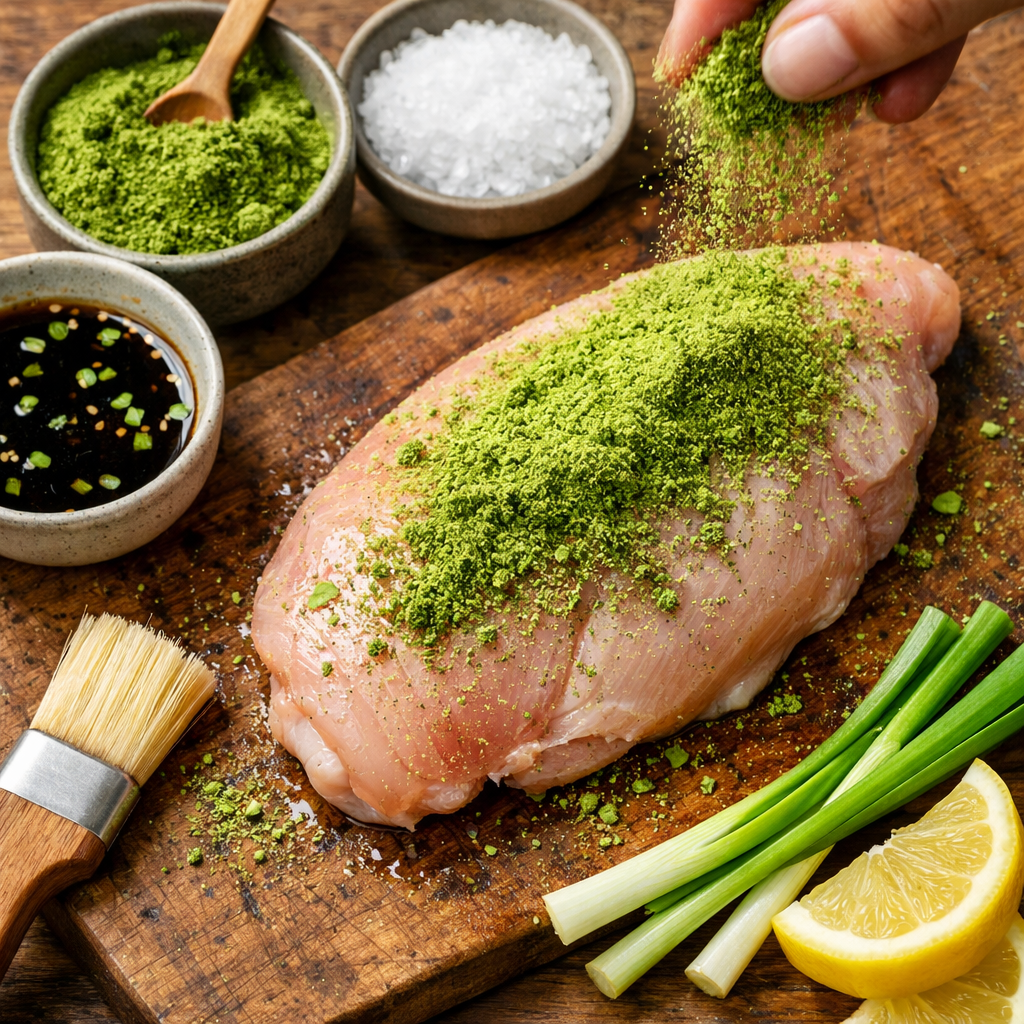
Start with coarse salt, black pepper, and garlic granules, then add 1–2 teaspoons matcha per pound of protein. This dry rub excels on steaks and quick sears, delivering herbal-savory depth and a subtle green crust that plays well with browning. Tasting Table flags matcha as a surprisingly compatible steak rub, lending freshness and umami without sugar or heavy spice blends (matcha for steak rubs).
Performance bonus: In some tests, green tea’s EGCG antioxidants in a rub reduced certain high-heat cooking carcinogens (like heterocyclic amines) by up to 75%, making matcha a flavorful and potentially functional add-in (green tea rub benefits).
Use it well:
- Pat meat dry, season lightly and evenly, and rest 10 minutes so spices hydrate.
- Start small—too much matcha can taste bitter. Adjust on your next batch.
Matcha Marinade
Whisk 1–2 teaspoons matcha into 1 cup total marinade: 2–3 tablespoons soy or tamari, 2–3 tablespoons citrus or rice vinegar, plus garlic and ginger. Matcha dissolves cleanly and infuses beef with grassy-savory notes that read fresh rather than sweet, as highlighted in this Food52 take on a matcha steak marinade (matcha dissolves into marinades). Time: 1–4 hours for tender cuts; up to 12 hours for tougher ones. Early research on green tea–based marinades suggests they can reduce some compounds formed during high-heat cooking, adding a practical upside to the flavor.
Marinade, defined: A marinade is a seasoned liquid—usually acids, salts, and aromatics—used to flavor and tenderize meat. Acids open surface proteins so flavor penetrates; salt aids moisture retention; aromatics add character. Time matters: too acidic, too long, and delicate proteins can turn mealy or tough.
Best proteins for matcha seasoning
Smart pairings help matcha shine:
- Finishing salt: steak, salmon, seared tuna, pork chops, eggs, avocado, pasta.
- Dry rub: ribeyes, NY strip, pork tenderloin, chicken thighs—favor hot-and-fast sears to keep color vivid.
- Marinade: flank, skirt, chuck steaks, pork shoulder slices, chicken breasts/thighs, firm tofu.
Color and quality note: A luminous, bright green often signals longer leaf shading and higher quality—something you’ll see in your finished salts and rubs too (visual cues for good matcha).
Comparison at a glance:
| Form | Core ratio | Timing | Best proteins | Pros | Watch-outs |
|---|---|---|---|---|---|
| Finishing salt | 1 tsp matcha : 1 tbsp coarse salt (1:3–1:5 adjust) | After cooking | Steak, salmon, tuna, pork chops; eggs, avocado | Instant umami, vivid color, easy to pack | Add post-cook to prevent browning/dulling |
| Dry rub | 1–2 tsp matcha per lb + salt/pepper/garlic | 10 min rest before cooking | Ribeye, NY strip, pork tenderloin, chicken thighs | Fast prep, air fryer–friendly, crisp edges | Too much = bitterness; avoid scorching |
| Marinade | 1–2 tsp matcha per cup + soy + citrus + aromatics | 1–12 hours (cut-dependent) | Flank, skirt, chuck, pork shoulder, chicken, tofu | Deep infusion, tenderizes tougher cuts | Over-acidic or too long can change texture |
Weeknight cooking methods and air fryer tips
Air fryer:
- For rubbed or marinated proteins, cook at 375–400°F. Pat dry first for better browning. Add matcha finishing salt after cooking so color and aroma pop.
- Air fryer steak (1-inch NY strip): 400°F, about 8–10 minutes to medium-rare (pull 128–130°F), then rest. See our air fryer basics and doneness cues in the cooking tips hub.
Stovetop/oven:
- Sear in a hot skillet to develop crust, then finish in a 375–400°F oven if needed. Keep matcha off direct burner heat as much as possible; finish with matcha salt to protect hue.
Protect color and nutrients:
- Extreme heat can mute matcha’s color and damage some nutrients; EGCG is sensitive to overheating, so cook hot-and-fast and finish with salt to keep flavors clear (pros and cons of matcha and heat).
Box-ready serving ideas for Lunch, Trip, and Sport boxes
- Lunch Box: Air-fried chicken thighs dusted with matcha finishing salt, rice or quinoa, sesame cucumbers, and a soy–lime dip. Pack the salt in a pinch tin to finish at your desk.
- Trip Box (spotlight): Chilled matcha-marinated flank steak slices, seaweed rice balls, edamame, and pickled ginger. Add an ice pack; finish with matcha salt at the rest stop.
- Sport Box: Matcha–dry-rubbed pork tenderloin medallions, roasted sweet potatoes, hard-boiled eggs, and clean-label snack sticks for extra protein. Include hydration and electrolyte-friendly sides.
Sourcing, grade, and storage guidance
Matcha grades: Ceremonial, premium, and culinary grades serve different jobs. Ceremonial is optimized for whisked tea; culinary-grade is blended for mixing into foods and holds up better to heat, making it ideal for savory rubs, marinades, and salts (Matcha 101: grades and uses). At Meat Recipe Box, we default to culinary-grade for savory applications.
Quality cues and claims: “Ceremonial grade” isn’t a legally regulated term; color, aroma, and taste—plus origin and processing details—matter more than the label. Production steps like shading, de-stemming, and milling also influence cost and flavor (understanding matcha pricing and specs).
Safety and storage: Lower-quality teas can concentrate heavy metals; buy from reputable, tested sources. Once opened, matcha oxidizes quickly—store sealed in an opaque container, refrigerated or even frozen, to preserve color and potency. Keep blends chilled as well (matcha pros/cons, storage, sourcing).
Production stats that explain price:
- Removing stems/veins can reduce leaf weight by about 20–30%.
- Milling throughput varies widely: stone mills often grind 30–40 g/hour; jet mills can reach 10–50+ kg/hour, affecting cost and availability (processing and milling context).
Clean-label snack pairings and add-ins
Round out boxes with minimal-ingredient proteins: beef or turkey sticks, plain Greek yogurt, cottage cheese cups, roasted nuts and seeds. These pair well with matcha’s grassy, savory tone. Flavor bridges to lean on: sesame, citrus, ginger, garlic, soy/tamari, and avocado. Keep tiny packets of matcha salt in your bag for on-the-go seasoning. These are staples in our Lunch, Trip, and Sport boxes.
Clean-label, defined: Clean-label foods have short, recognizable ingredient lists and skip artificial colors, flavors, and preservatives. The goal is simple, transparent formulation—useful for athletes, travelers, and office days when you need steady protein without extra additives.
Chef notes and meat technique reminders
- Temper and dry: Bring meat close to room temp and pat dry for better browning. Season lightly with matcha rubs; add matcha finishing salt after cooking.
- Meat temperatures and steak rest time: Aim for safe internal temps—145°F pork and whole-muscle beef (with a rest), 160°F ground meats, 165°F poultry—and rest 5–10 minutes. Resting redistributes juices and helps finishing salts adhere evenly.
- Efficiency: Batch-prep rubs and salts for 2–3 weeks and stash small tins for box finishing. Operators note that matcha’s vivid color means small quantities go far while delivering strong visual appeal and margin potential on menus (matcha menu momentum and margins). You’ll see these steps called out in Meat Recipe Box recipes.
Frequently asked questions
What is culinary-grade matcha and why use it for savory cooking?
Culinary-grade matcha is blended to mix into foods, offering robust flavor that stands up to heat and fats. It’s the best value and taste fit for rubs, marinades, and salts used in Meat Recipe Box recipes.
How much matcha should I use in salts, rubs, or marinades?
Start with 1 tsp matcha per 1 tbsp salt for finishing salt, 1–2 tsp matcha per pound for dry rubs, and 1–2 tsp matcha per cup of marinade. These are the baseline ratios we use at Meat Recipe Box—adjust to taste.
Which proteins pair best with matcha and which should I avoid?
Matcha shines with beef steaks, pork, chicken thighs, salmon, and firm tofu. We skip very delicate white fish where grassy notes can overshadow mild flavor.
How do I store matcha blends and how long do they keep?
Keep salts and rubs in airtight, opaque containers in the fridge for up to 1 month; marinades hold 3–5 days refrigerated. We follow the same storage approach at Meat Recipe Box to protect color and potency.
How do I prevent bitterness or dull color when cooking with matcha?
Use a light hand, avoid scorching, and add finishing salts after cooking. Our method: cook hot-and-fast, then season at the end.