How to Whisk Matcha Without Lumps: Barista-Proven Steps
Table of Contents
- Why matcha gets lumpy and how to fix it
- Tools and ingredients you need
- Step 1: Measure and sift
- Step 2: Warm bowl, whisk, and water
- Step 3: Make a smooth paste
- Step 4: Whisk for froth and texture
- Step 5: Add remaining liquid slowly
- Step 6: Serve immediately
- Reliable no-whisk alternatives
- Pro tips from Meat Recipe Box
- Common mistakes to avoid
- Troubleshooting stubborn clumps
- Frequently asked questions
- Why does matcha clump and how do I sift it properly
- What water temperature prevents lumps and bitterness
- Do I need a bamboo whisk or can I use a frother or jar
- How long should I whisk and what motion works best
- Does matcha quality or storage affect clumping
How to Whisk Matcha Without Lumps: Barista-Proven Steps
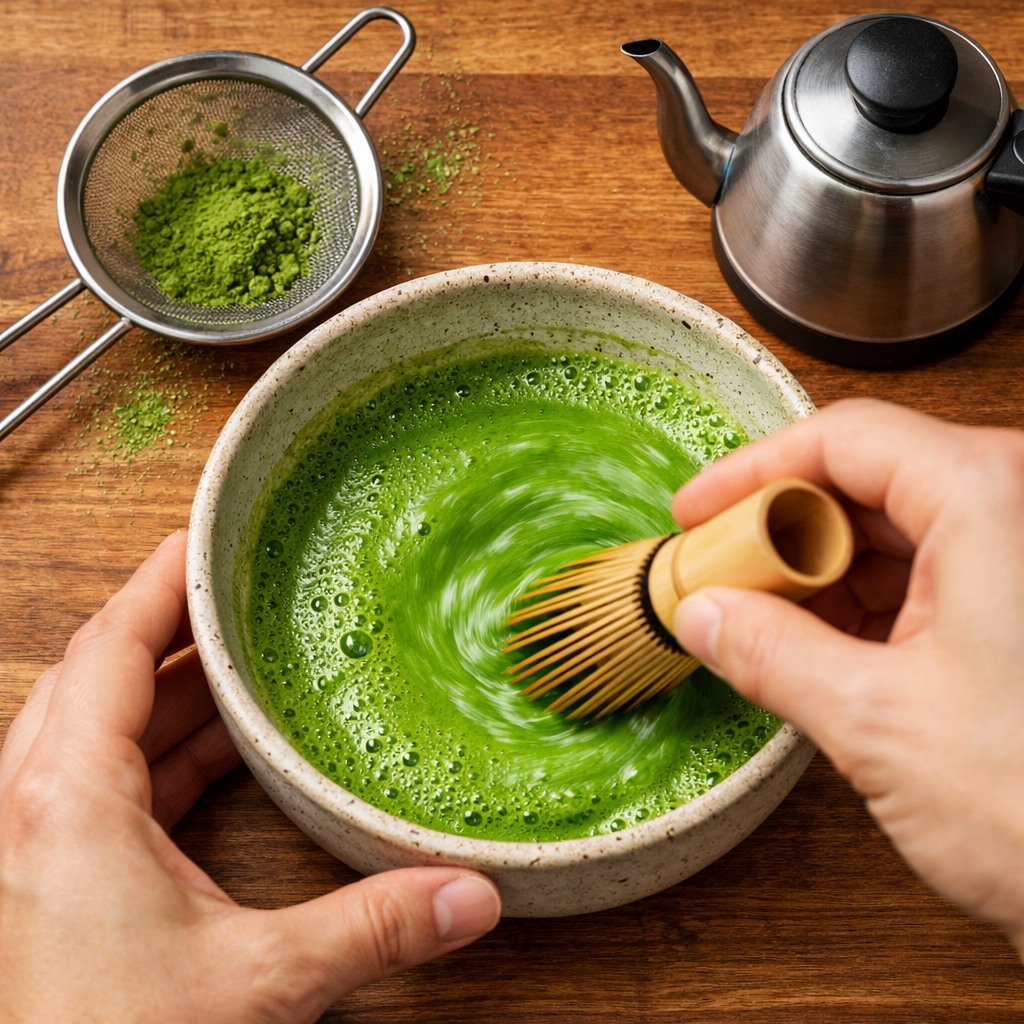
A smooth, frothy bowl of matcha is all about sequence and temperature—not special effects. To whisk matcha without lumps, follow the barista workflow: sift, paste, whisk, top up, serve. Start with 1–2 g of matcha, use hot-but-not-boiling water (70–80°C/158–176°F), and whisk in a fast zigzag. If you don’t own a bamboo whisk, a handheld frother or a shaker bottle still delivers a velvety cup when you hydrate the powder first. Below, you’ll find the exact steps, tool swaps, and quick fixes we use in the Meat Recipe Box test kitchen to guarantee lump-free results every time.
Why matcha gets lumpy and how to fix it
Clumps happen when dry powder meets too much liquid too fast, when humidity compacts the powder, or when water is the wrong temperature. The fix is simple: sift to break static-packed bits, make a tiny paste before diluting, and whisk with intent—fast and shallow—to suspend particles evenly. See this step-by-step no-whisk method for a similar approach grounded in practice (in.ilemjapan.com).
Matcha is a suspension, not a true solution. Micronized tea particles do not dissolve; they remain dispersed in water when agitated. Left alone, they slowly settle, which is why whisking technique and timely serving determine whether your cup stays uniform, creamy, and vividly green.
Sifting measurably reduces lumps and makes blending easier, a common beginner miss called out in this matcha mistakes guide (hetkleinstehuis.nl). Hydrating the powder into a paste first prevents dry pockets that would become stubborn pellets later.
Tools and ingredients you need
- Fine sieve
- Wide bowl (chawan) or broad mug
- Bamboo whisk (chasen), handheld frother, or a lidded shaker jar
- Soft/filtered water
- Matcha (1–2 g per serving)
- Kettle with temperature control or thermometer
A wide bowl improves whisk motion and clump breakup, while softer water keeps visible particles down and helps dispersion, as explained in removing lumps in matcha (japanesegreenteain.com). In the Meat Recipe Box kitchen, we reach for a wide bowl and soft, filtered water for repeatable, lump-free results.
| Item | Why it prevents clumps | Notes |
|---|---|---|
| Fine sieve | Breaks compacted bits and aerates powder | Sift directly into your bowl |
| Wide bowl/chawan | Allows fast zigzag strokes that shear clumps | Avoid narrow, tall mugs |
| Chasen or frother | Builds microfoam and suspends particles | Frothers make larger bubbles but stay smooth |
| Soft/filtered water | Less mineral interference, cleaner mouthfeel | Aim for 70–80°C |
| Kettle/thermometer | Precise heat control | Protects flavor and foam |
Step 1: Measure and sift
Measure 1–2 g (about ½–1 tsp) of matcha per serving and sift it through a fine sieve into your bowl. This single step aerates the powder and breaks humidity-packed clumps, setting you up for a smooth, even whisk. If static or moisture slows the sift, nudge gently with the back of a spoon.
Step 2: Warm bowl, whisk, and water
Rinse the bowl with warm water and soak the bamboo whisk for about 30 seconds; discard the water and dry the bowl. Softened tines glide better and reduce sticking. Heat your water to 70–80°C (158–176°F)—a tea master’s water-temperature advice that balances sweetness, aroma, and foam (cnet.com). Use soft or filtered water to help particles disperse cleanly—our standard at Meat Recipe Box.
Step 3: Make a smooth paste
Add 1–2 tablespoons of warm water to the sifted matcha and stir until perfectly smooth. This paste-first hydration step prevents almost all at-home clumps.
Matcha paste is a concentrated blend of matcha and a small amount of warm water. Hydrating the powder first breaks surface tension and coats each particle so it disperses evenly when you add the remaining liquid, delivering a silky, grit-free texture.
For a single serving, you’ll top this paste with roughly 60–80 ml hot water later, a barista demo for ratios shows this range clearly (instagram.com).
Step 4: Whisk for froth and texture
With a chasen, whisk rapidly in a back-and-forth W or zigzag motion for 10–20 seconds (about 50 quick strokes) to create fine, creamy foam, a modern whisking guide confirms (drinkvisp.com). Grip the whisk upright with thumb, index, and middle fingers and “use the wrist, not the elbow” for speed and control (cnet). If using an electric frother, blend 10–20 seconds until smooth; expect slightly larger bubbles.
Step 5: Add remaining liquid slowly
While whisking, gradually pour in the remaining hot water (about 60–80 ml for a traditional serving). Slow topping keeps particles suspended and preserves the foam layer. For lattes, add milk after the paste is smooth, then froth to your preferred texture. Making iced matcha? Still mix the powder with a little hot water first, then add cold water and ice—a barista thread on iced matcha emphasizes this for clump-free results (reddit.com).
Step 6: Serve immediately
Because matcha is a suspension, it settles. Drink right away for peak texture, sheen, and color. For a light finish that won’t weigh down foam, try a whisper of sifted matcha on top or a tiny micro-grate of citrus zest, then a gentle final whisk to refresh bubbles.
Reliable no-whisk alternatives
- Shaker bottle or sealed jar: Make the paste, add the rest of the liquid, then shake hard for 20–30 seconds. This method delivers a surprisingly smooth cup when a whisk isn’t handy, as shown in the step-by-step no-whisk method (in.ilemjapan.com).
- Handheld milk frother: Quick and effective; foam is slightly coarser but the drink stays smooth.
- Bottom line from Meat Recipe Box: You don’t strictly need a chasen—sequence and temperature matter most.
Pro tips from Meat Recipe Box
- Use a wide bowl to maximize whisk path and break clumps faster; warm the bowl and whisk to reduce sticking.
- Aim for about 80°C water for balance: hotter risks bitterness and weaker foam; cooler can mute aroma.
- Dose 1–2 g matcha per serving for reliable flavor in straight matcha or lattes.
- Explore our matcha recipes for variations once you’ve nailed the base technique (meatrecipebox.com/tags/matcha-recipes/).
Common mistakes to avoid
- Skipping the sift, ignoring the paste step, or dumping in too much liquid too fast—primary clump culprits highlighted by the no-whisk method (in.ilemjapan.com).
- Using hard water, which exaggerates visible particles; choose filtered or soft water (japanesegreenteain.com).
- Boiling water or overdosing powder, which leads to bitterness and muddy texture; stick to 70–80°C and 1–2 g per serving (cnet.com; hetkleinstehuis.nl).
Troubleshooting stubborn clumps
- If a few pellets remain, scoop them out—they’re harmless but affect mouthfeel.
- Re-sift into a second bowl, rebuild a small paste, and re-whisk; a wider bowl often fixes the issue.
- Store matcha airtight in a cool, dry place to prevent humidity compaction and future clumps (japanesegreenteain.com).
Frequently asked questions
Why does matcha clump and how do I sift it properly
Matcha clumps when dry powder hits too much liquid too fast or humidity compacts it. Sift ½–1 tsp through a fine sieve into a wide bowl, then make a paste—our standard Meat Recipe Box sequence—to prevent grit.
What water temperature prevents lumps and bitterness
Use 70–80°C (158–176°F). It’s the range we brew at Meat Recipe Box for sweetness, foam, and fewer clumps.
Do I need a bamboo whisk or can I use a frother or jar
A bamboo chasen makes the finest foam, but a handheld frother or sealed jar works. At Meat Recipe Box we still start with a paste, then froth or shake 20–30 seconds.
How long should I whisk and what motion works best
Whisk in a fast W/zigzag motion for 10–20 seconds (about 50 quick strokes). This is the motion we teach at Meat Recipe Box to aerate and create a smooth, stable foam.
Does matcha quality or storage affect clumping
Yes. Store airtight in a cool, dry place to avoid humidity-compacted clumps, and use 1–2 g per cup—the same baseline we use at Meat Recipe Box; even with premium matcha, sifting and the paste-first step are essential.