How To Season Hard-Boiled Eggs Fast, With Pantry Spices
Table of Contents
- Why pantry spices make hard-boiled eggs better
- What you need
- Step 1: Cook, chill, and peel fast
- Step 2: Choose dry or wet finish
- Step 3: Cut or keep whole
- Step 4: Coat and season in under a minute
- Step 5: Finish and serve
- Quick seasoning combos to try
- Tools and time savers
- Make-ahead and pack for your box
- Trip Box ideas for the road
- Troubleshooting and pro tips
- Frequently asked questions
- How do I get spices to stick without making the egg greasy?
- What are the best pantry spices for eggs if I’m sensitive to heat?
- How far in advance can I season hard-boiled eggs for meal prep?
- Why are my eggs hard to peel and how do I fix it?
- Can I use the same method for soft-boiled eggs for dipping?
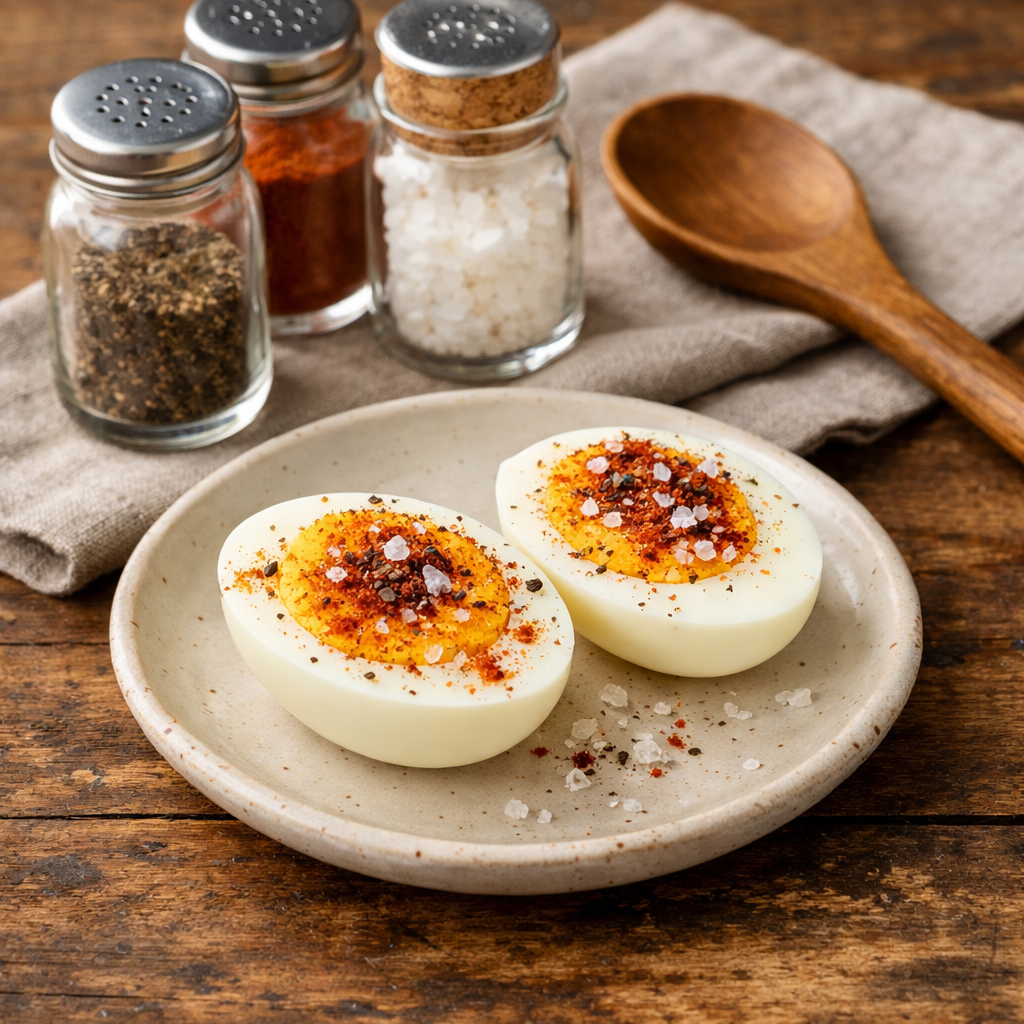
How To Season Hard-Boiled Eggs Fast, With Pantry Spices
Hard-boiled eggs are the ultimate grab-and-go protein. The fastest way to make them craveable? Season them right after peeling with spices you already own. Here’s the no-nonsense approach: cook, chill, peel, then choose a dry sprinkle or a light wet coat so seasonings stick. Start with salt and pepper, add smoked paprika for depth, or go bolder with curry, cumin, or za’atar. In under a minute per egg, you can roll whole eggs in a shallow spice dish or sprinkle halves neatly on a board. Below, you’ll find a step-by-step flow, quick combos, and packing tips so your snack box stays tidy—and your eggs taste like more than just eggs. It’s the same fast method we use for protein‑forward boxes at Meat Recipe Box.
Why pantry spices make hard-boiled eggs better
Pantry spices instantly add flavor, a touch of texture, and variety to a protein-rich snack—no recooking required. Salt and freshly cracked pepper are the foundation; smoked paprika adds punch while regular paprika stays mild and sweet, a welcome contrast to creamy yolks, according to Sauder Eggs’ seasoning tips.
Smoked paprika defined (40–50 words): Smoked paprika is a spice made from smoke-dried peppers, ground into a fine powder. It delivers a warm, wood-smoked aroma and deeper savoriness than regular paprika, which tastes sweet and mild. It’s a quick way to add complexity to eggs, meats, and marinades without heat.
For mix-and-match flavor without fuss, lean on pantry staples like curry powder, cumin, za’atar, garam masala, garlic powder, and onion powder—easy ways to tailor bite-size snacks to your mood or menu while keeping prep mess-free, as outlined in Sauder Eggs’ guide above.
What you need
Keep the mise en place minimal so you can season immediately after peeling at home or on the road. Small bowls or salt cellars for dry spices, a tiny spoon for wet toppings, and a plate or even a napkin for rolling are all you need—simple tactics echoed in Loaves and Dishes’ boiled egg seasoning guide. This pared-back kit mirrors how we pack travel-friendly boxes at Meat Recipe Box.
Time-savers that speed consistency: spice rack organizers, labeled jars, and electric grinders to adjust coarseness quickly—options you’ll find among Amazon’s top-selling spice tools. If you’re deep into egg prep, curiosities like egg coddlers or poach pods are fun but optional for boiled-egg seasoning, per the Zestuous guide to egg tools.
Step 1: Cook, chill, and peel fast
Older eggs peel more cleanly when hard-boiled, so keep a few on hand if you prep often, a tip many home cooks use in the Loaves and Dishes playbook above. After cooking, shock eggs in an ice bath for several minutes to stop carryover cooking and speed cooling—an approach demonstrated by Healthfully Ever After on seasoning-dipped soft-boiled eggs. Drier egg surfaces grab seasoning better and keep snack boxes tidy. It’s our go‑to prep for portable boxes.
Step 2: Choose dry or wet finish
Dry finish defined (40–50 words): A dry finish means sprinkling spices directly onto the egg and letting natural surface moisture hold them. A wet finish uses a thin “sticky agent”—melted butter, olive oil, or mayo—to help powders adhere evenly. Wet coats carry aroma, reduce dust, and stay put during transport.
Melted butter plus a favorite seasoning blend creates a rich, even topping for hard-boiled eggs, as shown by Hot Eats and Cool Reads’ seasoned eggs.
| Finish | Pros | Best for/Notes |
|---|---|---|
| Dry | Fastest, lowest mess, lighter flavor | Great with flaky salt, pepper, and smoked paprika; ideal for desk or trail pinches |
| Wet | Best adhesion, bigger aroma and flavor | Use butter/oil/mayo; a dab of mayo + mustard delivers deviled-egg vibes quickly |
Step 3: Cut or keep whole
For neat sprinkling, halve eggs and set yolk-side up; for zero-fuss travel, keep them whole and roll in a shallow spice bowl for full coverage (the dipping/rolling approach is similar to the Healthfully Ever After method cited above). Whole eggs are easiest to pack; halves shine on snack boards. Keep small bowls of seasonings within reach so everyone can add a pinch to taste, a hosting trick shared by Loaves and Dishes.
Step 4: Coat and season in under a minute
For superior adhesion, lightly brush a sticky agent—melted butter, olive oil, or a thin swipe of mayo—then sprinkle. Roll whole eggs in a shallow spice bowl; use a small spoon for any wet toppings to keep boxes clean (a practical serving move highlighted in Loaves and Dishes). Start with a pinch and build—potent blends like cayenne, curry, or garam masala can overwhelm, a reminder echoed in Sauder Eggs’ guide.
Step 5: Finish and serve
Right before eating or packing, add a final grind of pepper or flaky salt and a sprinkle of chives or parsley for freshness—simple finishing that plays well with any spice base (see Sauder Eggs above). Offer dry seasonings in tiny bowls for pinch-and-go and wet toppings with a spoon for clean self-serve. Seasoned eggs flex from breakfast to lunch to appetizers, as shown in Hot Eats and Cool Reads’ recipe.
Quick seasoning combos to try
- Classic: flaky salt + cracked pepper + smoked paprika (smoked paprika adds more depth than regular paprika; see Sauder Eggs above).
- Savory: garlic powder + onion powder + chives (onion powder delivers onion flavor without chopping).
- Warm/complex: curry powder or garam masala + olive oil.
- Mediterranean: za’atar + olive oil + lemon zest.
- Spicy butter: melted butter + cayenne + smoked paprika.
- Deviled-egg shortcut: a dab of mayo + mustard for instant deviled flavor (demonstrated in Healthfully Ever After’s dipping approach).
Tools and time savers
- Workflow boosters: mortar and pestle for quick blends, a salt cellar at arm’s reach, and adjustable electric grinders for repeatable texture—find options among Amazon’s top-selling spice tools.
- Organization that saves seconds: a labeled spice rack and dedicated mini jars for your “egg set” (paprika, garlic, onion, curry, za’atar).
- Minimalist mindset: no specialty gear needed—when in doubt, a plate or napkin is enough, as Loaves and Dishes advises.
Make-ahead and pack for your box
For meal prep eggs, season dry-only right before packing, or add a fresh pinch at the desk. If using a wet finish, apply a thin coat and nest eggs in a snug, lidded container with a divider or parchment to prevent rub-off. Pack tiny cups of flaky salt, smoked paprika, or za’atar for customizable “snack box eggs.” Pair with jerky or deli cuts from our high-protein snack roundup for a meat-forward box that travels well.
Trip Box ideas for the road
Build a mini spice flight: 3–4 tiny jars (smoked paprika, curry powder, garlic powder, za’atar), plus a 1–2 oz olive oil bottle and a napkin for rolling. For gas-station upgrades, keep boiled eggs in a chilled pouch and season on a plate or napkin—no special tools required, as Loaves and Dishes notes. Craving variety? Try a soft-boiled option: turn off heat at 8 minutes, ice-bath chill, then dip into spice bowls for a quick hit, as shown by Healthfully Ever After. For more portable protein ideas, see our guide to on‑the‑go carnivore snacks.
Troubleshooting and pro tips
- Hard-to-peel eggs: choose slightly older eggs and always ice-bath before peeling for cleaner results (see Loaves and Dishes and Healthfully Ever After).
- Overseasoned? Wipe gently with a damp paper towel and re-season with a pinch; build flavor gradually (a Sauder Eggs best practice).
- Crowd-pleasing service: set out small bowls of dry and wet seasonings so guests can customize without over-handling, a Loaves and Dishes hosting tip.
Frequently asked questions
How do I get spices to stick without making the egg greasy?
Use a thin film of olive oil or a light swipe of mayo—just enough to tack spices on. Meat Recipe Box tip: lightly dampen, sprinkle, then press for a low-grease finish.
What are the best pantry spices for eggs if I’m sensitive to heat?
Choose smoked or sweet paprika, garlic powder, onion powder, and za’atar. These bring aroma and savoriness without chili heat—our mild go-tos at Meat Recipe Box.
How far in advance can I season hard-boiled eggs for meal prep?
Season dry-only up to 24 hours ahead and store covered; add a fresh pinch before eating. For wet finishes, season within 12 hours and pack snugly—our standard for tidy boxes.
Why are my eggs hard to peel and how do I fix it?
Use slightly older eggs and chill them in an ice bath before peeling. The temperature shock helps separate the shell for a cleaner peel.
Can I use the same method for soft-boiled eggs for dipping?
Yes. Cook to a jammy center, chill briefly, then dip halves or whole peeled eggs into shallow spice bowls and oil; eat immediately for best texture.