How to Make Matcha Desserts With Bold, Balanced Tea Flavor
Table of Contents
- Why matcha desserts work for bold, balanced flavor
- Choose the right matcha grade for desserts
- Set up your essential matcha tools
- Step 1 Measure and sift for smooth, vibrant results
- Step 2 Bloom matcha with warm liquid for a silky base
- Step 3 Whisk properly for aeration and even dispersion
- Step 4 Incorporate into batters, creams, and doughs without overmixing
- Step 5 Taste and balance sweetness, acidity, and salt
- Protect color and flavor in no bake and baked desserts
- Flavor pairings that spotlight matcha
- Easy make ahead matcha desserts for busy weeks
- Box ready and portable matcha sweets for the Trip Box
- Meat forward pairings that complement matcha desserts
- Founder notes time saving swaps and troubleshooting
- Frequently asked questions
- What grade of matcha should I use for baking versus no bake desserts
- How do I keep matcha from tasting bitter or weak
- Why is sifting and pre blooming matcha important
- How do I prevent dull color in baked matcha treats
- Can I make dairy free or lower sugar matcha desserts without losing flavor
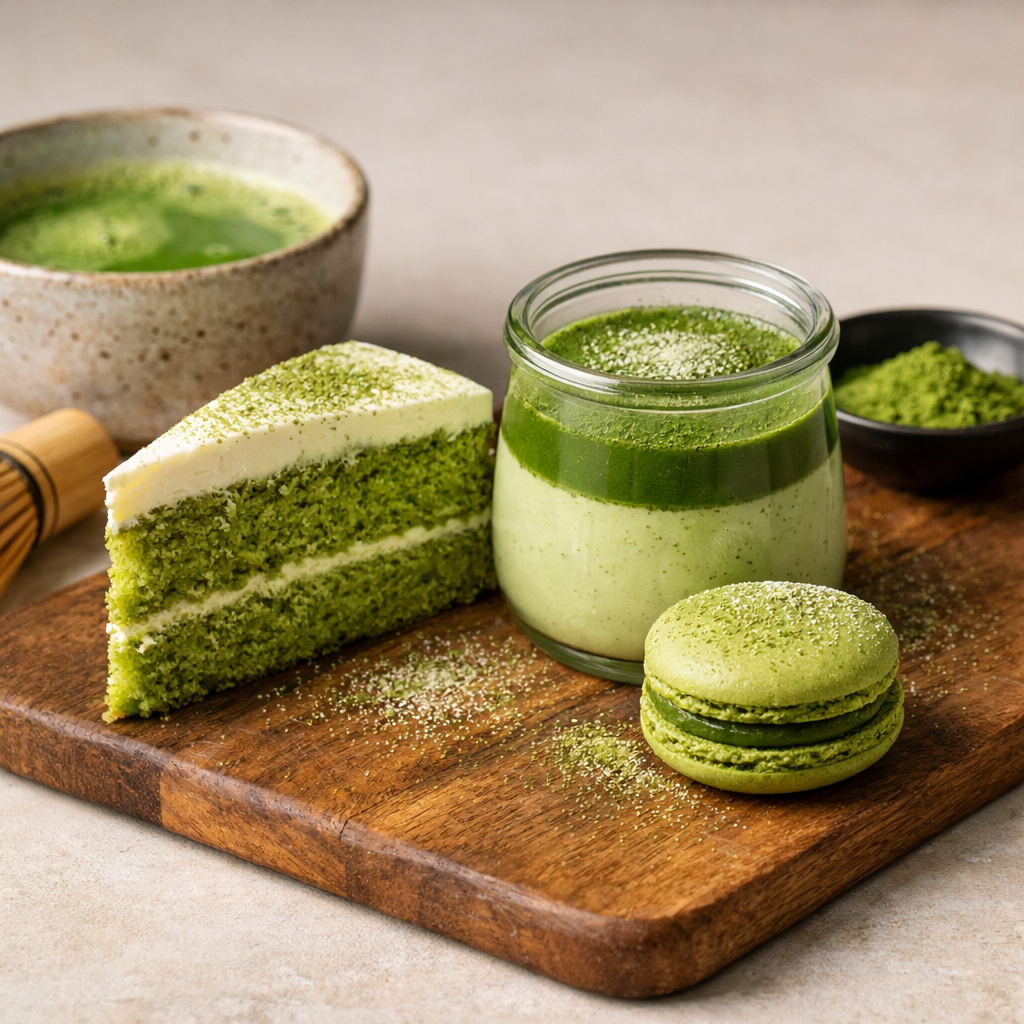
How to Make Matcha Desserts With Bold, Balanced Tea Flavor
Matcha can taste vibrant, creamy, and clean in desserts—never grassy or bitter—when you choose the right grade, prep it properly, and balance flavors thoughtfully. In this guide, you’ll learn how to make matcha desserts with bold, balanced flavor using simple tools and chef-tested steps. We’ll cover when to reach for culinary-grade matcha versus barista-grade matcha, how to bloom and whisk for silky results, and how to protect color in both no-bake matcha and baked treats. You’ll also get portable desserts for our Meat Recipe Box Trip Box approach, plus make-ahead flows that fit meal-prep weeks. From matcha cheesecake and matcha ice cream to cookies and panna cotta, you’ll get pro-level texture and tea-forward flavor—fast.
Why matcha desserts work for bold, balanced flavor
Matcha is stone‑milled powder from shade‑grown tea, whisked into water or dairy rather than steeped. “Because you drink the whole leaf, matcha delivers antioxidants and a smooth, lasting caffeine boost,” notes Barú’s ultimate matcha tool guide (see the comprehensive expert tool guide: Barú’s ultimate matcha tool guide at https://www.baru.be/en/ultimate-matcha-tool-guide). Flavor ranges from sweet‑umami to vegetal, varying by grade and freshness.
“No-bake formats preserve aromatics; baked goods benefit from robust culinary matcha.” That insight from Mizuba’s dessert tips (see Mizuba’s dessert tips at https://mizubatea.com/blogs/recipes/matcha-desserts-and-baked-goods-tips-and-tricks) tracks with our Meat Recipe Box kitchen tests. Creamy custards like crème brûlée or panna cotta showcase matcha’s roundness, while sifting guarantees a silky mouthfeel and even color, as echoed in this best matcha dessert recipes roundup (see Proportional Plate’s best matcha dessert recipes at https://www.proportionalplate.com/best-matcha-dessert-recipes/).
Choose the right matcha grade for desserts
Use culinary-grade matcha for baking. It’s selected for stronger, bolder flavor and often milled from more mature leaves, so it holds up when mixed with fats and sugar and exposed to heat. Barista-grade matcha is crafted to stay full-bodied with milk—ideal in panna cotta, whipped mousses, and latte-style creams. Ceremonial-grade shines whisked with water for delicate umami; enjoy it straight (usucha/koicha) or as a finishing drizzle on plated desserts, as explained in this perfect matcha setup at home guide (see Aprika’s perfect matcha setup at home at https://aprikamatcha.com/blogs/matcha-101/how-to-create-the-perfect-matcha-setup-at-home).
Table: Matcha grades at a glance
- Grade | Flavor & role | Best uses
- Ceremonial | Delicate, sweet-umami; most nuanced aromatics | Straight tea; finishing sauces; light gels/aspics
- Barista | Full-bodied with milk; balanced | Panna cotta, mousse, ice cream bases
- Culinary | Robust under heat; greener, assertive | Cookies, cakes, brownies, baked cheesecake
Set up your essential matcha tools
A chasen (bamboo whisk with ~100–120 tines) creates a smooth, creamy base and delicate froth, fully dispersing powder in seconds. Pre-soak the chasen in warm water for about 2 minutes to soften tines and extend its life, a small step that pays off in texture. A fine sifter (furui) eliminates static clumps; a chashaku scoop measures roughly 1 g, helpful when pre-portioning. Use a wide chawan (about 5 inches) for efficient whisking and splash control—recommendations echoed in Kettl’s tools for a perfect matcha (see Kettl’s tools for a perfect matcha at https://kettl.co/blogs/kettl-tea-blog/the-tools-for-a-perfect-matcha). These are the same tools we rely on in the Meat Recipe Box kitchen.
Step 1 Measure and sift for smooth, vibrant results
Use a scale for precision. Start with 1–2 g for light applications and increase for more intense fillings or glazes. Always sift matcha before mixing to remove clumps and maintain vivid color and a silky texture, as highlighted in this matcha dessert guide (see Proportional Plate’s matcha dessert guide at https://www.proportionalplate.com/best-matcha-dessert-recipes/).
- Sift just before whisking; static bonds can reform after several hours, so fresh sifting prevents grit.
- Dosage benchmarks (taste and adjust):
- Panna cotta (4 servings): 2–3 tsp
- Mousse (4 servings): 2–3 tsp
- Ice cream base (1 quart): 1–1.5 tbsp
- No-bake cheesecake batter (9-inch): 1–2 tbsp
- Cookies/shortbread (12–18 cookies): 2–3 tsp
- Brownies (8-inch pan): 2–3 tsp
Step 2 Bloom matcha with warm liquid for a silky base
Whisk matcha with a small amount of warm liquid—about 70°C/158°F—to form a smooth paste before adding to batters, creams, or ganache. This prevents specks, protects aromatics, and creates a uniform starting point that disperses evenly in any dessert matrix.
Blooming matcha means whisking the powder with a small amount of warm liquid (about 70°C/158°F) to form a smooth paste before mixing into your batter or cream. This gentle hydration releases aroma compounds, prevents specks, and ensures even color and flavor throughout the dessert.
Tip: Bloom into dairy for custards and ganache or into a portion of cream before folding into whipped fillings.
Step 3 Whisk properly for aeration and even dispersion
Whisk in a W- or M-motion with quick wrist action until a light froth forms; then finish with small circles to even out the surface and break large bubbles. This technique, standard in traditional prep, translates directly to smooth, creamy dessert bases. The chasen’s multiple tines accelerate dispersion and texture.
Mind the heat: use warm—not hot—liquid when blooming, and choose barista- or culinary-grade matcha for stability in mixed desserts and bakes.
Step 4 Incorporate into batters, creams, and doughs without overmixing
Fold the bloomed matcha paste gently into whipped creams, custards, and mousses to keep them airy. For baked goods, whisk matcha with dry ingredients first for even distribution, then combine with wets.
Three-step fold checklist:
- Add in thirds to avoid streaking.
- Rotate the bowl as you fold.
- Finish with broad spatula sweeps to catch the bottom.
Step 5 Taste and balance sweetness, acidity, and salt
Matcha’s pleasant bitterness needs counterpoints. Vanilla, white chocolate, and dairy or coconut milk soften edges; citrus or berries add bright top notes. Use this seasoning ladder, then chill and taste again cold (flavors mute in the fridge):
- Pinch of salt to lift sweetness
- 1–2 tsp vanilla to round edges
- 1–2 tbsp sugar (or honey/maple) to refine balance
For dietary goals, coconut milk offers dairy-free richness; banana “nice cream” keeps things light yet creamy.
Protect color and flavor in no bake and baked desserts
No-bake options—panna cotta, mousse, semifreddo, ice cream—minimize heat loss of aromatics and keep matcha front-and-center. Baked goods, however, benefit from culinary-grade’s robustness and careful heat management. Avoid overbaking to preserve green hues; sift and pre-bloom to curb specks and bitterness. For inspiration across mille crepe, basque cheesecake, tiramisu, and brownies, browse this matcha recipes collection (see Just One Cookbook’s matcha recipes collection at https://www.justonecookbook.com/matcha-recipes/).
Flavor pairings that spotlight matcha
- Soften and round: vanilla, white chocolate, dairy, coconut milk
- Brighten: lemon, yuzu, lime, raspberry, strawberry
- Deepen and ground: dark chocolate, toasted sesame, pistachio, almond, hazelnut
Quick-build ideas:
- Matcha crème brûlée or panna cotta (sifted, bloomed base)
- Coconut macaroons with matcha drizzle
- Shortbread with dried lavender and matcha–white chocolate dip
- Butter toffee topped with matcha–white chocolate
- Matcha-dipped candied orange slices for garnishing parfaits and cakes
Easy make ahead matcha desserts for busy weeks
Lean on chill-to-set desserts that portion cleanly and travel well:
- No-bake cheesecake (press-in crust), panna cotta, four-ingredient mousse
- Matcha ice cream or banana “nice cream”
- Chia pudding jars with coconut milk
Storage and transport:
- Jars with tight lids for chia/mousse (3–4 days refrigerated)
- Loaf pan ice cream for sliceable bars (wrap well; freeze up to 2–3 weeks)
- Use cooler packs and insulated sleeves for commutes; this mirrors how we pack Meat Recipe Box Trip Boxes
Weekend batch flow (technique checklist):
- Bloom matcha. 2) Blend base. 3) Chill to set. 4) Portion into jars/bars. 5) Label and date.
Box ready and portable matcha sweets for the Trip Box
Portion desserts into ramekins, sealed cups, or bar-shaped bakes. Pack in insulated carriers with ice packs for cold sets. This mirrors how we pack desserts in Meat Recipe Box Trip Boxes.
Portable picks:
- Matcha chia pudding jars with coconut milk
- Shortbread with lavender–mocha matcha dip packs
- Coconut macaroons with matcha drizzle
- Toffee shards with matcha–white chocolate
- Sliced matcha mille crepe for special trips
Meat forward pairings that complement matcha desserts
Plan a savory-to-sweet arc, as we do in Meat Recipe Box menus. Salty-umami mains—teriyaki chicken skewers or soy-ginger flank steak—set up a silky matcha panna cotta or shortbread for contrast. Rich roasted pork welcomes a tangy matcha–raspberry parfait to cut through fat. For high-protein prep, pair grilled-chicken rice boxes with portable matcha chia pots; add citrus or berry elements to reset the palate after fatty cuts.
Founder notes time saving swaps and troubleshooting
Time-savers:
- Keep barista-grade on hand for foolproof blending in creams and mousses.
- Stash a dedicated fine sifter in your utensil drawer—the same setup we use at Meat Recipe Box.
- Pre-portion matcha into 1 g packets (a chashaku scoop is about 1 g), so dessert prep moves fast.
Troubleshooting:
- Gritty texture: Sift immediately before use; an ultrafine furui stops static clumps.
- Bitter or weak flavor: Bloom at ~70°C/158°F, then balance with vanilla or white chocolate; adjust salt and sugar after chilling.
- Dull color: Don’t overbake; choose culinary-grade for heat and mix just until combined.
Tools that matter most: A chasen for texture and a quality fine sifter for consistency. Those two upgrades solve 80% of dessert issues before they start in our Meat Recipe Box tests.
Frequently asked questions
What grade of matcha should I use for baking versus no bake desserts
Use culinary-grade matcha for baking because it stays bold under heat. For no-bake desserts like panna cotta or mousse, barista-grade blends well with milk, while ceremonial-grade is best reserved for straight tea; this is the approach we use in Meat Recipe Box recipes.
How do I keep matcha from tasting bitter or weak
Bloom matcha with warm liquid, then balance with vanilla or white chocolate and a pinch of salt. At Meat Recipe Box, we also taste before chilling and adjust sweetness or acidity with citrus to keep flavors vibrant.
Why is sifting and pre blooming matcha important
Sifting removes clumps for a silky texture, and pre-blooming dissolves powder so flavor disperses evenly. It’s a small step we never skip at Meat Recipe Box because it prevents grit and keeps the color vivid.
How do I prevent dull color in baked matcha treats
Use culinary-grade matcha, mix gently, and avoid overbaking. In Meat Recipe Box tests, even folding and protecting batter from excessive heat and light keep the hue vivid.
Can I make dairy free or lower sugar matcha desserts without losing flavor
Yes—use coconut milk for richness and balance with vanilla or citrus. Meat Recipe Box favorites include banana “nice cream” and coconut-based chia puddings for creamy texture with less sugar.