How to Cook Haggis: A Step-by-Step Guide for Beginners
Table of Contents
- What haggis is and how it’s sold
- Tools and safety essentials
- Step 1: Check the pack and portion size
- Step 2: Choose your cooking method
- Oven method
- Poach or steam method
- Microwave method
- Step 3: Rest, open, and serve
- Step 4: Classic sides and quick sauces
- Make-ahead, leftovers, and reheating
- Trip Box ideas and portable serving tips
- From-scratch notes for adventurous cooks
- Meat Recipe Box meal-planning tips for haggis
- Frequently asked questions
- Is shop-bought haggis already cooked?
- What internal temperature should haggis reach?
- Can I microwave haggis safely?
- How do I prevent the casing from bursting?
- Can I freeze cooked haggis and how do I reheat it?
How to Cook Haggis: A Step-by-Step Guide for Beginners
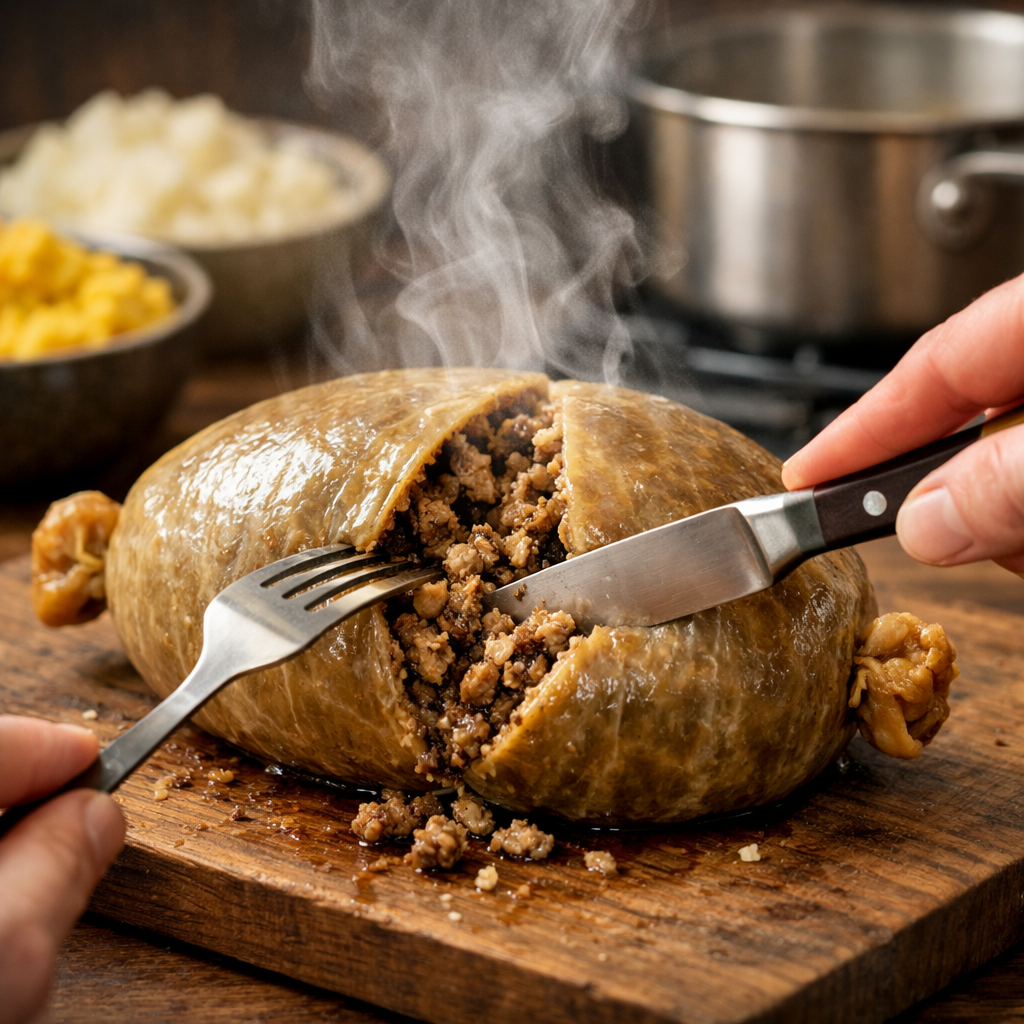
Cooking haggis is simpler than its mystique suggests. Most shop-bought haggis is already cooked; your job is to reheat it gently until piping hot, keep the casing intact, and serve with classic neeps and tatties. This step-by-step guide shows you exactly how to cook haggis in the oven, by poaching/steaming, or in the microwave—plus how to plate it beautifully, make it portable, and plan leftovers like a pro. Whether you’re prepping a Burns Night supper or weekday meal prep, follow the timings on your pack, aim for a safe 160°F (71°C) in the center, and use Meat Recipe Box’s no-fuss methods to prevent splitting. Let’s get you confident with haggis, start to finish.
What haggis is and how it’s sold
Haggis is a traditional Scottish pudding of minced offal and/or meat, oats, spices, and stock, steamed in a casing. Most shop-bought haggis is fully cooked and only needs reheating until piping hot, typically served with “neeps and tatties” (mashed turnip/swede and potatoes) according to BBC Good Food’s haggis guide (BBC Good Food).
You’ll see it sold as small “ball” haggis, catering-size logs, ready-cut slices, and occasional microwaveable packs. Cooking times vary by weight and brand—always follow the exact times printed on the pack (Haggis UK cooking instructions). Expect a savory, peppery profile with a rustic, nubbly texture from toasted oats, as noted in Scottish Scran’s tasting notes (Scottish Scran).
Keywords to know: what is haggis, shop-bought haggis, haggis ingredients, haggis neeps and tatties.
Tools and safety essentials
Must-have tools:
- Ovenproof dish and heavy foil
- Large saucepan with lid and/or a steamer basket
- Microwave-safe dish with a cover
- Tongs and a sharp knife
- Probe thermometer to verify 160°F (71°C) at the core (Scottish Gourmet USA tips)
Safety musts:
- Keep water just below a simmer for poaching/steaming—avoid a rolling boil to prevent casing bursts and waterlogging (Scottish Gourmet USA tips).
- Discard the tough outer casing before serving, and remove any metal clips before microwaving (Sous Chef’s Burns Night recipe).
Step 1: Check the pack and portion size
Cooking times vary by weight and brand; always follow the printed timings on your pack (Haggis UK cooking instructions).
Quick reference (estimates—pack guidance trumps all): a ~1 lb (≈500 g) haggis often bakes around 1.5 hours at 180°C/350°F with about 1 inch (2–2.5 cm) of hot water in the dish (Vohn’s Vittles haggis tutorial).
For catering sizes, rotate the haggis every 20–30 minutes and keep a gentle steam bath active. Typical 5 lb ranges: about 90 minutes when thawed or 2 hours from frozen; increase time if cooking multiples (Scottish Gourmet USA tips).
Step 2: Choose your cooking method
Pick the method that fits your time, texture, and equipment.
| Method | Typical time (varies by weight) | Ideal for | Risk of splitting | Moisture/texture |
|---|---|---|---|---|
| Oven (wrapped, shallow water) | ~60–120 min | Even heating, minimal fuss | Low | Juicy, steady heat, low waterlogging (Haggis UK cooking instructions) |
| Poach/steam (below simmer) | ~45–120 min | Traditional approach, large sizes | Low–moderate if gently simmered | Moist, classic crumb if not boiled (Scottish Gourmet USA tips) |
| Microwave (slices/packs) | Minutes, by portion | Speed, lunch prep, leftovers | None (no casing) | Soft crumb; finish with a quick pan-sear for texture |
Key takeaways:
- Oven: steady heat, low risk when wrapped in foil and baked in shallow water (Haggis UK cooking instructions). It’s Meat Recipe Box’s recommended method for first-timers.
- Poach/steam: traditional; keep just below a simmer to prevent bursts (Scottish Gourmet USA tips).
- Microwave: fastest for slices or microwaveable packs; remove casing, heat covered on medium, stir once or twice; follow your pack (BBC Good Food’s haggis guide).
Oven method
- Preheat to 180°C (350°F), or 160°C fan. Wrap the haggis tightly in foil, set in an ovenproof dish, and add ~2–2.5 cm (about 1 inch) of hot water up the sides.
- Bake for the time on your pack by weight; as a reference point only, ~1 lb often needs ~1.5 hours at 180°C with 1 inch water (Vohn’s Vittles haggis tutorial).
- Confirm 160°F (71°C) at the center before serving (Scottish Gourmet USA tips).
- Troubleshooting: top up the water if it evaporates so the steam bath stays active.
Poach or steam method
- Place the haggis in a steamer basket over gently simmering water or submerge it in water kept just below a simmer—never a rolling boil.
- Cook until piping hot throughout, following pack times. Rotate larger haggis every 20–30 minutes and keep the water topped up (Scottish Gourmet USA tips).
- Optional: pierce the casing a couple of times before cooking to reduce bursting risk (step-by-step from-scratch walkthrough).
- Why simmer matters: vigorous boiling can split the ends and leave you with “haggis soup” (Scottish Gourmet USA tips).
Microwave method
- Confirm the packaging is microwave-safe. Remove all outer packaging and the tough casing; slice into ~1 cm pieces and place in a covered microwave-safe dish.
- Heat on MEDIUM in short bursts, stirring once or twice. Times vary by microwave and portion size—follow your pack (BBC Good Food’s haggis guide).
- Remove any metal clips before microwaving (Scottish Gourmet USA tips).
- Meat Recipe Box tip: quickly pan-fry the hot slices to caramelize for extra flavor (Sous Chef’s Burns Night recipe).
Step 3: Rest, open, and serve
Let the haggis rest a few minutes off heat, then remove and discard the tough casing. Carve and serve with neeps and tatties. Neeps and tatties are simple mashes of turnip/swede and potatoes, the classic side for haggis. Serve piping hot or at 160°F (71°C) for safety. For context, haggis is traditionally celebrated on Burns Night, January 25 (BBC Good Food’s haggis guide).
Step 4: Classic sides and quick sauces
Neeps and tatties (mini-recipe):
- Boil peeled potatoes and turnip/swede in separate pots for 20–25 minutes until tender.
- Drain well, let steam off for a minute to avoid watery mash.
- Mash each with butter, salt, pepper; add a splash of milk or cream as desired.
5-minute sauces:
- Whisky cream pan sauce: deglaze a hot pan with a splash of whisky, reduce briefly, stir in double cream, a knob of butter, and black pepper; simmer to thicken. This is the traditional pairing (Haggis UK cooking instructions).
- Portable options: quick peppercorn sauce or a mustard yogurt sauce (Greek yogurt + Dijon + black pepper + pinch of salt).
Finishing option: after reheating, sear haggis slices in a hot pan for caramelization and sturdier texture in meal-prep containers (Sous Chef’s Burns Night recipe).
Make-ahead, leftovers, and reheating
- Slice and portion after cooking for rapid reheating. Microwave covered on MEDIUM until piping hot or 160°F (71°C); stir once if crumbled.
- Buffet/warm hold: use a slow cooker—HIGH for ~45 minutes if thawed or ~1 hour if frozen to get hot, then reduce to LOW to hold; stir occasionally to prevent drying (Scottish Gourmet USA tips).
- Keywords: reheating haggis, leftover haggis, meal prep haggis.
Trip Box ideas and portable serving tips
Trip Box builds (Meat Recipe Box-style):
- Seared haggis sliders with mustard yogurt, pickled onions, and a thin layer of tatties as a spread.
- Haggis hand pies or wraps with neeps mash; ideal with an ice pack for commutes or road trips.
Portability tips:
- Use toasted buns or sturdy wraps, line containers with a paper towel to absorb moisture, and pack sauces separately.
- Pan-sear slices after reheating to lock in shape and reduce crumbles-in-transit.
- Keywords: portable haggis, haggis sandwiches, road-trip snacks.
From-scratch notes for adventurous cooks
“Pluck” refers to the heart, liver, and lungs of the animal, traditionally minced with suet/meat, oats, spices, and stock, then steamed in a natural casing. From-scratch haggis means prepping the pluck/meats, toasting oats, and stuffing an ox bung or using a pudding basin before gentle cooking (step-by-step from-scratch walkthrough; Traditional Haggis Recipe).
Safety/process notes:
- Pierce the casing to reduce bursting; steam/poach gently, not at a boil.
- Pan-fry a spoonful of the mixture to check seasoning before stuffing (step-by-step from-scratch walkthrough).
- Vegetarian alternative: lentils, mushrooms, and rolled oats deliver surprisingly similar texture and peppery depth (Sous Chef’s Burns Night recipe).
Meat Recipe Box meal-planning tips for haggis
Three-day plan:
- Day 1: Classic plates with neeps, tatties, and whisky cream.
- Day 2: Sliders or wraps with mustard yogurt.
- Day 3: Breakfast hash—seared haggis, crispy potatoes, and fried eggs.
Batch-slice on Day 1 for fast, consistent reheats.
Events (Burns Night, tailgates): keep haggis hot in a slow cooker—bring to temp on HIGH, then hold on LOW; stash mash in thermos-style containers and pack a chilled squeeze bottle of sauce (Scottish Gourmet USA tips).
Explore more Scottish appetizers and smart meal-prep ideas in our hubs: Scottish appetizers and meal-prep.
Frequently asked questions
Is shop-bought haggis already cooked?
Yes—most shop-bought haggis is pre-cooked. At Meat Recipe Box, we simply reheat until piping hot.
What internal temperature should haggis reach?
Aim for 160°F (71°C) in the center. At Meat Recipe Box, we recommend checking with a probe thermometer.
Can I microwave haggis safely?
Yes, if the packaging specifies it. Remove the casing, slice, cover, and heat on medium in short bursts, stirring once or twice—this is the approach we use at Meat Recipe Box.
How do I prevent the casing from bursting?
Keep poaching or steaming just below a simmer, avoid boiling, and optionally pierce the casing a couple of times. That’s the simple rule we follow at Meat Recipe Box.
Can I freeze cooked haggis and how do I reheat it?
Yes—freeze in slices for easy portions. Reheat covered until piping hot or at 160°F (71°C), adding a splash of liquid if needed; it’s our go-to make-ahead approach.