How to Build Flavorful Steak Marinades and Rubs, Step-by-Step
Table of Contents
- Choose the cut and goal
- Master the marinade formula
- Build a reliable dry rub
- Mix, portion, and contain safely
- Time it right for each cut
- Prep before cooking for best crust
- Cook and finish with confidence
- Flavor templates you can copy tonight
- Garlic herb and lemon
- Soy ginger and sesame
- Red wine and rosemary
- Smoky chipotle and lime
- Coffee cacao rub
- Make ahead for busy weeks
- Troubleshooting and pro tips
- How Meat Recipe Box helps you plan
- Frequently asked questions
- What is the basic marinade ratio for steak?
- How do I choose between a marinade and a dry rub?
- How long should I marinate different steaks?
- Can I reuse marinade or turn it into a sauce?
- How do I get a great crust without burning the seasoning?
How to Build Flavorful Steak Marinades and Rubs, Step-by-Step
A great steak doesn’t need complexity—it needs a clear plan. This guide shows you how to build steak marinades and rubs step by step, choose the right method for your cut, and nail timing, safety, and searing. You’ll get a repeatable marinade formula, a reliable steak dry rub recipe, and plug-and-play flavor templates you can copy tonight. Whether you want to tenderize steak quickly or build a crackling crust, you’ll find simple decisions and confident technique to get dinner done fast. These are the same building blocks we use in Meat Recipe Box recipes and meal plans.
Choose the cut and goal
Match your method to your cut and outcome. Lean or thin steaks benefit from moisture and gentle tenderizing, while well-marbled cuts shine with a focused, high-heat crust. Dry rubs excel at surface flavor and smoke; marinades bring moisture and speed on leaner cuts, especially when time is tight, as noted in this practical guide to marinades and rubs from Finke Farms Beef (sugar also means more caramelization, so mind heat).
Marinade (40–50 words): A marinade is a liquid blend of fat, acid, salt, and aromatics that coats and lightly penetrates meat. It adds flavor and can help tenderize lean steaks. Texture depends on time and acidity—too long can make meat mushy. Always marinate in the refrigerator for safety.
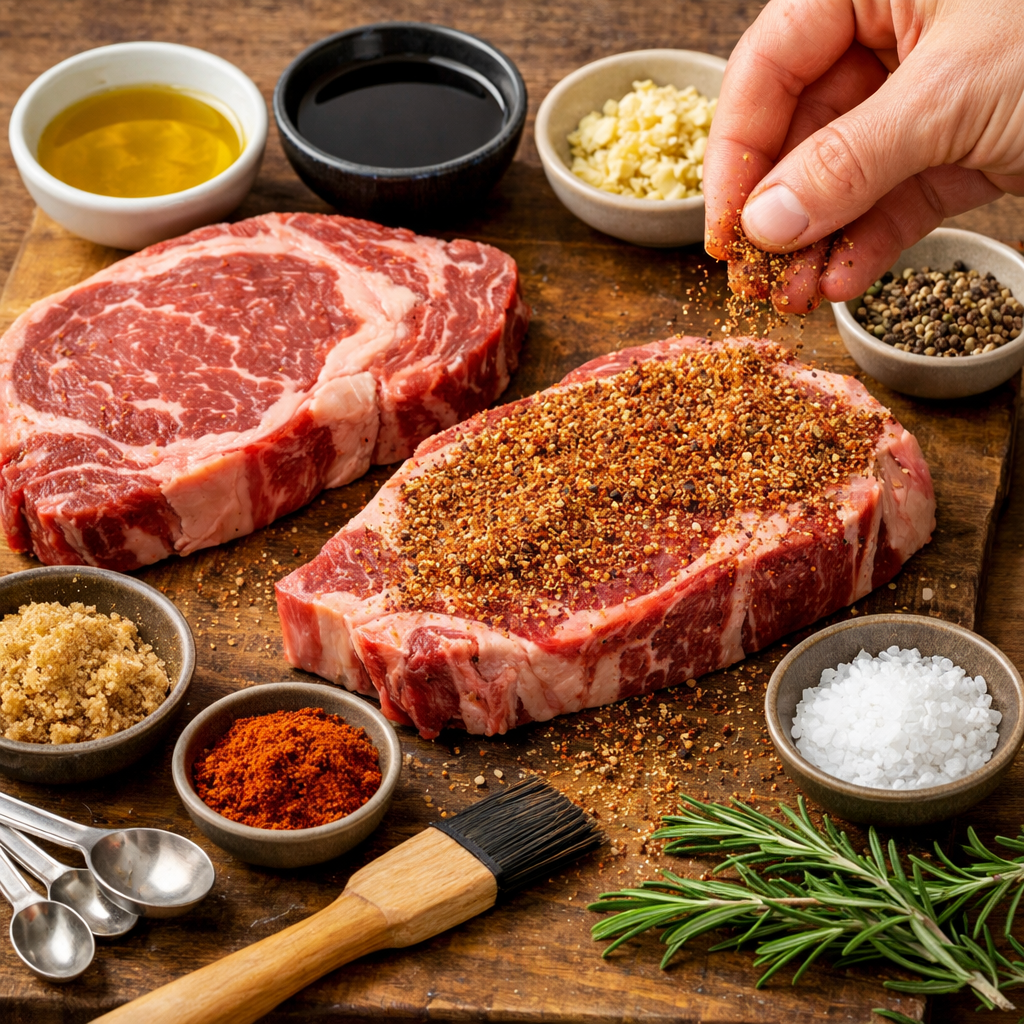
Dry rub (40–50 words): A dry rub is a mix of salt, a touch of sugar, spices, and herbs pressed onto meat to season the surface and form a crust under high heat. Sugar boosts browning and caramelization; use a lighter hand when cooking over very high heat to avoid burning.
Quick decision grid:
| Best steak cuts (examples) | Your goal | Best approach | Why it works |
|---|---|---|---|
| Flank, skirt, flat iron, top sirloin (thin/lean) | Add moisture + quick tenderizing | Marinade | Acid + salt help tenderize; flavors penetrate quickly |
| Sirloin (thicker), hanger, tri-tip | Deeper flavor without mush | Marinade (mild acid), 6–12 hours | Time extends flavor; moderate acids protect texture |
| Ribeye, New York strip, Denver (well-marbled) | Bold crust + concentrated beef flavor | Dry rub or salt-forward seasoning | Fat marbling + high heat = great sear and crust |
| Filet mignon | Gentle seasoning + butter finish | Light rub or simple salt/pepper | Delicate texture benefits from minimal intervention |
For more on marinade vs rub, tenderize steak tips, and marinating steak safety, see the marinating 101 guidance from Beef Loving Texans (use about 1/2 cup marinade per 2 pounds of beef and always refrigerate).
Master the marinade formula
A good marinade balances five elements. Use pantry staples and this ratio to stay decision-light. It’s also the base we use in Meat Recipe Box templates.
- Fat/oil carries and releases fat-soluble flavors from spices and herbs, helping them coat the steak evenly (see the straightforward how-to from Hey Grill Hey).
- Acid (vinegar, citrus, wine) brightens and can tenderize lean cuts.
- Salt (or salty components like soy/tamari) amplifies flavor and helps seasoning move into the surface.
- Aromatics (garlic, herbs, spices) define the profile.
- Optional sweetener (honey, brown sugar) balances acidity and accelerates browning.
Starter ratio per 2 lb steak (about 1/2 cup total):
- 3 Tbsp oil
- 2 Tbsp acid
- 1–1.5 Tbsp salty component (low-sodium soy or tamari)
- 1–2 Tbsp aromatics
- 1–2 tsp sweetener
Use about 1/2 cup of marinade for every 2 pounds of beef, and always marinate in the fridge, as recommended by Beef Loving Texans.
Pantry-fast builds:
- Three-ingredient weeknight marinade: oil + soy sauce + Worcestershire. For sodium control, use low-sodium soy or tamari (gluten-free); coconut aminos are sweeter and less salty, so reduce added sugar and salt. See this simple 3-ingredient approach for inspiration from Cake ‘n Knife.
Build a reliable dry rub
Dry rub basics: salt for seasoning, a touch of sugar for caramelization, spices for character, and optional heat like cayenne. Go lighter on sugar when cooking over very high heat to prevent burning, a point emphasized in Finke Farms Beef’s overview. This balance matches the rubs we standardize in Meat Recipe Box.
Try the 8:3:1:1 ratio (brown sugar: kosher salt: chili powder: black pepper/other spice). A simple, do-anything steak rub mix:
- 1/4 cup paprika
- 1 Tbsp garlic powder
- 1 Tbsp onion powder
- 2 tsp ground cumin
- 1 Tbsp kosher salt
- 2 tsp coarse black pepper
Variations:
- Coarse garlic-pepper-herb blend (a Montreal-style alternative) for classic steakhouse flavor.
- Coffee rub for steak: add finely ground coffee, smoked paprika, and a pinch of cocoa for deeper roast notes.
Mix, portion, and contain safely
- Whisk or blend marinades until emulsified so oil and acid coat evenly; portion about 1/2 cup per 2 lb steak.
- Use a resealable bag or shallow nonreactive container (glass, ceramic, food-safe plastic). Avoid metal with acidic marinades to prevent off-flavors; Clover Meadows Beef highlights nonreactive containers as a must.
- Press out excess air in bags for uniform contact.
- If you want sauce later, reserve some clean marinade before adding raw meat, or boil used marinade at a rolling boil for at least 1 minute to make it safe (per Beef Loving Texans).
Time it right for each cut
Marinating windows depend on thickness and acidity:
- Thin/lean cuts: 30 minutes–2 hours. Too much acid or time can turn the surface mushy (Finke Farms Beef).
- Hearty/thicker steaks: 6–24 hours, capping acidic blends at 24 hours (Beef Loving Texans).
Practical examples:
- Skirt or flank: 30–120 minutes for weeknights; up to 8–12 hours for maximum flavor without softening.
- Thick sirloin or hanger: 6–12 hours; up to 24 hours with mild-acid blends for deeper flavor (Carlsbad Cravings suggests this as an upper bound).
Always marinate in the refrigerator—never on the counter (Beef Loving Texans). Meat Recipe Box meal plans group timing windows by cut to simplify prep.
Prep before cooking for best crust
- Remove steak from the bag, discard marinade or heat-treat it, and pat the steak very dry to prevent steaming and encourage browning (a core tip echoed by The Real Food Dietitians).
- If broiling or grilling, wipe away excess sugary marinade to reduce flare-ups.
- For rubs, press into the meat. Let steaks sit 30 minutes at room temperature for even cooking, or refrigerate overnight for deeper flavor development.
Cook and finish with confidence
Two reliable, repeatable methods:
- Cast-iron sear + oven: Heat a dry cast-iron skillet over high for 5–6 minutes. Sear ~3 minutes per side, then finish in a 375°F oven for 5–8 minutes as a starting point (timing influenced by thickness).
- Broiler: Set the top rack about 4 inches from the element; broil 4–6 minutes per side as a guide.
We rely on these two methods across Meat Recipe Box recipes for repeatable results.
Doneness and rest:
- Use an instant-read thermometer. As a reference, target 145°F for medium-rare and 160°F for medium; then rest 10–15 minutes so juices redistribute (as guided by The Real Food Dietitians and the 3-ingredient marinade method).
Flavor templates you can copy tonight
Each template below follows the master formula and yields about 1/2 cup marinade for 2 lb steak. Choose marinade for lean cuts (flank, skirt, sirloin) and rub for marbled cuts (ribeye, strip). If swapping tamari (gluten-free) or coconut aminos (sweeter, less salty), adjust added salt and sugar.
Garlic herb and lemon
- Marinade: 3 Tbsp olive oil + 2 Tbsp lemon juice + 1 Tbsp low-sodium soy or 1 tsp kosher salt + 1 Tbsp minced garlic + 1 Tbsp chopped parsley and 1 tsp thyme; optional 1 tsp honey.
- Timing: 30 minutes–2 hours for thin cuts; up to overnight for thicker pieces, staying under 24 hours with acids (reinforced by Beef Loving Texans and Finke Farms Beef).
- Rub variant: lemon zest, garlic powder, parsley flakes, kosher salt, black pepper; press on and rest 30 minutes.
Soy ginger and sesame
- Marinade: 2 Tbsp neutral oil + 1 Tbsp toasted sesame oil + 1 Tbsp rice vinegar + 2 Tbsp low-sodium soy or tamari + 1 Tbsp grated ginger + 1 minced garlic clove. Swap coconut aminos for a milder, sweeter profile (see Cake ‘n Knife for soy alternatives).
- Timing: 30–120 minutes on thin cuts; 6–12 hours on thicker steaks in the fridge.
- Rub approach: sesame seeds, ginger powder, garlic powder, brown sugar, kosher salt, white pepper.
Red wine and rosemary
- Marinade: 2 Tbsp olive oil + 2 Tbsp dry red wine + 1 Tbsp low-sodium soy or 1 tsp kosher salt + 2 smashed garlic cloves + 2 tsp chopped rosemary; optional 1 tsp brown sugar to round tannins.
- Timing: 2–12 hours depending on thickness; cap acids at 24 hours total (The Real Food Dietitians; Beef Loving Texans).
- Serve with a quick pan sauce; only use reserved clean marinade or boil spent marinade for 1 minute before serving.
Smoky chipotle and lime
- Marinade: 2 Tbsp neutral oil + 2 Tbsp lime juice + 1 Tbsp low-sodium soy or 1 tsp kosher salt + 2 tsp minced chipotle in adobo + 1 tsp cumin + 1 minced garlic clove; optional 1–2 tsp honey to balance heat.
- Timing: Thin cuts 30–90 minutes; thicker 6–12 hours. Pat very dry before searing to avoid flare-ups (The Real Food Dietitians).
- Rub version: smoked paprika, chipotle powder, cumin, brown sugar, kosher salt, black pepper; press and rest 30 minutes.
Coffee cacao rub
- Rub: 2 Tbsp finely ground coffee + 1 tsp unsweetened cocoa + 1 Tbsp light brown sugar + 2 tsp kosher salt + 1 tsp smoked paprika + 1 tsp coarse black pepper; optional pinch cayenne. Sugar boosts caramelization—monitor closely over high heat (Finke Farms Beef).
- Press onto dry steaks; rest 30 minutes or refrigerate overnight for deeper flavor. Ideal for ribeye or strip where fat can carry big roast notes.
Make ahead for busy weeks
- Double marinades and freeze steaks directly in the marinade. Thaw safely in the refrigerator or submerge the sealed bag in cool water, changing the water every 30 minutes (as modeled by The Real Food Dietitians’ make-ahead approach).
- Pre-mix dry rubs and store airtight in a cool, dark place for 3–6 months. Label with date and heat level for easy reuse.
- Build portable meals by pairing marinated or rubbed steak with make-ahead sides. Browse our recipe index and weekly meal plans to turn these flavor blocks into box-ready lunches.
Troubleshooting and pro tips
Common pitfalls:
- Over-acidic or too-long marinades cause mushy texture—cap acidic marinating at 24 hours (Beef Loving Texans; Finke Farms Beef).
- Don’t marinate at room temperature; always refrigerate (Beef Loving Texans).
- Avoid metal bowls with acidic marinades; use glass, ceramic, or food-safe plastic (Clover Meadows Beef).
Quick saves:
- If marinade touched raw meat and you want a sauce, boil it for at least 1 minute at a rolling boil (Beef Loving Texans).
- Weak crust? Pat steaks drier, reduce sugar in rubs, and preheat cast iron for 5–6 minutes before a hard sear (The Real Food Dietitians).
You’ll see these reminders built into Meat Recipe Box recipe cards.
How Meat Recipe Box helps you plan
We make flavor planning decision-light. Save these templates as “building blocks,” batch-prep rubs and marinades on Sunday, and slot steaks into your week alongside make-ahead sides. For portable meals—work lunches, road trips, and game days—see our recipe index and weekly meal plans for step-by-step times, temps, and storage tips.
Frequently asked questions
What is the basic marinade ratio for steak?
Aim for about 1/2 cup marinade per 2 lb steak with roughly 3 Tbsp oil, 2 Tbsp acid, 1–1.5 Tbsp salty component, 1–2 Tbsp aromatics, and 1–2 tsp sweetener. This is the base ratio in Meat Recipe Box templates.
How do I choose between a marinade and a dry rub?
Use marinades to add moisture and quick tenderizing to lean cuts like flank or skirt; choose rubs to build a flavorful crust on marbled cuts like ribeye or strip. Meat Recipe Box recipes cue the best method by cut.
How long should I marinate different steaks?
Thin/lean cuts need 30 minutes–2 hours; thicker steaks can go 6–24 hours depending on acidity. Meat Recipe Box meal plans list timing windows by cut.
Can I reuse marinade or turn it into a sauce?
Reserve clean marinade before adding raw meat, or boil used marinade at a rolling boil for at least 1 minute to make it safe as a sauce. Meat Recipe Box recipes note when to reserve a clean portion.
How do I get a great crust without burning the seasoning?
Pat steaks very dry, preheat a cast-iron skillet until hot, and manage sugars in marinades or rubs; Meat Recipe Box recipes cue these steps, then have you sear hard and finish in the oven or on indirect heat.