How to Boil Eggs Without Cracking: Proven, Kitchen-Tested Methods
Table of Contents
- Overview and why eggs crack
- Tools and setup for stress-free boiling
- Step 1: Bring water to a steady boil or set up a steamer
- Step 2: Prep and gently lower the eggs
- Step 3: Cook to your desired doneness
- Step 4: Ice bath for easy peeling and perfect texture
- Step 5: Peel smart and store safely
- Steaming method for the most reliable no-crack results
- Instant Pot method for consistent peelability
- Cold-start then steep method for gentle heating
- Timing guide by doneness and egg size
- Pro tips to prevent cracks and stuck shells
- Troubleshooting common issues
- How we use boiled eggs in Meat Recipe Box meals
- Frequently asked questions
- Do room temperature eggs crack less than cold eggs?
- Should I pierce the large end of the egg before cooking?
- Is salt or vinegar in the water worth it?
- What if an egg cracks while cooking?
- How long can I store boiled eggs in the fridge?
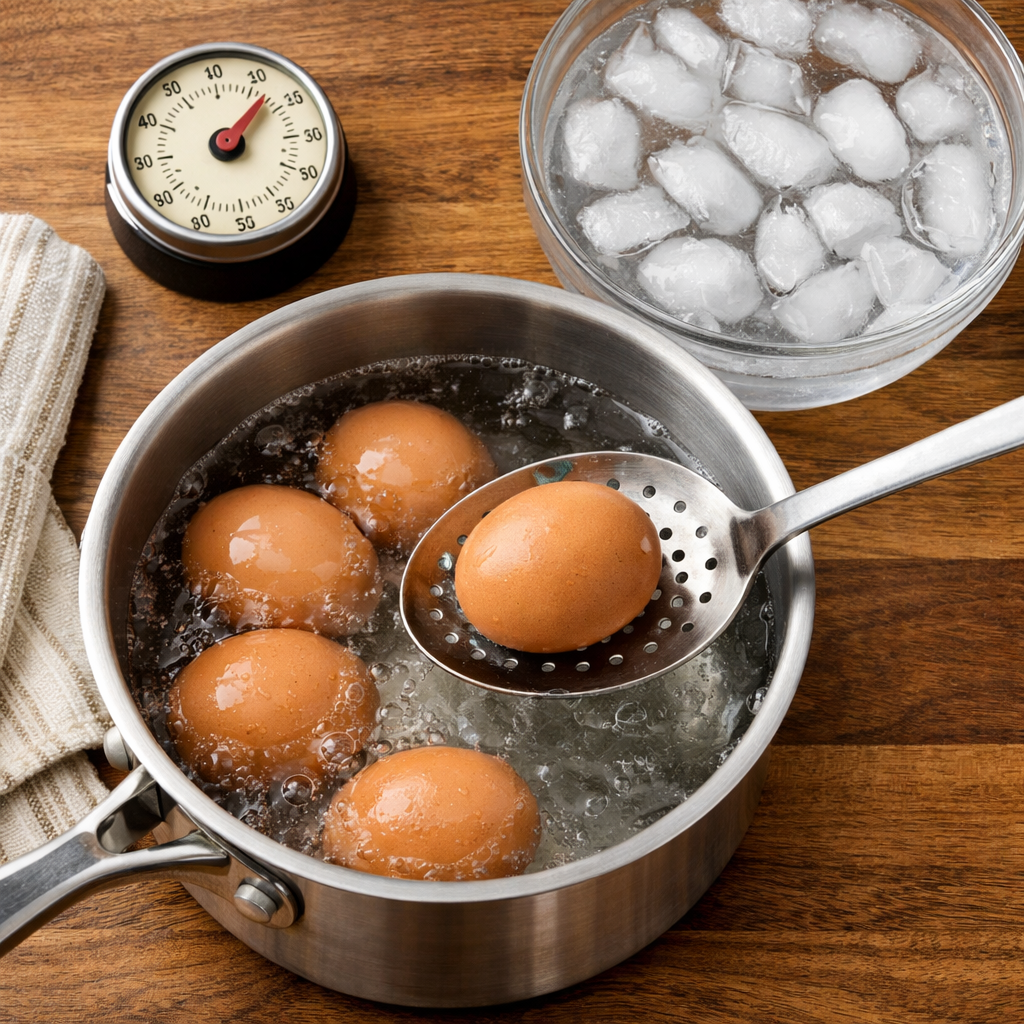
How to Boil Eggs Without Cracking: Proven, Kitchen-Tested Methods
If your eggs keep cracking or peel like a nightmare, you’re in the right kitchen. Here’s the short answer from the Meat Recipe Box test kitchen: start with room‑temperature eggs, lower them gently, cook with steady heat (steamed eggs are our most reliable no‑crack method), then move them straight to an ice bath for easy peeling. Below you’ll find our weeknight‑reliable, chef‑tested methods—stovetop steaming, classic boil, and Instant Pot eggs—plus a timing chart, pro tips, and fast troubleshooting. We’ll show you how to prevent egg cracks, why older eggs peel more easily, and how to dial in jammy to hard‑boiled yolks without guesswork. Cook a dozen on Sunday and you’re set for salads, snack boxes, deviled eggs, and protein add‑ins all week.
Overview and why eggs crack
Most cracks come down to heat and handling. Understanding the cause helps you pick the best method for your kitchen.
- Thermal shock: Cold eggs hitting very hot water can fracture as the air pocket at the large end expands. Fix: use gradual heat, steam above the water, or vent with a careful pin‑prick.
- Mechanical impact: Eggs bang around in a rolling boil. Fix: lower gently, avoid dropping, and keep the pot at a steady simmer instead of a turbulent boil.
- Freshness: Very fresh eggs peel stubbornly. Fix: use eggs that are a week or two old for easier peels.
Thermal shock is the stress created when cold eggs meet high heat; the expanding air in the large-end pocket can crack the shell. Gentle heating, steaming, or cautiously venting that pocket prevents most fractures (see Exploratorium’s egg science).
Tools and setup for stress-free boiling
A few low‑effort tools make a big difference:
- Medium pot with lid and a steamer basket set above 2 inches of water.
- Spider or slotted spoon for lowering eggs—never drop.
- Bowl for a well‑iced water bath and a reliable timer.
- Clean kitchen towel to line the pot when cooking large batches so eggs don’t clatter or bump (a simple no‑crack towel trick many home cooks swear by).
- Optional: an egg pin/needle to vent the large end (pros/cons below).
Step 1: Bring water to a steady boil or set up a steamer
- For steaming: Add about 2 inches/5 cm of water, set the basket so eggs sit above (not in) the water, and bring to a steady boil with the lid handy. Steaming heats fast, uses less water, and scales well for batches.
- For boiling only: Use plenty of water so the temperature rebounds quickly when eggs go in; one widely cited test used roughly 12 cups for 4 eggs to maintain steady heat (see Food & Wine’s multi-method test).
Step 2: Prep and gently lower the eggs
- Aim for room‑temperature eggs to minimize thermal shock.
- Lower eggs with a spider or slotted spoon—don’t drop them in.
- Cooking a big batch? Line the pot with a clean towel to cushion eggs so they won’t bang.
- If pricking: Pierce the large end with a purpose-made egg pin to vent the air pocket; some cooks find it prevents cracks, but results vary and the hole can weaken shells (see this handy egg pin guide).
Step 3: Cook to your desired doneness
- Steaming baseline: 10–12 minutes for classic hard‑boiled; 6–13 minutes covers jammy to hard.
- Keep the lid on for steam methods; for boiling, maintain a steady simmer rather than a violent boil.
Science note: Egg whites (albumen) firm near about 185°F/85°C while yolks set around 149°F/65°C; gentler, even heat helps you avoid rubbery whites and chalky yolks (see National Geographic’s egg-cooking science).
Step 4: Ice bath for easy peeling and perfect texture
Move eggs straight into an ice bath and chill at least 5 minutes. This halts carryover cooking, keeps yolks vivid, and promotes easy-peel hard‑boiled eggs (see Simply Recipes’ ice-bath guidance). If an egg leaks mid‑cook, a pinch of salt in the hot water helps the white coagulate and contain the mess.
Step 5: Peel smart and store safely
- For peeling: Slightly older eggs help. After chilling, tap to crack all over, start at the wide end where the air pocket lives, and peel under a trickle of running water to lift the membrane cleanly (see Serious Eats’ peeling techniques).
- Storage: Keep unpeeled or peeled eggs refrigerated in a covered container to limit odor transfer. Peel close to serving for best texture.
Steaming method for the most reliable no-crack results
Trust this when you want minimal cracking and easy peeling that fits busy schedules and batch cooking. It’s the default in the Meat Recipe Box test kitchen.
- Set a pot with 2 inches water and a steamer basket; bring to a steady boil. Add room‑temp eggs; cover.
- Steam 10–12 minutes for hard‑boiled; adjust within 6–13 minutes for softer yolks.
- Transfer to an ice bath for at least 5 minutes; peel as above.
Our tests align with guides reporting creamier yolks, tender whites, and excellent scalability from steam cooking (see Food52’s steaming method).
Instant Pot method for consistent peelability
For set‑it‑and‑forget‑it consistency and very easy peeling: We use this when we need hands-off batches on prep days.
- Add 1 cup room‑temp water to the pot; place eggs on the trivet/rack.
- Pressure cook on High for about 5 minutes (adjust for doneness), quick‑release, then ice bath 5 minutes.
- Expect ultra-easy peels and even cooking; remember the cooker needs time to come to pressure, so total elapsed time may rival stovetop steaming in practice (supported by AOL’s hard‑boiled test).
Cold-start then steep method for gentle heating
A classic stovetop alternative that reduces thermal shock:
- Place eggs in a pot, cover with cold water by about an inch.
- Bring just to a boil, immediately remove from heat, cover, and steep until done (use the timing chart below).
- The gradual heating helps prevent rubbery whites and can limit cracking—just mind your timer and finish with a prompt ice bath.
Timing guide by doneness and egg size
Times below are starting points for sea‑level kitchens; adjust by 30–60 seconds for very large batches or altitude. All methods assume a 5‑minute ice bath finish.
| Method | Egg Size | Doneness | Time Range (minutes) |
|---|---|---|---|
| Steam | M | Jammy | 6–7 |
| Steam | M | Soft | 7–8 |
| Steam | M | Medium | 9–10 |
| Steam | M | Hard | 10–12 |
| Steam | L | Jammy | 7–8 |
| Steam | L | Soft | 8–9 |
| Steam | L | Medium | 10–11 |
| Steam | L | Hard | 12–13 |
| Steam | XL | Jammy | 8–9 |
| Steam | XL | Soft | 9–10 |
| Steam | XL | Medium | 11–12 |
| Steam | XL | Hard | 13–14 |
| Boil (hot‑start) | M | Jammy | 6–7 |
| Boil (hot‑start) | M | Soft | 7–8 |
| Boil (hot‑start) | M | Medium | 9–10 |
| Boil (hot‑start) | M | Hard | 10–11 |
| Boil (hot‑start) | L | Jammy | 7–8 |
| Boil (hot‑start) | L | Soft | 8–9 |
| Boil (hot‑start) | L | Medium | 10–11 |
| Boil (hot‑start) | L | Hard | 11–12 |
| Instant Pot | M | Jammy | 3–4 (High, QR) |
| Instant Pot | M | Soft | 4–5 (High, QR) |
| Instant Pot | M | Medium | 5–6 (High, QR) |
| Instant Pot | M | Hard | 6–7 (High, QR) |
| Instant Pot | L | Jammy | 4–5 (High, QR) |
| Instant Pot | L | Soft | 5–6 (High, QR) |
| Instant Pot | L | Medium | 6–7 (High, QR) |
| Instant Pot | L | Hard | 7–8 (High, QR) |
Note: Egg whites firm around 185°F/85°C while yolks set near 149°F/65°C, which is why gentler methods yield tender whites and creamy centers.
Pro tips to prevent cracks and stuck shells
- Lower eggs gently with a spider; avoid dropping into a rolling boil.
- Prefer a steamer basket with water below the basket—steam is forgiving and reduces cracking.
- Choose eggs about a week old for easier peeling; finish with an immediate ice bath.
- Add a small pinch of salt to the cooking water if a shell nicks; it helps coagulate any escaping whites.
- Air fryer and Instant Pot eggs can work well, but for many kitchens a classic steam/boil is just as convenient.
Troubleshooting common issues
- Egg cracked mid‑cook: Keep going; add a pinch of salt to help the white set, then ice bath. Peel the cracked one first.
- Hard to peel: Use older eggs next time; always chill fully, crack all over, and peel under running water starting at the wide end.
- Rubbery whites: Switch to steaming or the cold‑start/steep method for gentler heat.
- Uneven doneness: Use ample water for boil methods, keep the pot covered for steam, and set a timer.
How we use boiled eggs in Meat Recipe Box meals
- Protein add‑on: Top one‑pot casseroles and chopped salads, or tuck into travel and sport meal boxes (watch for our upcoming meal‑box ebook).
- Appetizers and sides: Deviled eggs with crispy bacon bits; Scotch eggs get a crisp finish in the air fryer—a fast way to add weeknight crunch.
- Meal planning: Steam a dozen on Sunday; add to ramen bowls with leftover pork shoulder, build quick tuna‑and‑egg salads, or pack snack boxes. Subscribe to our newsletter for batch‑cooking tips—our chef develops every recipe in‑house and welcomes your questions and collaborations.
Frequently asked questions
Do room temperature eggs crack less than cold eggs?
Yes—bringing eggs to room temp reduces thermal shock, but the bigger wins are gentle lowering, steady heat, and steaming or cold‑start methods, then an ice bath. These are the steps we use at Meat Recipe Box.
Should I pierce the large end of the egg before cooking?
It can vent expanding air and sometimes prevent cracks, but results are mixed and it weakens shells. At Meat Recipe Box we rarely need it when steaming; if you try it, pierce only the large end and handle gently.
Is salt or vinegar in the water worth it?
A pinch of salt can help coagulate leaking whites if a shell cracks. We skip vinegar at Meat Recipe Box; it’s optional and not necessary if you chill promptly in an ice bath.
What if an egg cracks while cooking?
Keep cooking; the egg is safe. At Meat Recipe Box we add a little salt to set the white quickly, then ice bath and peel that egg first.
How long can I store boiled eggs in the fridge?
Refrigerate peeled or unpeeled eggs in a covered container and use within about one week. That’s the window we plan around in Meat Recipe Box meal prep.