Evidence-Backed Health Benefits of Matcha Green Tea, Explained
Table of Contents
- What matcha is and why it’s different
- Key compounds in matcha that drive benefits
- Antioxidant support and inflammation control
- Focus, calm energy and cognitive performance
- Heart health signals and cholesterol support
- Metabolism, fat oxidation and weight management
- Caffeine, tolerance and timing for busy schedules
- Safety, dosing and how to choose quality matcha
- How I use matcha in box-ready recipes
- Practical swaps to support your health goals
- Frequently asked questions
- How much matcha should I drink for benefits?
- Is matcha better than coffee for steady energy?
- Can matcha help with weight loss on its own?
- Is matcha safe to drink every day?
- What is the best time of day to have matcha?
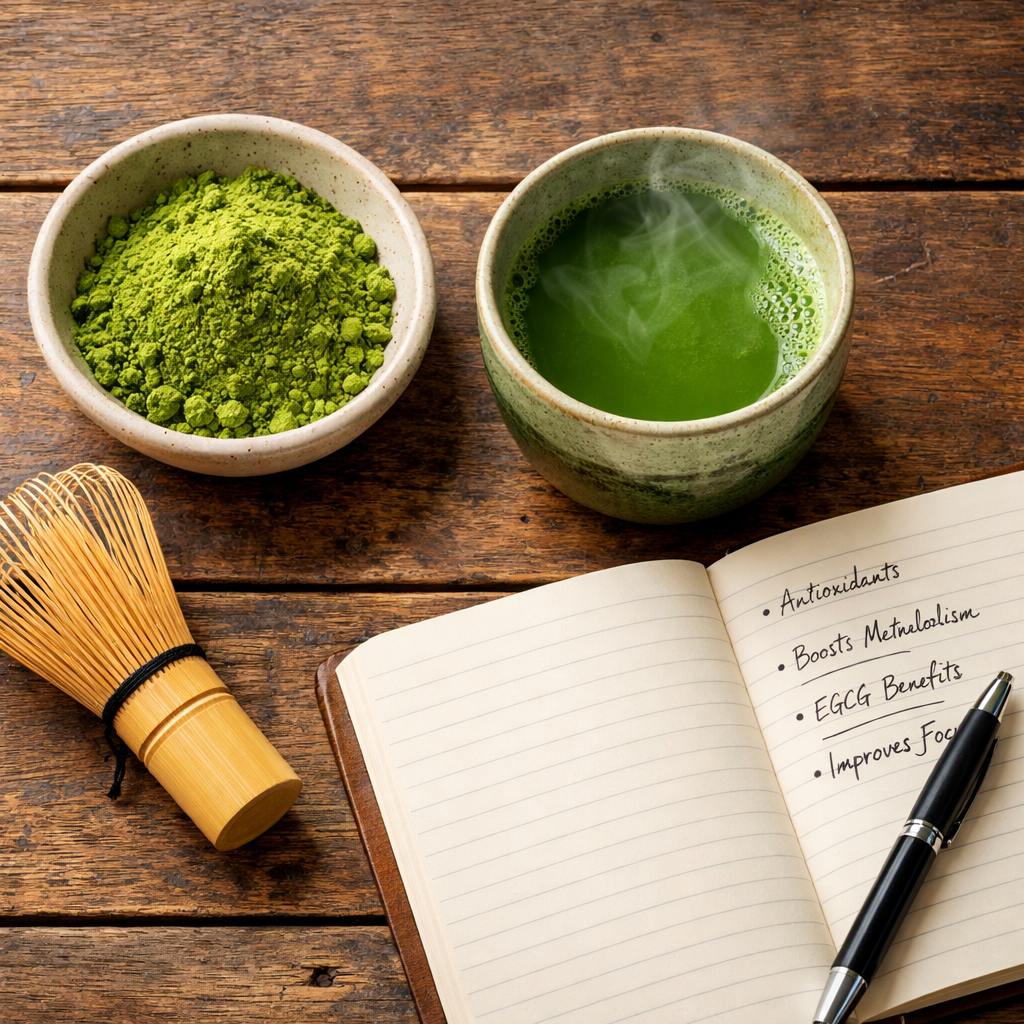
Evidence-Backed Health Benefits of Matcha Green Tea, Explained
Matcha is a finely milled green tea powder whisked into water or milk so you drink the leaf itself. That whole‑leaf format concentrates key compounds—catechins, L‑theanine, and caffeine—behind matcha’s most talked‑about benefits: antioxidant support, calmer focus, and modest cardio‑metabolic signals. In practical terms, most healthy adults can enjoy 1–2 servings per day for steady energy and general cellular support, provided they’re mindful of caffeine and individual tolerance, as outlined by a balanced overview from the Harvard Health review. For busy home cooks and commuters, matcha is simple to prep, travels well, and pairs smartly with protein for long‑lasting energy—the same approach we use when packing Meat Recipe Box meals.
What matcha is and why it’s different
“Matcha is a powdered green tea made from Camellia sinensis; you consume the whole leaf.” Because you whisk the powder into your drink instead of discarding leaves after steeping, a serving typically delivers more catechins (notably EGCG), caffeine, and L‑theanine than a standard cup of brewed green tea. Farmers shade‑grow the plants for several weeks before harvest, which boosts chlorophyll and certain amino acids—a key reason matcha’s antioxidant potential often exceeds steeped green tea, as summarized in EatingWell’s antioxidant comparison. In practice, that can mean notably higher catechin intake per cup than regular green tea when matcha is fully dissolved.
Culturally, matcha has been central to Japanese tea ceremonies for centuries, a tradition captured in the BBC overview of matcha’s origins.
Key compounds in matcha that drive benefits
Matcha’s effects trace back to a few standout bioactives. Concentrations vary by cultivar, grade (ceremonial vs. culinary), brand, and preparation, so plan to start low and adjust.
| Compound | What it is | Potential effects | Key source |
|---|---|---|---|
| EGCG (epigallocatechin gallate) | The most abundant catechin in matcha; catechins comprise roughly 90% of matcha’s polyphenols, which can be around 30% of dry weight. | Potent antioxidant activity; may help neutralize reactive oxygen species and support anti-inflammatory pathways. | NCBI systematic review |
| L‑theanine | A tea‑specific amino acid concentrated by shade‑growing. | Modulates neurotransmitters and tempers caffeine’s impact, promoting calm alertness and smoother focus. | Healthline’s matcha guide |
| Caffeine | A natural stimulant that varies with dose and grade. | Heightens alertness; in matcha, its effects are often “rounded” by L‑theanine for fewer jitters in many people. | — |
| Chlorophyll and other polyphenols | Pigments and plant compounds elevated by shading. | Additional antioxidant capacity and potential oxidative stress support. | — |
Antioxidant support and inflammation control
“Matcha’s antioxidants may help stabilize free radicals and reduce cell damage,” primarily via catechins like EGCG. In head‑to‑head lab assessments, matcha preparations have inhibited reactive oxygen species more than equivalent amounts of loose‑leaf green tea, according to the NCBI systematic review. That said, much of the strongest evidence is from laboratory and animal models; human research is growing but remains mixed on specific clinical outcomes, and reputable nutrition outlets note that matcha is not a cure‑all.
What this can mean for daily life (evidence level in parentheses):
- General cellular defense against oxidative stress (lab/human mixed)
- Support for low‑grade inflammation pathways (lab/early human)
- Potential recovery aid after exercise when used within a balanced diet (small human trials)
Focus, calm energy and cognitive performance
Calm alertness describes the signature matcha feel: L‑theanine alters how caffeine affects the brain, promoting relaxed focus, steadier mood, and fewer jitters than coffee for many people. A typical serving of matcha provides roughly 25–75 mg of caffeine—generally less than a standard coffee—and many users report more sustained, gentler energy; this pattern aligns with observations in a Prevention magazine experiment. Human trials are limited but encouraging: small randomized studies report reduced stress and slight improvements in attention and working memory after matcha or green tea intake, and a two‑month trial using 2 g/day of green tea powder in older adults improved aspects of brain function in the systematic review. In Meat Recipe Box recipes, we often pair matcha with protein to extend that steady energy.
When to drink for focus:
- Before morning meetings or study blocks
- Pre‑drive on long commutes
- 60–90 minutes before practice, workouts, or rehearsals
Heart health signals and cholesterol support
Green tea consumption has been associated with modest reductions in total and LDL cholesterol and small improvements in blood pressure across pooled analyses, which may translate to a lower risk of heart disease; see the evidence summary from The Conversation. Because matcha often delivers higher catechin exposure than brewed tea, similar benefits are plausible, though matcha‑specific randomized trials on hard cardiovascular outcomes are still limited.
Practical swap:
- Sugary latte (and pastry) → Matcha latte with unsweetened milk and a protein bite (e.g., turkey meatballs): fewer added sugars, steadier energy.
That’s the kind of smart pairing we build into Meat Recipe Box menus.
Metabolism, fat oxidation and weight management
Animal studies suggest matcha can reduce weight gain and improve glucose and lipid profiles; human research points to small, short‑term increases in fat oxidation during activity after green tea or matcha intake. The effects are modest and work best alongside calorie control and regular movement, as summarized in the systematic review. Importantly, experts advise against relying on high‑dose green tea extracts for weight loss due to safety concerns; beverages are the safer route.
Try this:
- Have a small matcha 30–60 minutes before a brisk walk.
- Swap the 2 p.m. soda for iced, unsweetened matcha.
Caffeine, tolerance and timing for busy schedules
Matcha usually contains more caffeine and L‑theanine per serving than brewed green tea but less caffeine than coffee for similar volumes. Many people find the caffeine‑plus‑L‑theanine combo yields smoother, sustained energy with fewer jitters than coffee. Timing matters: enjoy matcha in the morning or early afternoon for focus, and if you’re caffeine‑sensitive, avoid it within about six hours of bedtime.
A simple on‑the‑go schedule:
- Pre‑drive: 1 small matcha before a long commute
- Mid‑shift: 1 matcha with a Meat Recipe Box protein snack
- Pre‑workout: 1 matcha 45–60 minutes before training
Safety, dosing and how to choose quality matcha
Moderate matcha intake appears safe for most healthy adults, but individual responses vary. Rare cases of liver injury have been linked to high‑dose green tea extracts; experts generally recommend drinking tea rather than taking concentrated supplements. If you have liver disease, take medications, are pregnant, or are highly caffeine‑sensitive, speak with your clinician first.
Buying and quality checklist:
- Look for shade‑grown, vibrant spring‑green powder; reputable producers remove stems and veins before stone‑grinding.
- Ceremonial grade is typically smoother for sipping; culinary grade works well in lattes and cooking.
- Levels of caffeine and catechins vary by brand, origin, and preparation—start low and adjust.
How to start:
- Begin with 1/2–1 teaspoon (1–2 g) daily.
- Note how you feel (energy, sleep).
- If desired, increase gradually to 1–2 servings per day.
How I use matcha in box-ready recipes
Matcha shines in make‑ahead, travel‑friendly combos that pair antioxidants with protein for steadier energy.
- Trip Box: Chilled matcha‑milk thermos + beef jerky sticks + salted rice balls.
- Lunch Box: Matcha yogurt shake (Greek yogurt + matcha + milk) + chicken salad sliders.
- Sport Box: Pre‑practice matcha citrus cooler + baked turkey meatballs.
- Weekend Prep: Overnight matcha oats with whey + sliced steak bento.
Browse the Meat Recipe Box healthy drinks collection for ideas, or scan our newest Meat Recipe Box recipes to build your own box.
Practical swaps to support your health goals
- Replace a 2 p.m. soda with unsweetened iced matcha for fewer added sugars and steadier energy.
- Swap a sugary latte for a lightly sweetened matcha with milk to cut calories while keeping a café treat.
- Choose pre‑walk matcha instead of an energy drink for smoother focus and potential heart‑health support suggested by green tea meta‑analyses.
| Current habit | Matcha swap | Why it helps |
|---|---|---|
| Afternoon soda | Iced matcha + lemon | Lower sugar; gentle lift |
| Large sugary latte | Matcha latte, unsweetened milk | Fewer calories; steady energy |
| Energy drink pre‑gym | Straight matcha or matcha‑citrus cooler | Caffeine + L‑theanine; simpler ingredient list |
Frequently asked questions
How much matcha should I drink for benefits?
Start with 1/2–1 teaspoon (1–2 g) daily and adjust to tolerance; most healthy adults do well with 1–2 servings per day. In Meat Recipe Box recipes, we typically keep it to one serving and pair it with protein.
Is matcha better than coffee for steady energy?
For many, yes—matcha’s caffeine plus L‑theanine often delivers smoother, longer‑lasting focus with fewer jitters than coffee. We use that combo in Meat Recipe Box for calmer focus.
Can matcha help with weight loss on its own?
Only modestly; it may slightly increase fat oxidation, but meaningful weight loss requires calorie control and activity. We frame matcha as a supportive beverage alongside balanced Meat Recipe Box meals and movement.
Is matcha safe to drink every day?
Generally yes in moderate amounts; avoid high‑dose extracts and check with your clinician if pregnant, on medications, or caffeine‑sensitive. Our Meat Recipe Box recipes stick to beverage doses.
What is the best time of day to have matcha?
Morning or early afternoon supports focus without disrupting sleep; if you’re sensitive, avoid it within six hours of bedtime. That’s when we slot matcha into Meat Recipe Box make‑ahead kits.