Culinary vs Ceremonial Matcha: Which Works Best In Smoothies?
Table of Contents
- Quick verdict
- How matcha grades differ
- Flavor and texture in smoothies
- Cost and everyday practicality
- Nutrition and caffeine considerations
- Testing methodology for a fair comparison
- Smoothie performance results
- Recommendation for busy home cooks
- Tips for using matcha in smoothies and snacks
- Choose the right grade and dose
- Prevent clumps and grit
- Balance flavors and sweetness
- Make it portable and prep ahead
- Portable, meat-forward pairings that travel well
- Protein boosts and add-ins
- Snack box ideas for the Trip Box
- When ceremonial matcha makes sense
- How to buy and store matcha for fresh flavor
- Frequently asked questions
- How much matcha should I add to a smoothie?
- Can I prep matcha smoothies ahead without bitterness?
- Why is my matcha gritty or clumping in the blender?
- Does dairy affect matcha’s benefits or flavor?
- What is the difference between culinary, premium, and ceremonial grades?
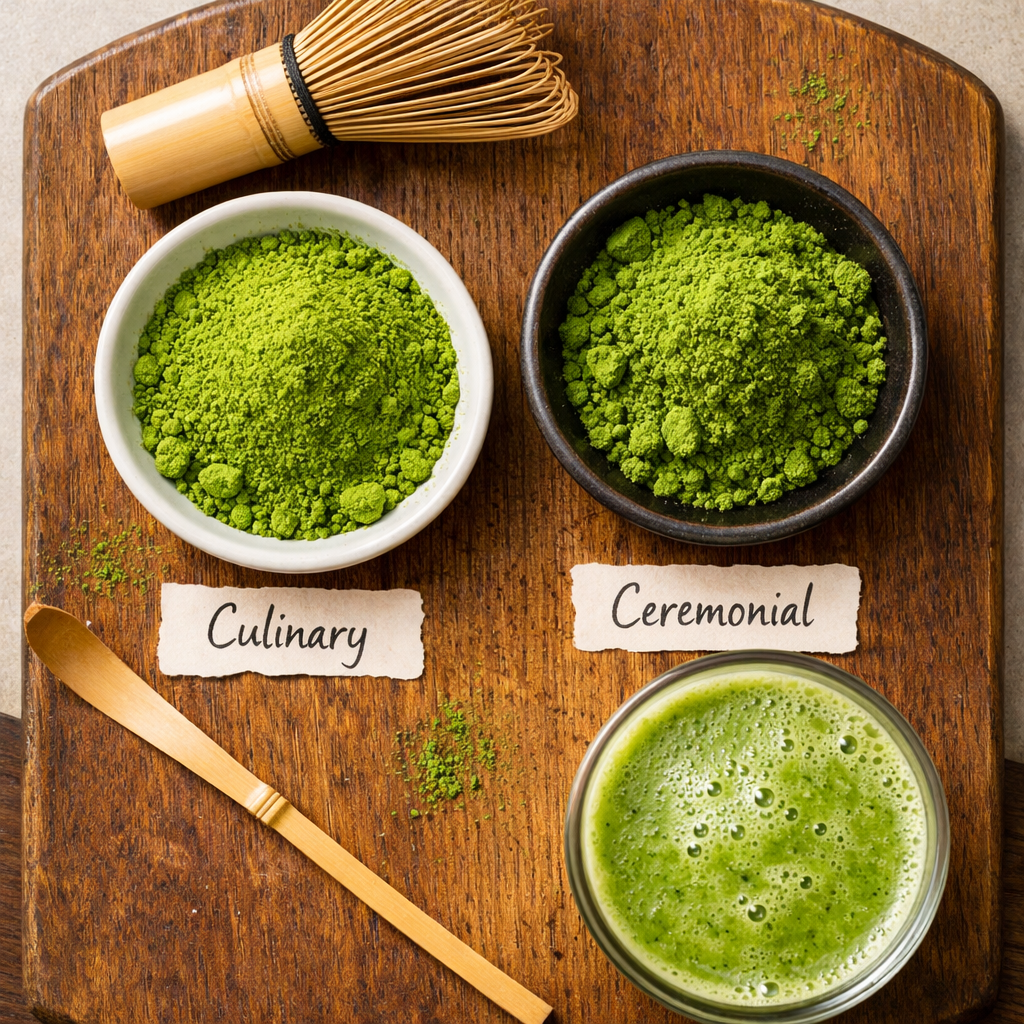
Culinary vs Ceremonial Matcha: Which Works Best In Smoothies?
If your goal is a vibrant, energizing smoothie, choose culinary matcha. Its bolder, slightly astringent profile stays present against milk, yogurt, fruit, and sweeteners—where delicate ceremonial nuances disappear. Start with 1 teaspoon (about 2 g) per 12–16 oz smoothie; adjust to taste, and prevent clumps by whisking the powder into a quick warm-water slurry before blending. Save ceremonial matcha for whisked, straight tea sessions where its sweet umami and aroma can shine. The bottom line: use the right grade for the job, and your blender—and budget—will thank you.
Quick verdict
Culinary matcha is the practical, flavor-forward, budget-friendly pick for smoothies and blended snacks. Its robust, grassy intensity resists being drowned out by dairy or fruit, while ceremonial’s refined sweetness and umami are best appreciated when sipped straight. Price differences reinforce the choice: ceremonial often runs about $1.50–$4.00 per gram versus culinary at roughly $0.25–$0.75 per gram, according to price ranges compiled by Strabella Home (https://www.strabellahome.com/blogs/news/ceremonial-matcha-vs-culinary-how-to-choose-2026). And as Barista Brew Labs’ guide notes, ceremonial’s delicate notes tend to get masked in milk-based blends (https://baristabrewlabs.com/blogs/tips/ceremonial-vs-culinary-matcha-which-one-s-right-for-you).
How matcha grades differ
Ceremonial matcha: The highest grade from first-flush, shade-grown young leaves. It’s stone-ground into an ultra-fine powder with vivid emerald color and naturally sweet, velvety umami. Intended for whisking with hot water and sipping straight, it emphasizes aroma, balance, clarity, and a silky finish overall. See Senbird Tea’s analysis (https://senbirdtea.com/blogs/green-tea/understanding-ceremonial-matcha).
Culinary matcha: Later-harvest or lower-position leaves with more catechins. The grind is fine but slightly coarser, yielding a bold, grassy flavor with pleasant astringency that survives milk, yogurt, and sugar. It’s built for smoothies, lattes, and baking where robustness matters most.
Mini comparison (first flush, shade-grown, L-theanine, catechins, ultra-fine grind, vivid green):
- Harvest: ceremonial uses youngest first-flush leaves; culinary often draws from later harvests.
- Shading: ceremonial leaves are typically shaded 20–30 days, boosting chlorophyll and L-theanine.
- Grind: ceremonial is stone-ground to about 5–10 microns; culinary remains fine but slightly coarser.
- Color: ceremonial skews vivid jade/emerald; culinary can read deeper olive or yellow-green depending on freshness. For an at-home check, Nio Teas’ breakdown of grades suggests a “white paper test”: bright green implies fresher, higher-grade powder; dull yellow-brown signals age or low quality (https://nioteas.com/blogs/matcha/ceremonial-matcha-vs-culinary-matcha).
Flavor and texture in smoothies
Ceremonial is naturally sweet with smooth, savory umami—gorgeous when whisked, but easily muted by milk, yogurt, or fruit. Culinary is bolder, grassier, and slightly bitter/astringent, traits that remain perceptible in blended drinks and help balance sweetness.
Texture-wise, ultra-fine ceremonial (around 5–10 microns) can feel silkier; culinary may register a touch “sharper.” In a high-speed blender, a quick pre-slurry neutralizes most grit.
Pros and cons for smoothies:
- Culinary pros: flavor holds up, balances sweetness, much more cost-effective.
- Ceremonial cons: subtle notes get masked in milk-heavy blends, making the premium moot.
Cost and everyday practicality
- Ceremonial: about $25–$50+ per 30 g; ≈$1.50–$4.00/gram.
- Culinary: about $10–$25 per 30 g; ≈$0.25–$0.75/gram.
Using ceremonial in milk/fruit blends often wastes the nuance you paid for; culinary is formulated to hold up without overspending. Money-saver tip: a 12 oz bag of quality culinary can yield 170+ lattes at roughly $0.25 per serving—ideal economics for daily smoothies, too.
Nutrition and caffeine considerations
L-theanine is an amino acid concentrated by shading that promotes calm, focused energy. In matcha, more L-theanine correlates with smoother flavor and steadier feel; shading leaves for roughly 20–30 days also deepens chlorophyll and color, especially in ceremonial grades.
Culinary often carries higher catechin levels, contributing to its bitterness/astringency—traits that pair naturally with ripe banana, mango, dates, honey, or dairy in smoothies. For sustained satiety and steadier energy, matcha’s gentle lift pairs well with Meat Recipe Box’s protein-forward snacks.
Testing methodology for a fair comparison
Standardized smoothie test:
- Base: 8 oz dairy or alt milk + 1/2 cup Greek yogurt
- Fruit: 1 small ripe banana
- Ice: 1 cup
- Sweetener: 1 teaspoon honey
- Matcha variable: type (culinary vs ceremonial) and dose (1–2 teaspoons)
- Prep: sift or pre-slurry matcha with 1–2 tablespoons warm water
- Blend: high speed 45–60 seconds
- Rest: 2 minutes to let air bubbles rise, then taste for grit
- Assess: color via white paper test; aroma; flavor intensity; sweetness/umami; bitterness/astringency; texture vs expected grind fineness (ceremonial ~5–10 microns).
Summary table (example results):
| Grade | Dose | Color Note | Flavor Hold-Up | Grit Score (1=none,5=gritty) | Overall |
|---|---|---|---|---|---|
| Culinary | 1 tsp | Olive-bright green | Clear, tea-forward | 2 | Best value |
| Culinary | 2 tsp | Deeper olive | Very strong; slightly bitter | 3 | Strong but bold |
| Ceremonial | 1 tsp | Vibrant emerald | Smooth; nuance subdued | 1 | Great solo, not in blends |
Smoothie performance results
Culinary matcha consistently maintained a clearer green tea flavor against dairy and fruit with acceptable texture. Ceremonial tasted plush and smooth, but its nuanced sweetness and umami largely vanished once blended—making the premium unnecessary for smoothies. Color-wise, ceremonial appeared brighter emerald; culinary leaned deeper olive/yellow-green depending on brand freshness. For the best-looking green without overspending, pick a fresh, mid-to-higher-quality culinary grade and verify hue on white paper before restocking.
Recommendation for busy home cooks
Use culinary grade for all smoothies, snack bars, protein bites, and prep-ahead matcha yogurt cups. If you also enjoy whisked tea, keep ceremonial for sipping and culinary for recipes. Time-pressed? Buy culinary in economical bags and pre-portion 1–2 teaspoon packets for grab-and-blend mornings. For portable balance, pair with meat-forward, box-ready snacks (see the Trip Box ideas below). Explore more protein-friendly pairings in our recipes hub (https://meatrecipebox.com/categories/recipes/).
Tips for using matcha in smoothies and snacks
Choose the right grade and dose
- Use culinary grade for blends; start with 1 teaspoon (2 g) per 12–16 oz smoothie and adjust. Doubling increases bitterness—counter with sweetness and fat.
- Ceremonial works but isn’t cost-effective for blends; its delicate umami and sweetness are easily masked.
Prevent clumps and grit
- Sift matcha or whisk with 1–2 tablespoons warm water to form a thin slurry before adding to the blender; finer dispersion mirrors ceremonial’s ultra-fine grind.
- Blend on high for 45–60 seconds; rest 30 seconds to let foam dissipate and reassess texture.
- Persistent grit? Check freshness and color; dull yellow-brown tones often signal older powder prone to clumping.
Balance flavors and sweetness
- Pair culinary’s slight bitterness with ripe banana, mango, dates, or honey; add dairy or coconut milk for roundness.
- Brighten with acids (pineapple, kefir, lemon); enhance perceived sweetness with a pinch of salt and vanilla.
- Add protein and fat (Greek yogurt, nut butter, collagen, or Meat Recipe Box’s meat-forward sides below) for creaminess and longer satiety.
Make it portable and prep ahead
- Batch freezer packs: portion fruit, greens, protein, and culinary matcha sachets; add milk/water and blend day-of.
- Stir matcha into no-bake protein bites or yogurt cups; pack in lidded jars—great for coolers on Trip Box days.
- Label doses and dates; use the white paper test periodically to spot fading freshness.
Portable, meat-forward pairings that travel well
These are the kinds of pairings we pack in Meat Recipe Box Trip Boxes.
Protein boosts and add-ins
- Ready-to-pack meats: turkey sausage patties, roast beef roll-ups, or chicken snack boxes deliver 20–30 g protein per meal.
- Blend collagen or unflavored whey into a matcha smoothie, then add a savory side like jerky or biltong for chew and sustained energy.
- Quick combos:
- Matcha–banana smoothie + turkey jerky
- Creamy coconut matcha + cold grilled chicken skewers
- Kefir–matcha shake + roast beef–cheddar roll-ups
Snack box ideas for the Trip Box
- Build a compartmented Trip Box:
- 12–16 oz matcha smoothie (insulated flask)
- Hard-boiled eggs or chicken salad lettuce cups
- Beef sticks or biltong
- Apple slices, cheddar cubes, salted almonds
- Make-ahead treats: matcha rice krispie bars or granola clusters for sweet crunch alongside savory meat snacks. Use spill-proof containers and cooler packs.
When ceremonial matcha makes sense
Choose ceremonial when you plan to whisk and sip without milk or sweeteners; that’s where its smooth, sweet umami and vivid color truly shine. Craft matters: stone mills produce matcha slowly—on the order of a few dozen grams per hour—helping explain higher costs, as outlined in Matchaeologist’s overview of stone milling (https://matchaeologist.com/blogs/explore/ceremonial-vs-culinary-matcha). If you love both sipping and smoothies, keep both grades on hand.
How to buy and store matcha for fresh flavor
Buying:
- Seek vivid emerald (not dull or brown). On white paper, a bright green hue signals fresher, higher-quality powder.
- Choose reputable culinary grade for recipes; skip ultra-cheap options that may be stale.
Storage:
- Keep airtight, cool, and dark; refrigerate after opening if possible.
- Minimize air exposure with small tins or single-serve sachets.
- Remember: stone-ground fineness and freshness affect clumping and flavor; oxidized powders fade in color and aroma over time.
Frequently asked questions
How much matcha should I add to a smoothie?
Start with 1 teaspoon (2 g) of culinary matcha in a 12–16 oz smoothie and adjust to taste. That’s the baseline we use in Meat Recipe Box tests; if you add more, increase sweetness or dairy to balance bitterness.
Can I prep matcha smoothies ahead without bitterness?
Yes. Pre-portion ingredients and add matcha the day you blend (or pre-slurry with warm water). Meat Recipe Box tip: chill in an insulated bottle and drink within 24 hours.
Why is my matcha gritty or clumping in the blender?
Dry powder clumps in cold liquid—sift or pre-slurry with warm water, then blend on high for 45–60 seconds. If grit remains, check freshness and color; this is the quick check we use at Meat Recipe Box.
Does dairy affect matcha’s benefits or flavor?
Dairy softens bitterness and rounds flavor, which is why culinary performs well in lattes and smoothies. For a more pronounced tea note in Meat Recipe Box–style blends, use less dairy or add a squeeze of lemon.
What is the difference between culinary, premium, and ceremonial grades?
Culinary is bold and best for mixing; ceremonial is ultra-fine, vivid, and meant for sipping straight. “Premium” often sits between them on flavor and price—our go-to for nicer lattes without ceremonial costs.