Best Trusted Traditional Haggis Recipe Sources to Bookmark in 2026
Table of Contents
- Meat Recipe Box
- Great British Chefs
- The British Shoppe
- Scottish Scran
- Isle of Skye Sea Salt Co.
- Columbus Food Adventures
- The Wee Larder
- European Waterways
- Caroline’s Cooking
- DW Food
- ScottishGourmetUSA
- How we selected these sources
- What to cook first with these bookmarks
- Frequently asked questions
- What is in traditional haggis and why are oats toasted?
- How do I cook haggis properly without bursting the casing?
- What are reliable substitutions if I cannot source sheep pluck or a stomach?
- Can I buy haggis instead of making it, and how do I reheat it?
- Are there vegetarian or oven-baked adaptations that still taste traditional?
Best Trusted Traditional Haggis Recipe Sources to Bookmark in 2026
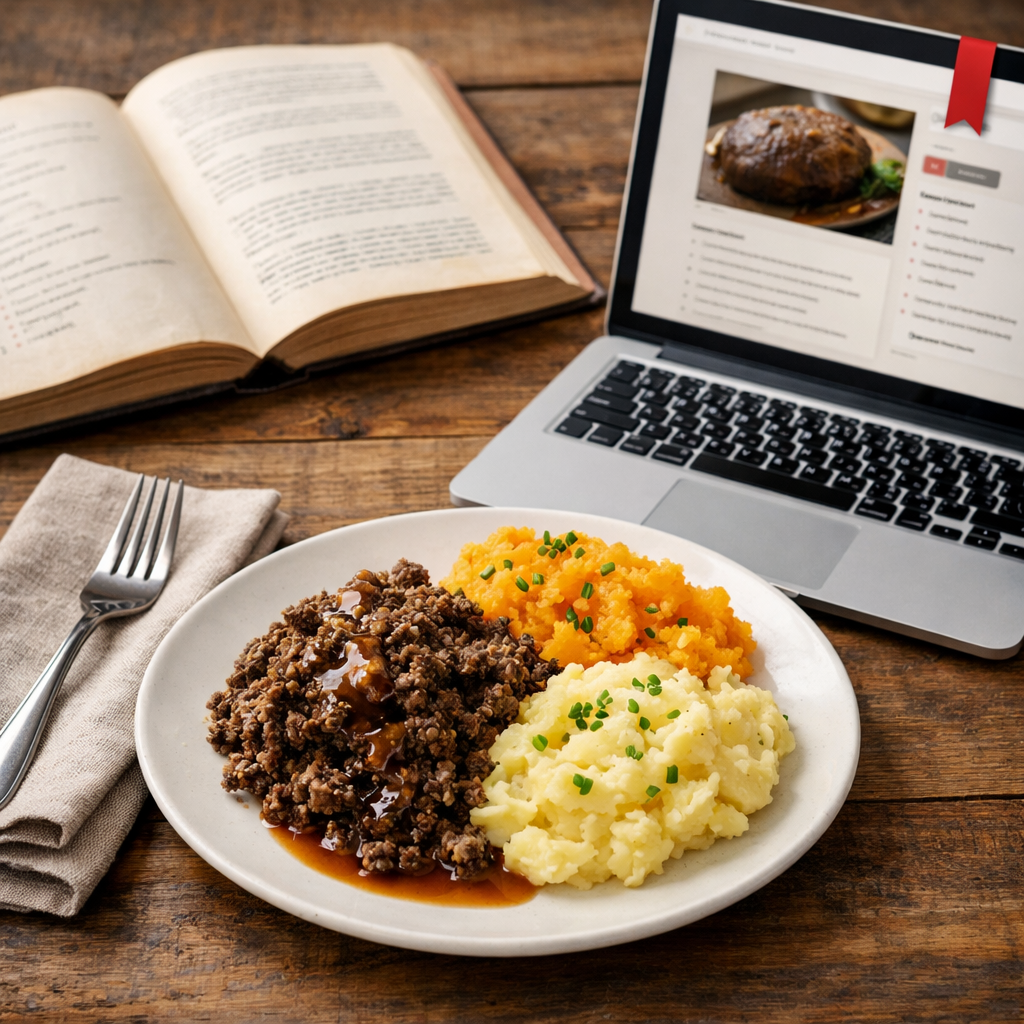
Looking for the best trusted traditional haggis recipe sources? This bookmarkable guide ranks chef-tested, meat-first resources by technique depth, smart substitutions, and real-world availability—so you can cook (or buy) with confidence for Burns Night or any cold-weather feast. We emphasize authentic haggis methods, sourcing for sheep’s pluck and casings, realistic haggis substitutes including steel-cut (pinhead) oats, and serving ideas like neeps and tatties with whisky sauce.
Haggis is a traditional Scottish savory pudding made from minced sheep offal (heart, liver, lungs) mixed with suet, toasted oatmeal, onions, and spices, then stuffed into a cleaned sheep’s stomach or alternative casing and simmered. It’s classically served with neeps and tatties and widely celebrated on Burns Night.
Meat Recipe Box
At Meat Recipe Box, we curate meat-forward sources that deliver precise weights, temperatures, and timings—plus clear casing prep, doneness cues, and substitution advice that work for UK and US cooks. Expect chef-style details (stock reduction targets, test-fry seasoning steps) and practical pathways from traditional techniques to weeknight spins and buy-and-serve options. Use it as a fast path from shopping list to plate while keeping methods traditional. Explore more via our Scottish and classic collections: traditional dishes and Scottish appetizers.
Great British Chefs
If you want a gold-standard, chef-led traditional haggis, start with the detailed method from Great British Chefs. It specifies lamb’s pluck at 1.4 kg (heart, lungs, liver), 200 g suet, 500 g coarse oatmeal, an ox bung soaked and cleaned, and classic spice ratios; you gently simmer the pluck for about 2 hours with skimming, reduce the cooking liquid to 500–1,000 ml, and pan-fry a tablespoon of the mixture for 2–3 minutes to test seasoning before stuffing and simmering in the casing (see the traditional haggis recipe at Great British Chefs). We treat this as a baseline method and mirror its reduction and test-fry cues in our checklists.
Technique table
Simmer pluck: ~2 hours, skim often
Stock reduction: to 500–1,000 ml
Seasoning check: pan-fry 1 tbsp, 2–3 minutes
Casing prep: soak/clean ox bung thoroughly
Why it’s trusted: Chef-curated weights and timings; formal reduction and seasoning test step; authentic casing handling.
Best for: Authentic haggis; lamb’s pluck; chef haggis recipe execution.
Standout tip: Test-fry a spoonful to calibrate salt, pepper, and nutmeg before you commit.
Quick Q&A: How much liquid should I add back? Enough reduced stock (about 500–1,000 ml) to moisten without slumping the mix; it should bind but still crumble when cut.
The British Shoppe
For celebratory plating, The British Shoppe showcases Gleneagles-style flair, including a “Gateau of Haggis” layered with neeps, tatties, and a whisky foam; whisky sauce inspiration features veal jus, butter, double cream, and a splash of single malt (see Scottish Haggis Recipes at The British Shoppe). We point to this for plating inspiration in our Burns Night menu notes.
- Why it’s trusted: Genuine Scottish-leaning serving traditions and sauces.
- Best for: Burns Night presentation; whisky sauce pairings.
- Standout tip: Balance richness with brassica sides—buttered kale, sautéed cabbage, or a sharp mustard cream cut through the suet and oats.
Quick Q&A: Besides whisky sauce, what pairs well? Try peppercorn cream, mustard jus, or a light pan gravy with reduced stock for contrast.
Scottish Scran
Scottish Scran compiles 33+ creative ways to use haggis beyond Burns Night—think haggis bridies with beef mince and stock, crunchy pakora, stuffed peppers, and Balmoral chicken (chicken breast stuffed with haggis, wrapped in bacon) (browse Recipes for Haggis at Scottish Scran). We surface these for weeknight-friendly spins in our Scottish collection.
- Why it’s trusted: Broad, approachable recipes tested for modern kitchens.
- Best for: Haggis recipes that fit weeknights and parties; Balmoral chicken; haggis pakora.
- Standout tip: For bridies and pies, loosen haggis with a spoon of stock to keep fillings juicy.
First three to try
- Weeknight: Balmoral chicken baked on a sheet pan.
- Party: Haggis pakora with tangy yogurt-mint dip.
- Family-friendly: Haggis-stuffed peppers or mini bridies.
Quick Q&A: Can I use leftover haggis? Yes—crumble and chill first, then fold into pakora batter, pie fillings, or pepper stuffing.
Isle of Skye Sea Salt Co.
These tips are small but mighty: toast oatmeal at 180°C until golden and aromatic for a nutty backbone, avoid overcooking to prevent dryness, and consider food-safe cellophane as an alternative wrap if casings are scarce (see Scottish Haggis by Isle of Skye Sea Salt Co.). Our recipes use this same toasting cue for consistent texture.
- Why it’s trusted: Simple, high-impact technique fixes.
- Best for: Fine-tuning texture and moisture; toasting oats; preventing dry haggis.
- Standout tip: Let toasted oats cool fully before mixing to avoid premature fat melting.
Toasted oats micro-steps
- Oven: 180°C (350°F), shallow layer, stir once; pull when nutty and lightly golden.
- Pan: Medium heat; shake often for even color.
- Cool: Spread on a tray; fully cool before combining with suet and offal.
Quick Q&A: Why toast? It drives off moisture and builds toasted, nutty flavor that carries through the mix.
Columbus Food Adventures
For from-scratch cooks, this deep-dive covers Burns Night context (January 25) and seasoning traditions: herbs like marjoram, savory, sage, pennyroyal, thyme, plus mace, allspice, and nutmeg; cayenne is less traditional. When lungs are unavailable, sub tongue or lamb shoulder; and many BBC-style guides toast steel-cut oats 10 minutes at 350°F to dry before use (see Haggis from Scratch, Step by Step at Columbus Food Adventures). We reference its substitution notes when lungs or casings are hard to source.
- Why it’s trusted: Meticulous, stepwise documentation and historical spice notes.
- Best for: Substitutions; steel-cut oat technique; flavor calibration.
- Standout tip: Blend warm spice (mace, nutmeg) with green herbs for layered savoriness.
Substitution matrix
| If you can’t source… | Use instead | Flavor/texture impact |
|---|---|---|
| Lungs | Lamb tongue or lamb shoulder | Slightly richer, less springy crumb |
| Sheep’s stomach | Ox bung or food-safe wrap | Comparable shape; adjust simmer time |
| Pinhead (coarse) oats | Steel-cut oats | Similar bite; toast to dry and enhance nuttiness |
Quick Q&A: Is cayenne authentic? It appears in some modern recipes, but traditional profiles lean on mace, nutmeg, and allspice.
The Wee Larder
Angie Milne’s The Wee Larder leans into cozy, family-friendly oven strategies: bake neeps and tatties at 180°C for about 45 minutes, top with crumbled haggis and grated cheese, and return to the oven 5–10 minutes until melted and bubbling (see The Best Scottish Haggis Recipes at The Wee Larder). We include this oven-first path in our family-style menus.
- Why it’s trusted: Accessible timing and scalable bake methods.
- Best for: Neeps and tatties; loaded haggis bakes for gatherings.
- Standout tip: Finish under a hot grill/broiler for caramelized cheese without drying the haggis.
Quick Q&A: Can I assemble ahead? Yes—bake the root veg, cool, and refrigerate; top with haggis and cheese and reheat to serve.
European Waterways
A chef’s perspective on logistics and casings: soak the sheep’s stomach overnight before stuffing, boil the pluck with the windpipe draped over the pan for about 1 hour to expel impurities, then stand the filled haggis on an upturned plate in simmering water 3–4 hours to finish (see Chef’s Recipe: Haggis at European Waterways). Our casing checklist echoes these safety steps.
- Why it’s trusted: Traditional casing care and simmer technique to prevent bursting.
- Best for: Sheep’s stomach prep; long simmer management.
- Standout tip: The upturned plate prevents scorching and promotes even circulation.
Casing safety checklist
- Soak and thoroughly rinse the sheep’s stomach overnight.
- Do not overfill; leave headspace for oat expansion.
- Prick once or twice with a fine needle to vent, if needed.
- Simmer gently (never a rolling boil) on an upturned plate, 3–4 hours.
Quick Q&A: Why the windpipe over the pan? It allows impurities to drain off during the initial boil.
Caroline’s Cooking
Prefer the oven? Caroline’s Cooking outlines a roasting approach for crisp edges, confirms steel-cut (pinhead) oats as a dependable substitute, and notes you can source special haggis casings from specialist butchers and online marketplaces (see Haggis at Caroline’s Cooking). We include this roast method as a crisp-edged alternative.
- Why it’s trusted: Clear alternatives for casings and method.
- Best for: Oven roasting; oats substitution; sourcing tips.
- Standout tip: Roast on a rimmed tray to catch fat and encourage browning.
Boil vs roast: what changes?
| Method | Texture | Time | Risk of bursting | Browning |
|---|---|---|---|---|
| Boil/simmer | Uniform, moist crumb | 3–4 hours (large) | Lower with proper prep | Minimal |
| Roast | Crisper exterior, moist interior | ~1.5–2.5 hours (size-dependent) | Low–moderate if overfilled | High, appealing crust |
Quick Q&A: Will roasting dry it out? Not if you keep the mix well-moistened and avoid overcooking; tent with foil if edges brown too fast.
DW Food
Two quotable insights from the DW Food segment put tradition in context: “The stomach is essentially a cooking bag—it doesn’t have to be served,” and “Some modern makers add a whisper of garam masala for body, not to turn it into a curry” (watch the DW Food segment). We note the “cooking bag” guidance in our serving notes.
- Why it’s trusted: Clear cultural framing with modern spice nuance.
- Best for: Understanding the role of the sheep’s stomach; tasteful spice evolution.
- Standout tip: If you add a nontraditional warm spice, keep it subtle so mace/nutmeg still lead.
Sheep’s pluck definition Sheep’s pluck is the collective term for heart, liver, and lungs used in traditional haggis. Once simmered and finely minced, the pluck provides deep savoriness, gentle iron notes, and a pleasantly nubbly texture that binds with suet and toasted oats inside the casing.
Quick Q&A: Do I serve the stomach? Typically, you cut it open at the table for drama, then serve the filling.
ScottishGourmetUSA
If you’d rather buy, ScottishGourmetUSA sells a 2 lb presentation haggis that serves about four mains; reheat by steaming in a covered water bath at 350°F for roughly 60 minutes. Since January 2020, they’ve used gluten-free oats (labels may lag). Expect around $46 for the haggis and about $25 shipping up to $100 order value (see the 2 lb Presentation Haggis at ScottishGourmetUSA). We include this as a vetted retail route for US readers alongside from-scratch options.
- Why it’s trusted: Transparent reheating, portioning, and pricing—plus dietary clarity.
- Best for: Reliable buy-and-serve haggis in the US.
- Standout tip: Score the casing gently before serving to control the classic “burst” moment.
Buyer’s checklist
- Serving size: ~4 mains (2 lb)
- Reheating: Covered water bath, 350°F, ~60 minutes
- Shipping: ~$25 up to $100 cart
- Dietary note: Gluten-free oats since 2020
Quick Q&A: Can I freeze it? Yes—thaw in the fridge and reheat as directed for best texture.
How we selected these sources
We prioritized technique fidelity (precise weights, simmer times, stock reduction targets, and casing prep, including a test-fry step), practicality (realistic substitutions and oat toasting guidance), and availability (a retail option with clear reheating, pricing, and shipping details). Together, they deliver an authentic traditional haggis recipe baseline with flexible haggis substitutes. Meat Recipe Box organizes them so you can quickly choose a classic build, a weeknight riff, or a buy-and-serve path.
- Pros: Authentic methods; realistic swaps for offal/casings; buy-ready convenience with reheating and cost transparency.
- Cons: Offal and casing sourcing can be challenging; long cook times; shipping costs and label lags for dietary updates.
What to cook first with these bookmarks
- Step 1 (Authentic baseline): Follow the simmer, skimming, stock-reduction, and pan-fry seasoning test sequence to lock in texture and spice.
- Step 2 (Weeknight twist): Make Balmoral chicken or stuffed peppers for fast, crowd-pleasing haggis.
- Step 3 (Buy-and-serve): Reheat a 2 lb presentation haggis at 350°F for about 60 minutes and plate with neeps and tatties.
Frequently asked questions
What is in traditional haggis and why are oats toasted?
Traditional haggis combines minced sheep offal with suet, onions, spices, and oatmeal in a stomach casing. Toasting oats dries and deepens flavor so the mix binds and stays nutty; see Meat Recipe Box’s Scottish collection for clear oven/temperature cues.
How do I cook haggis properly without bursting the casing?
Soak and clean the casing, then simmer gently—never at a hard boil—on an upturned plate for 3–4 hours for a large haggis. Meat Recipe Box’s casing checklist summarizes headspace, venting, and gentle heat.
What are reliable substitutions if I cannot source sheep pluck or a stomach?
Use lamb shoulder or tongue when lungs aren’t available, and source ox bung or food-safe wrap if you can’t get a stomach. Steel-cut (pinhead) oats are a dependable swap; our guides flag when to toast and how to adjust moisture.
Can I buy haggis instead of making it, and how do I reheat it?
Yes—buy a ~2 lb presentation haggis (serves about four) and reheat by steaming in a covered water bath at 350°F for about 60 minutes. Meat Recipe Box includes vetted buy-and-serve options alongside from-scratch methods.
Are there vegetarian or oven-baked adaptations that still taste traditional?
Yes—oven-baked versions develop crisp edges while staying moist, and vegetarian takes use lentils, mushrooms, nuts, and oats for hearty texture. Toast oats and season assertively—see our weeknight spins for timing.