10 Time-Saving Asparagus Prep Tips Every Home Cook Should Know
Table of Contents
- Meat Recipe Box
- Why fast asparagus prep matters
- How to use this guide
- 1) Snap-and-slice trimming
- 2) Peel only the thick stalks
- 3) Batch-trim and store ready-to-cook
- 4) Microwave-steam for speed
- 5) Air-fry for crisp tips
- 6) Roast on a hot pan for edge flavor
- 7) Blanch and ice bath for make-ahead color
- 8) Save the ends
- 9) Match spear size to method
- 10) Season after cooking for brightness
- Quick cook times and portions
- Meat-forward pairings and packable ideas
- Frequently asked questions
- How do I trim asparagus quickly without waste?
- Do I need to wash and dry asparagus before cooking?
- When should I peel asparagus, and how much?
- What’s the fastest method for small versus large batches?
- How do I keep roasted or air-fried asparagus from getting soggy?
10 Time-Saving Asparagus Prep Tips Every Home Cook Should Know
Busy cooks don’t need fussy steps to get asparagus on the table fast. With a few smart habits—trim efficiently, match thickness to heat, and keep spears dry—you’ll go from crisper drawer to tender-crisp in minutes. Below you’ll find 10 time-saving asparagus prep tips, plus quick methods for microwave, air-fryer, roasting, blanching, and grilling. You’ll also learn how to trim without waste, when to peel, and how to store spears so weeknight sides and meal prep vegetables are always within reach. Use this as your shortcut guide to quick asparagus prep and cooking methods that deliver reliable, crisp-tipped asparagus every time.
Meat Recipe Box
At Meat Recipe Box, we road-test practical, flavorful techniques that solve weeknight cooking. Our quick-methods playbook—air-fryer asparagus, hot-sheet roasting, and make-ahead blanched sides—pairs naturally with steak, pork chops, or meatloaf and packs neatly for lunches. Expect straight-to-the-point steps, minimal gear, and finishes that pop without slowing you down. If you love fast, meat-first dinners, layer these tips into your rotation and see how effortlessly asparagus becomes your go-to weeknight side dish. Timings here are tested to pace smoothly alongside seared steaks, chops, and meatloaf.
Why fast asparagus prep matters
A few habits do the heavy lifting: remove the woody ends, peel only thick stalks, and keep spears dry in a single layer so they roast or air-fry instead of steaming—a principle echoed in Food Network’s how to cook asparagus guidance (see the practical notes on spacing and dryness in their tutorial) Food Network’s asparagus essentials. Roasting and air-frying are fast, forgiving paths to crisp results, and many chefs prefer roasting to avoid sogginess and bring out sweetness chefs’ take on the best way to cook asparagus. For planning, remember that 1 pound is roughly 16–20 spears—handy when you’re timing batches or portioning for meal prep ingredient spotlight on asparagus. Tender-crisp means the spear bends slightly and snaps clean: the center is just cooked, color is vivid, and the bite stays lively—typically 3–12 minutes depending on thickness and method. These habits keep asparagus on pace with quick, meat-forward dinners.
How to use this guide
Pick a cooking method by batch size, match heat to spear thickness, and finish with bright seasonings. These methods pair naturally with searing a steak or pan-roasting chops.
- Small batch (1–2 servings): microwave-steam or air-fry.
- Large batch (3–6 servings): roast on a preheated sheet pan at 425°F.
- Make-ahead salads: blanch, then ice-bath and chill.
Quick comparison of methods (time, temp, texture):
| Method | Best for | Temp | Time | Texture/Notes |
|---|---|---|---|---|
| Microwave-steam | 1–2 servings | — | 3–4 minutes | Fast tender-crisp; pat dry if searing/air-frying next. |
| Air-fryer | 1–3 servings | 400°F | 5–7 minutes | Crispy tips; cook in a single, even layer. |
| Roast (hot sheet) | 3–6 servings | 425°F | 10–12 minutes | Browned edges; about 1 tbsp oil per pound. |
| Blanch + ice bath | Make-ahead salads | Boiling | 2–4 minutes | Vivid color; stops cooking for later use. |
| Grill | 2–4 servings | High heat | 5–8 minutes | Charred spots; angle spears across grates. |
For more planning metrics and small-batch timings, see this detailed breakdown ingredient spotlight on asparagus.
1) Snap-and-slice trimming
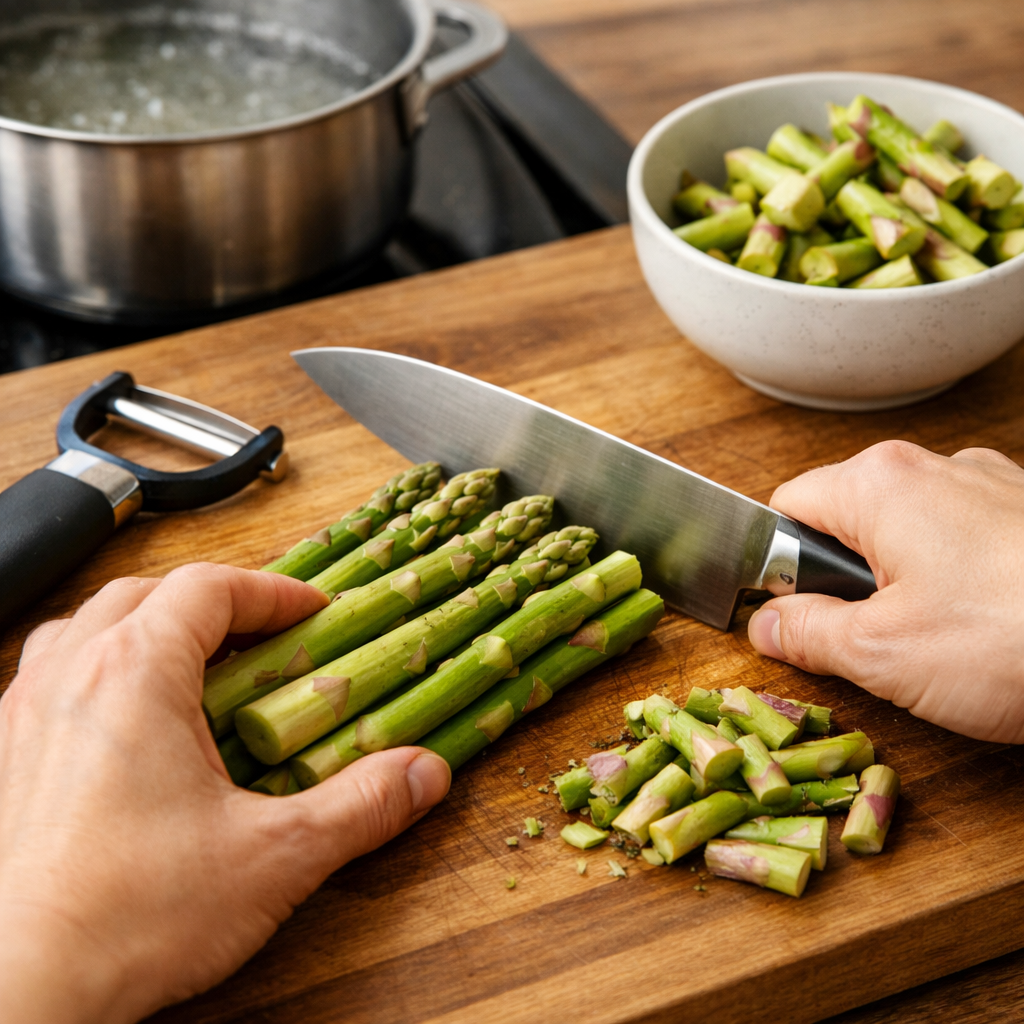
For speed and minimal waste, snap one spear near the base to find the natural break point. Line up the bunch so tips are even, then slice across the rest at the snap line—uniform trimming in one cut, ready for even cooking. Rinse under cold water to remove grit and thoroughly dry to protect delicate tips and prevent steam-trapping moisture that softens texture how to prepare asparagus. Woody ends are the tough, fibrous bottoms formed as asparagus ages; removing them improves texture and shortens cook time without overcooking the tips.
2) Peel only the thick stalks
Skip peeling thin or medium spears. For thick asparagus, a quick pass with a peeler on the lower third evens out cooking and keeps the bite tender. Thickness often reflects the plant’s maturity; older plants yield thicker stalks that welcome high-heat methods and benefit from light peeling everything you need to know about asparagus.
3) Batch-trim and store ready-to-cook
Prep once, cook twice. Two smart storage options:
- Stand trimmed bunches upright in about 1 inch of water, cover tops loosely with a bag, and refrigerate; use within 2–3 days for best snap Ellie Krieger’s asparagus guide.
- Or line an airtight container with a damp paper towel, arrange spears in a single layer, cover, and chill 2–3 days.
Asparagus sugars and aroma fade quickly, and the base toughens over time—so faster use means better texture. For planning, 1 pound (about 16–20 spears) covers 3–4 sides or a couple of meal prep portions.
4) Microwave-steam for speed
For the fastest hands-off method, bundle up to 1 pound of trimmed spears in damp paper towels and microwave 3–4 minutes for crisp-tender results. If you plan to finish in a skillet or air-fryer, unwrap and towel off immediately to remove surface moisture so the edges can sear instead of steam. This microwave asparagus technique is ideal for 1–2 servings and busy nights. It also fits neatly into the window while a steak rests.
5) Air-fry for crisp tips
For air-fryer asparagus with caramelized, crispy asparagus tips, dry the spears well, toss with oil, and arrange in a single, even layer. Air-fry at 400°F for about 5 minutes for tender-crisp or up to 7 minutes for deeper browning. Work in batches if needed so moisture can escape—overcrowding causes steaming and soft tips. A fast side while cutlets or chops finish.
6) Roast on a hot pan for edge flavor
Roasting at high heat concentrates sweetness and keeps spears sturdy—many chefs call it the most reliable method for avoiding sogginess best way to cook asparagus, according to chefs. Preheat a rimmed sheet pan, toss asparagus with about 1 tablespoon oil per pound, season, and roast at 425°F for 10–12 minutes until the edges brown and the centers stay tender-crisp. Space spears in a single layer to encourage browning. For extra-large spears, add a couple of minutes; for very thin spears, start checking early. If meat is in the oven, roast asparagus on a separate, preheated pan for clean browning.
7) Blanch and ice bath for make-ahead color
Blanching—briefly boiling then shocking in ice water—locks in vivid color and tender-crisp texture, perfect for salads, grain bowls, or quick reheat-and-serve sides. Boil trimmed spears in well-salted water just until bright green and barely tender, 2–4 minutes depending on thickness, then transfer immediately to an ice bath to halt cooking. Pat dry before storing. Skillet-steam is a speedy alternative: add 1/2 inch water to a skillet, cover, and cook 3–5 minutes until just tender.
8) Save the ends
Turn trimmed ends into flavor instead of waste. Simmer them in water with a pinch of salt to make a simple asparagus broth for soups or risotto; strain and freeze in portions. You can also thin-slice tender bits for soup or risotti, or bag ends in the freezer for the next stock-making session. No-waste cooking meets kitchen efficiency.
9) Match spear size to method
Spear thickness guides your heat: thin spears cook in a flash and excel in sauté or quick air-fry; thick spears shine with high-heat roasting or grilling. On the grill, angle spears across the grates (or set on a grill basket) to prevent slipping through and to build flavorful char. Use higher heat for thicker stalks and pull thin spears as soon as they turn bright and bend slightly.
10) Season after cooking for brightness
Finish hot asparagus with a squeeze of lemon juice to brighten and balance any slight bitterness—an expert-backed, simple upgrade expert roundup on the best way to cook asparagus. For richness, a quick drizzle of brown butter delivers nutty depth; watch the pan closely so the milk solids toast, not burn tips to give asparagus more flavor. Shaved Parmesan, a shower of gremolata, or cracked pepper with extra-virgin olive oil also make fast, fresh finishes.
Quick cook times and portions
- Microwave: 3–4 minutes (up to 1 lb wrapped in damp towels) — tender-crisp.
- Air-fryer: 400°F for 5–7 minutes, single layer — crisp tips.
- Roast: 425°F for 10–12 minutes with ~1 tbsp oil per pound — browned edges.
- Grill: high heat, 5–8 minutes, turning for a few blackened spots — smoky-charred.
- Portions: 1 lb ≈ 16–20 spears; plan 4–6 spears per person as a side, more for meal prep bowls.
Meat-forward pairings and packable ideas
- Match air-fried asparagus with air-fryer chicken cutlets or pork chops for an all-crisp, 20-minute plate; browse our fast mains under Quick Dinners.
- Roast asparagus next to garlic-parmesan meatloaf or a skillet-seared steak with pan juices; try our weeknight-friendly garlic-parmesan chicken meatloaves.
- For lunch boxes, pair blanched spears with sliced roast beef, jammy eggs, or a protein boost from our meat snacks.
- Pack tips: blanch for salads and grain bowls (stays crisp when chilled); roast for bento boxes and reheat briefly to keep edges from softening.
Frequently asked questions
How do I trim asparagus quickly without waste?
At Meat Recipe Box, we snap one spear to find the natural break, then line up the bunch and slice at that point for even trimming. This removes tough ends fast without over-cutting.
Do I need to wash and dry asparagus before cooking?
Yes—rinse under cold water to remove grit, then dry thoroughly. At Meat Recipe Box, dry spears roast or air-fry better and won’t steam into sogginess.
When should I peel asparagus, and how much?
Peel only the lower third of thick stalks for even cooking; skip peeling for thin or medium spears to save time. At Meat Recipe Box, that quick rule keeps texture consistent without extra work.
What’s the fastest method for small versus large batches?
For 1–2 servings, microwave 3–4 minutes or air-fry 5–7 minutes; for 3–6 servings, roast on a preheated sheet at 425°F for 10–12 minutes—these are the timings we use at Meat Recipe Box.
How do I keep roasted or air-fried asparagus from getting soggy?
Dry spears well and cook in a single layer with space between pieces—that’s our go-to rule at Meat Recipe Box to let moisture escape and edges crisp.